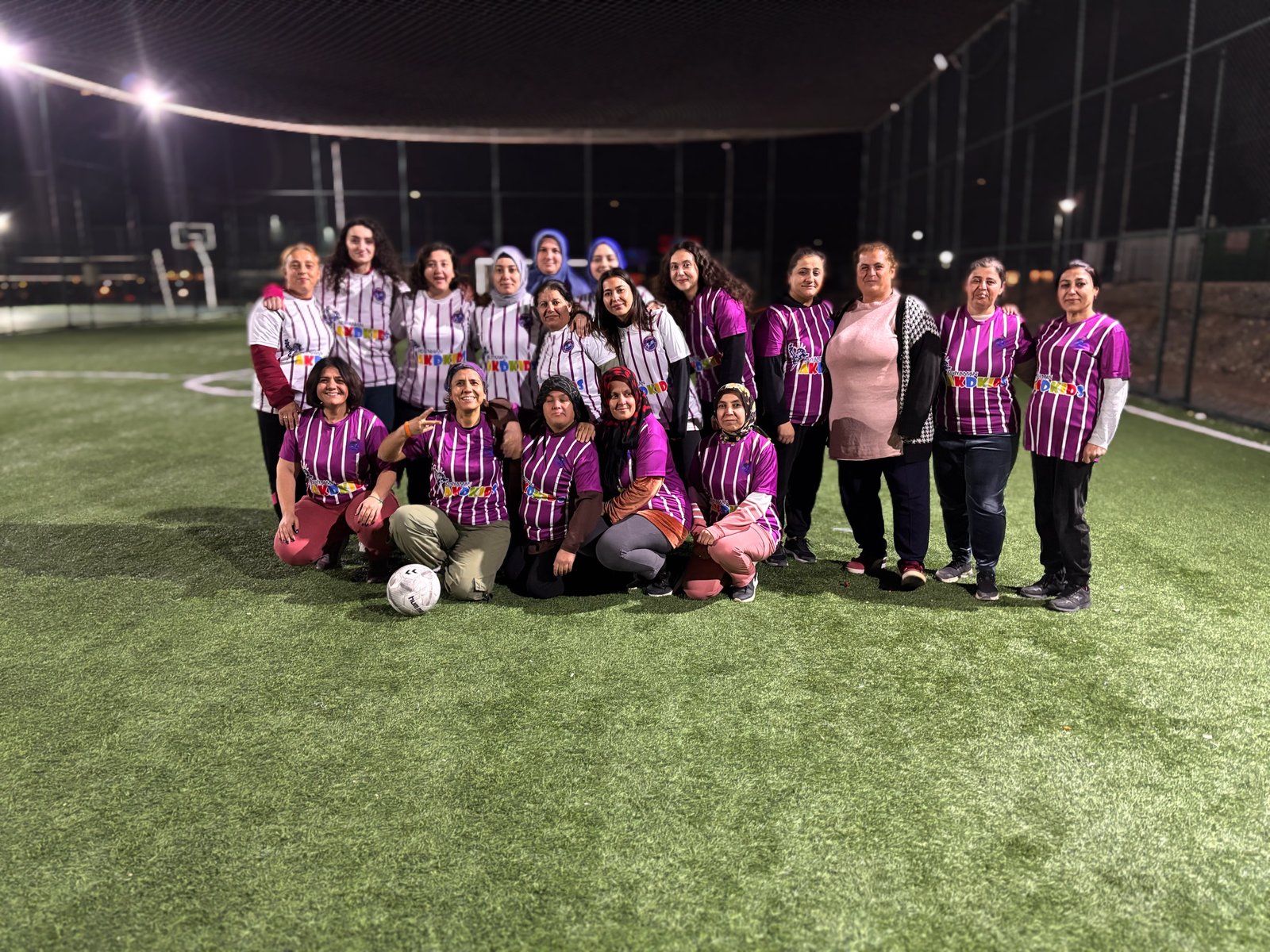

“Life after the earthquake has been really hard, but coming to a game even for just an hour gives me a breather – it’s empowering” says Sakine Özelci.
Like thousands of others, Özelci has been living in a container home – with her family of four – since the earthquakes that struck southern Turkey in February 2023. Football is one of the things that has kept her going.
Özelci’s team is called the Gökyüzü Şutlayıcıları (“Sky Shooters”). It was established by women aid workers, and local Adıyaman women joined later. For Özelci, who works for Hayata Destek (“Life Support”) – a charity set up to support earthquake survivors – the team plays a vital role in recovery.
“I feel stronger,” she says. “I used to not have the courage to walk by myself in the streets, but I’ve gained that courage. That’s what this team has given me.”
Özelci’s city, Adıyaman, was among the hardest hit by the earthquakes: 8,387 were killed and most of the city was rendered uninhabitable. Around 100,000 locals needed temporary accommodation.
Credit: İrem Sarıkulak
After the earthquakes, numerous civil society organisations flocked to the area to provide food, clothing, shelter and other essentials, as well as trauma support. But earthquake survivors have been looking for more durable ways to heal – and for one group of local women, setting up an amateur football team was the answer.
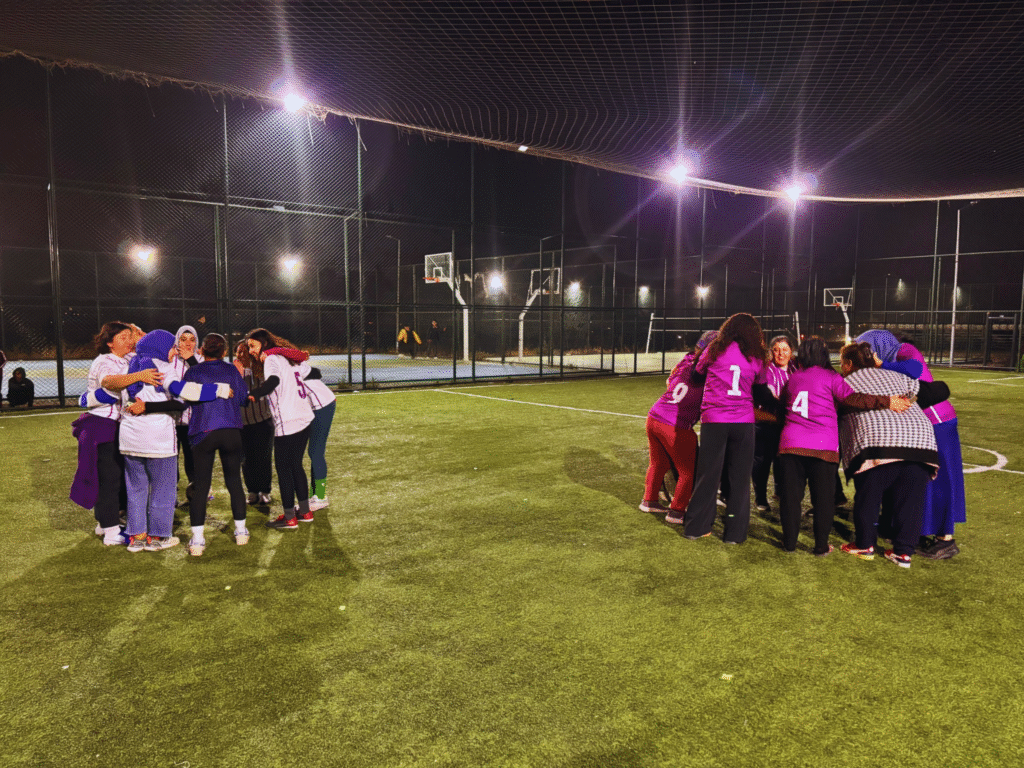
Sky Shooters player Damla Erdoğan Ünsal is pleased that women now have a “match day” of their own, since football is traditionally seen as a male sport in Turkey.
“Guys have a match day and family life is planned around it,” Erdoğan Ünsal says. “My husband has one and we never go anywhere on those days. Women are usually not afforded that luxury.”
Like Özelci, Erdoğan Ünsal appreciates the healing role football has played in the last three years.
“Women were holding onto a lot of anger,” Erdoğan Ünsal says. “We were exhausted by what we had gone through. Shouting on the field, yelling out ‘pass’ or ‘over here’ is relaxing in itself. Our voices did not use to come out so loudly but shouting out here has healed us.”

Credit: İrem Sarıkulak
Three years on
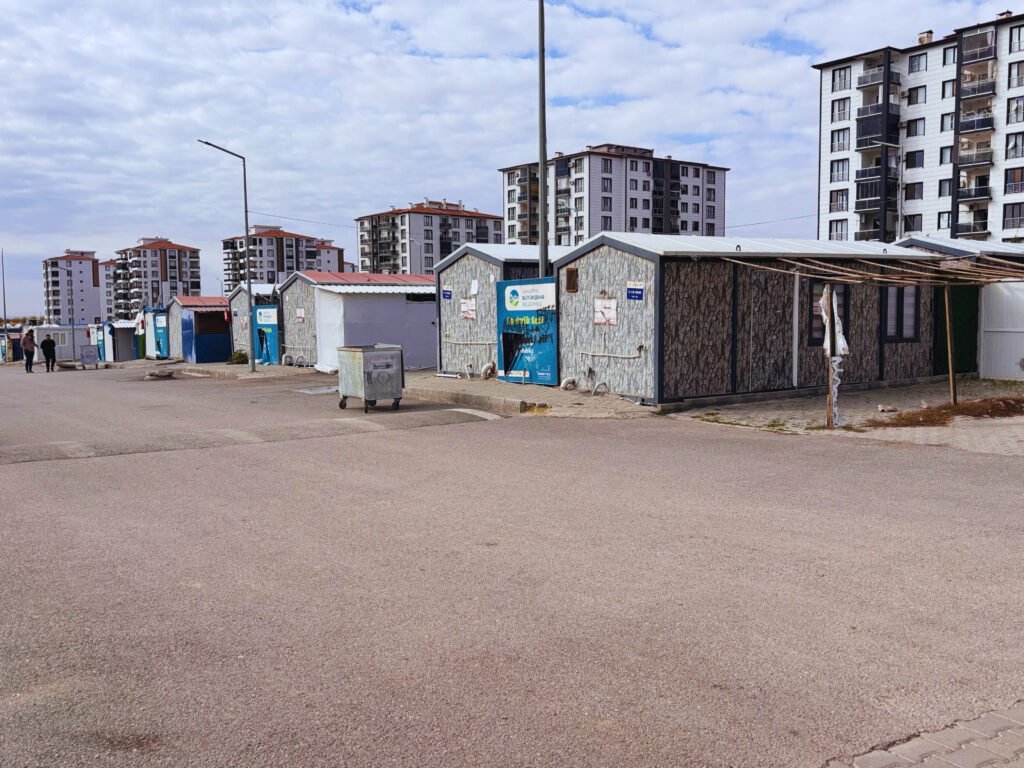
In 2026, the devastation of the earthquake is still felt across daily life in Adıyaman. Thousands of people still live in container homes.
“The earthquake exhausted women the most,” says İpek Emine Aslangöz, chair of the Turkish Women’s Union’s Adıyaman. “Women tried to provide for their families – in container homes, on the streets. It wasn’t their job but they had been conditioned to do so.”
Credit: İrem Sarıkulak
Dilan Aydın, a member of the Adıyaman City Council Women’s Assembly says women have faced a lack of privacy in the container encampments, where a large number of small units are packed together.
Employment and psychological counseling ranked among the top needs after food, housing and hygiene, she adds. Gülistan Polat, another member of the Women’s Assembly, thinks that people are still recuperating three years on.
“The other day, I asked a friend who had been trapped under the rubble for five hours how she was and she started crying,” Polat says. “Nobody had ever asked her that.”
Aid workers who travelled to help the earthquake-struck region similarly needed support.
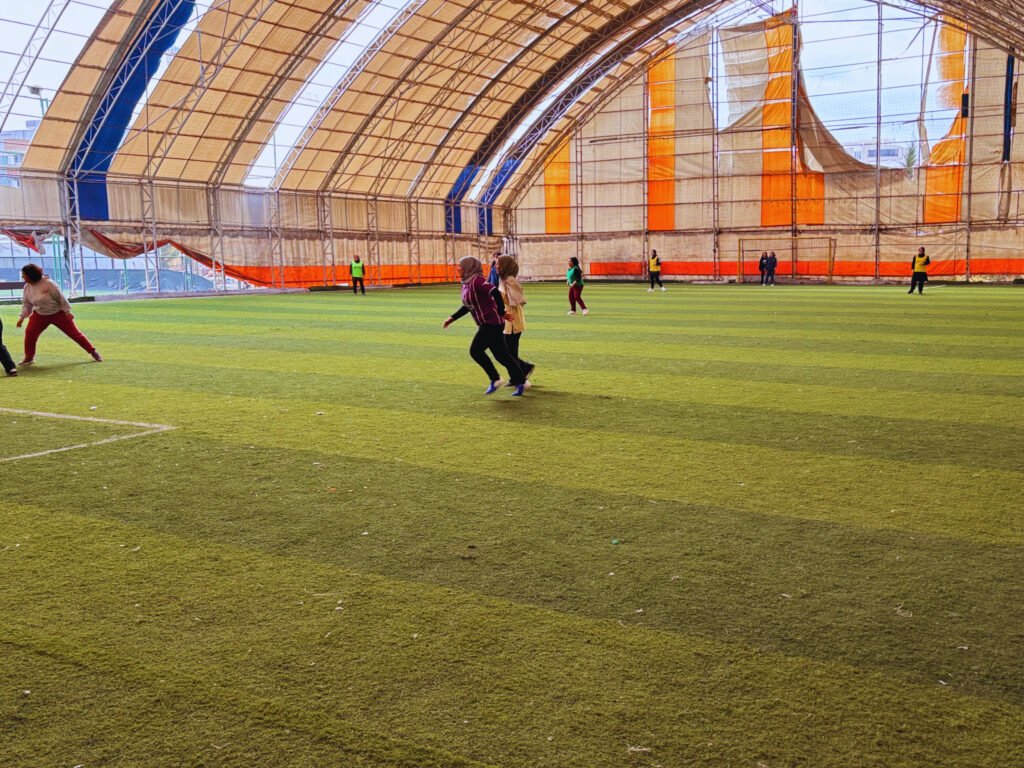
“I thought, ‘it would be great if we could play football,’ says Şirin Şeyhmus of the Leader Women’s Association. “There was a male colleague who played football and I told him ‘I want to come along and play with you’.
“At first, they were playing gently because I was there but I told them to relax. Then we thought, ‘why not play with some of the other women here?’”
Credit: İrem Sarıkulak
Doing it together
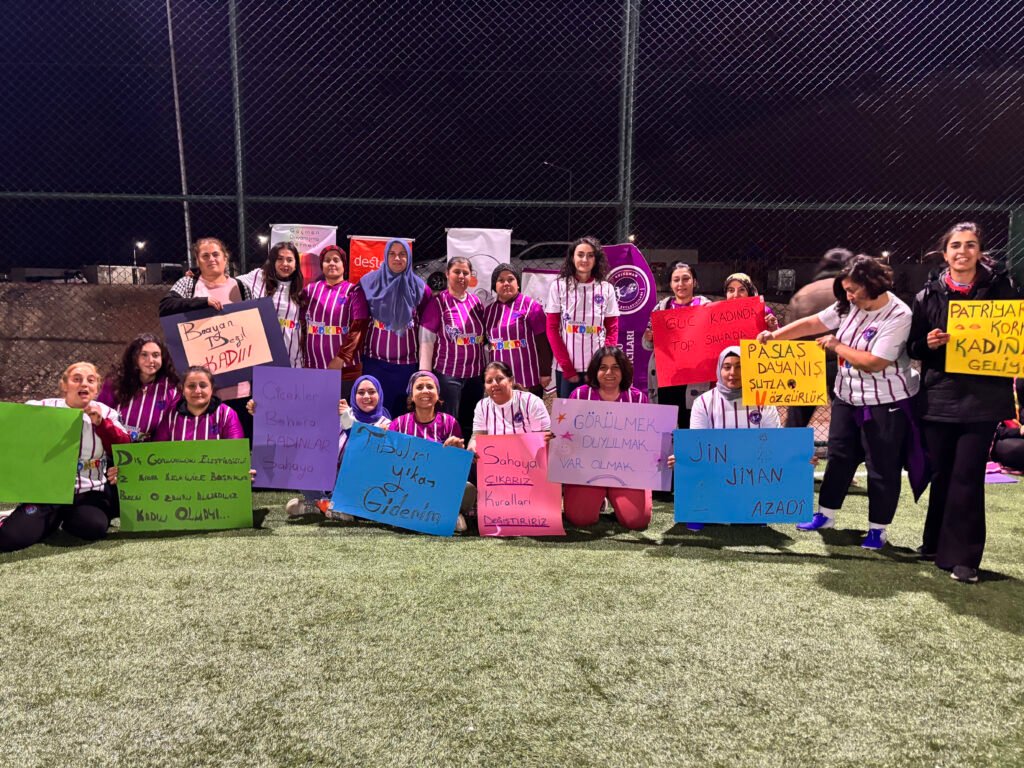
Altun Boğatekin, an aid worker, is now a Sky Shooters referee. She says she was reluctant about football at first.
“I didn’t warm to the idea because the space around football often involves violence, swearing and insults involving the female body,” she says. She volunteered to be a referee, but after memorising a 180-page rule book, started to wonder if women could play a less regimented form of the game.
“I thought, ‘these rules are not for us,’” Boğatekin says. “Women suffer from oppression whether they are laughing, running or getting dressed. We had just suffered an earthquake and I wanted women to be unreserved at least as they played football. It’s not important at all whether you score.”
Today, life in Adıyaman – on the surface, at least – is slowly getting back to normal. Support from aid agencies is dwindling and many are expected to withdraw completely from the region in 2026, as material conditions are improving.
Credit: İrem Sarıkulak
For many locals, that makes initiatives like the Sky Shooters football team all the more important.
“Our women haven’t yet regained their former strength and energy,” says Birsen Günay, chair of Adıyaman’s Young Entrepreneurial Women and Employment Association. “So the networks, gatherings and events are motivational. They boost self-confidence.”
İrem Sarıkulak