

Turkey’s government has made no secret of its desire to boost birth rates and strengthen the traditional nuclear family. But its ambitions clash with the relatively meagre maternity leave working mothers receive – just 16 weeks paid leave as standard – and a lack of publicly-funded daycare centres.
Its proposed solution, unveiled last year as part of a wider initiative that President Recep Tayyip Erdoğan dubbed the Year of the Family, is the “neighbourhood mum” project. This pilot for community-based childcare allows women aged under 65 to offer childminding services at home, charging lower fees than either private daycare or nannies.
Some experts cautiously welcome the project, though warn it doesn’t go far enough. Huriye Toker, director of Yaşar University’s Women and Family Studies Centre, believes it could contribute to lifting barriers to women’s participation in the workforce – but thinks other solutions are needed in the long run.

Credit: Her own archive
“It’s designed around the woman offering childcare at home, instead of solving the issue of women’s employment structurally. These projects need to work in tandem with other initiatives in order to solve childcare with public resources in the long run,” says Toker, suggesting flexible working hours and a crackdown on uninsured work would help boost women’s employment prospects.
Toker also doubts whether long-term care at a childminder’s is as beneficial to children as time at a daycare centre.
Mixed feelings
Two working mothers told Inside Turkey they had mixed feelings about childminders. “It’s not just about a place to leave our kids while we work. We don’t want them to just receive childcare, we want them to grow up in a good environment,” says shop manager Tuğçe Aras Kamilçelebi, 37, whose mother looked after her son until he was three.
“As a working mum who’s tried both, I would still prefer daycare instead of a nanny,” says HR manager Irmak Yıldırım Yavuz, 41, who has two children now of school age. “A well-known daycare centre that gets inspected and is professional is more beneficial for a child’s growth than nannies or mothers are. A child’s mannerisms, the questions they ask – their interests are shaped and enriched with the education they receive at daycare.”

Credit: Her own archive
Yavuz adds that she had a bad experience with a neighbour she hired as a nanny. “She didn’t have professional training. Since we didn’t have a clear, predetermined framework, she suddenly said ‘I’m bored of taking care of a kid at home’ and got another job without any prior notice.”
By contrast, she says, daycare made a huge difference to her son Çınar. “At four years old, he could tell you the entire biography of Atatürk; could tell you about Turkey’s geographical landscape. I could see the clear development in my child and it made me happy.”
Şenay Erdem, a therapist and expert in child psychology, thinks there’s value in the neighbourhood mum project, particularly in disadvantaged areas.
“The project could be helpful in supporting mothers from lower socioeconomic and education backgrounds. It would be mutually beneficial for women to learn from each others’ knowledge and experience,” she says.
However, Erdem thinks the required qualifications for childminders – which include primary-level and 180 hours’ training are too low and should be strengthened, if the project is to provide real benefits to children.
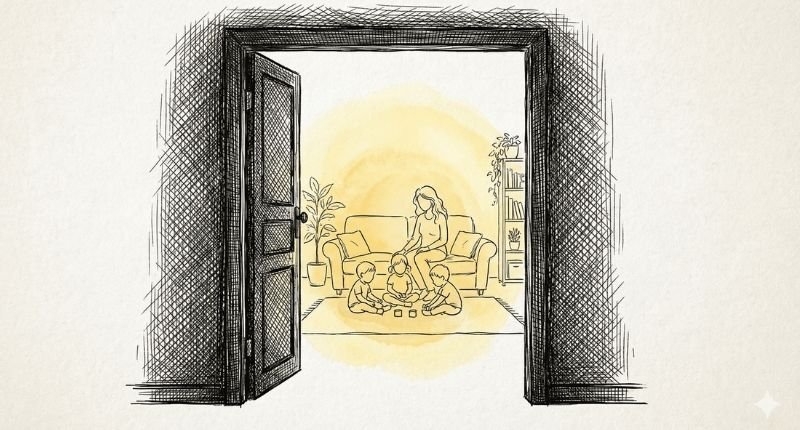
Credit: Generated by using Gemini AI
Another issue Erdem raises is the project’s name. “Mums, neighbourhood mums, grandmas… But where are the dads? This system could render fathers even more passive in childcare roles,” she says.
The Family and Social Services Ministry says in a pamphlet about the project that the name was decided based on workshops with child development academics, as the occupation of childcare does not have an all-encompassing name in Turkish.
Support and attention
For Yavuz, safety is a concern when it comes to childminders. “Maybe I’m biased because of my negative experiences with nannies, but I don’t think it’s safe for my child to be cared for in an unfamiliar home with three to five other kids. I don’t think my child would receive the necessary attention or support in this model,” she says.
Kamilçelebi, by contrast, says the neighbourhood mum project reminds her of the warmth and community of her own childhood. But she wonders how childminders would maintain the boundaries parents set for their children at home.

Credit: Her own archive
“Hygiene, healthy nutrition, dialogue within the household and behaviors that a child would model around the neighbourhood mum are very important. These should be closely monitored and inspected, since the way household members communicate with the child directly affects their development,” she says.
Erdem thinks that childminders should receive additional training in pedagogy and child development. “They should be able to relate to the child in a patient, affectionate and calm way, to see them as individuals and avoid methods like yelling, threatening or shaming,” she says. Elementary first aid knowledge, and an understanding of when to refer children to development professionals would also help, Erdem adds.
“It is crucial who you put in charge of your children during a time that impacts 90% of children’s cognitive, social, psychological and even physical development,” she says.
Missed connections
The two mothers who spoke to Inside Turkey raised other forms of support they thought would benefit working mothers. Yavuz, for instance, would like to see mothers offered longer statutory maternity leave.
“I had to work when my eldest was still a baby. Now we see child therapists together because I couldn’t be there for him,” she says. “The government fails to support both children and working mums in an area that affects mothers’ bonds with their kids. We don’t receive support financially and have to feel guilty for leaving our babies at home on top of that. This needs to change.”
Having to return to work while still breastfeeding was physically as well as emotionally damaging, she adds.
“You cut a three-month-old baby off from breast milk and you go to work. You can’t pump properly at work and when you can’t pump, your milk solidifies and causes pain. Eventually, you have to cut your baby off from breastfeeding too early.”

Credit: Generated by using Gemini AI
Kamilçelebi notes the lack of daycare centres. “As working mothers, our first problem is that we work long hours and unfortunately can’t benefit from public daycare. Even if we can access them, we have concerns about security, opening hours and the quality of education.
“Our children are the most precious things to us, it’s not just about finding a place to leave them while we work. We don’t want them to just receive childcare, we want them to grow up in a good environment. I would have loved to have public childcare alternatives to private daycare centers.
“This isn’t a luxury, it’s an essential need.”
Emel Altay