
In the back yard of a small stone house on the edge of ancient Pergamon’s Acropolis on modern-day Turkey’s Aegean coast, a woman is cleaning a stretched goat skin with a crescent-shaped knife. This is the centuries-old method of producing parchment. While holy texts and philosophical discourse may no longer be written on the material, this particular piece is an important link to humanity’s cultural heritage, since it’s being produced in the place that gave parchment its name.
The kingdom of Pergamon, which dates back to the 3rd century BC, is famed in legend as the first civilisation to make widespread use of parchment – dried animal skin – for writing. In later centuries, Carta Pergamena, or “paper of Pergamon,” spread throughout Europe thanks to its increased functionality and durability in comparison to papyrus. Religious texts were rewritten on parchment thanks to its durability, with the first hardcover book produced out of the material. Parchment remained the dominant writing material until the invention of the printing press and the advent of paper.
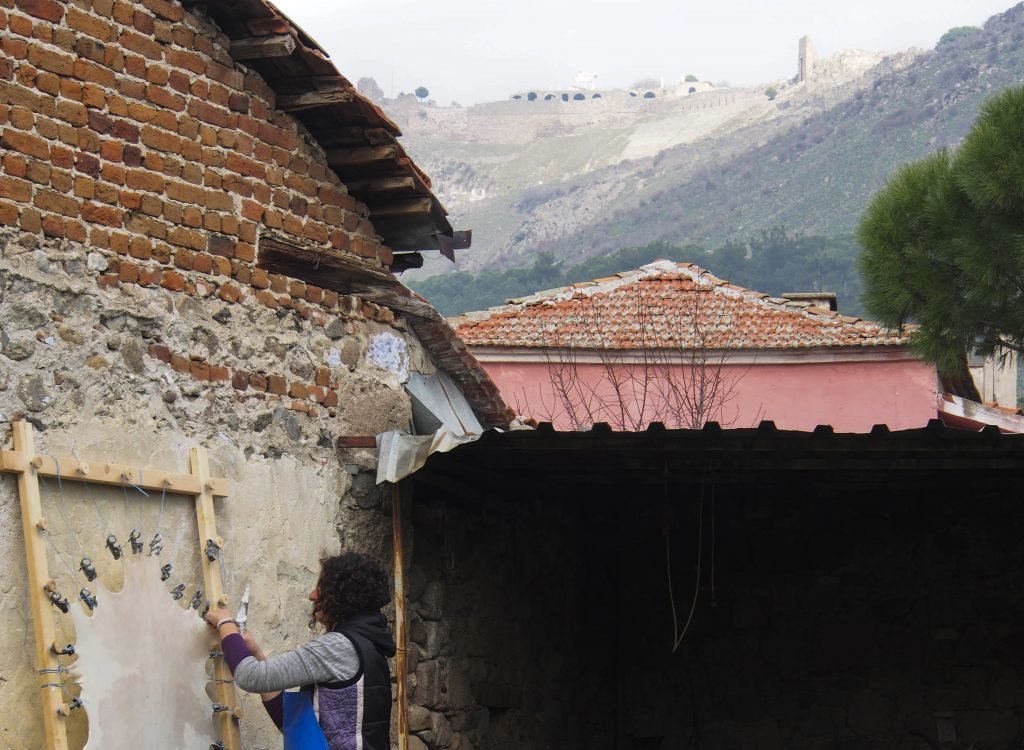
on the edge of ancient Pergamon’s Acropolis. (Credit: Bülent Türkmen. OLYMPUS DIGITAL CAMERA)
Nesrin Ermiş Pavlis, a 37 year-old artist making parchment in Pergamon today, learned the skill from Ismail Araç, the last remaining master craftsman in Anatolia. Pavlis, who is from Bergama – the Turkish city that sits next to ancient Pergamon – became interested in parchment after carrying out research for a bid to have her city added to UNESCO’s world heritage list. Now, Pavlis not only produces parchment in her small workshop beside the ruins of her grandparents’ stone house, but also teaches the skill to younger generations.
“I believe in the importance of preserving this cultural heritage and in reviving parchment in the land of its birth,” Pavlis told Inside Turkey. “It’s valuable not just for Bergama, but for all of humanity.” Pavlis’s training began after she and a friend, Demet Sağlam Tokbay, discovered that Araç was the last parchment-maker in Anatolia who used traditional methods.
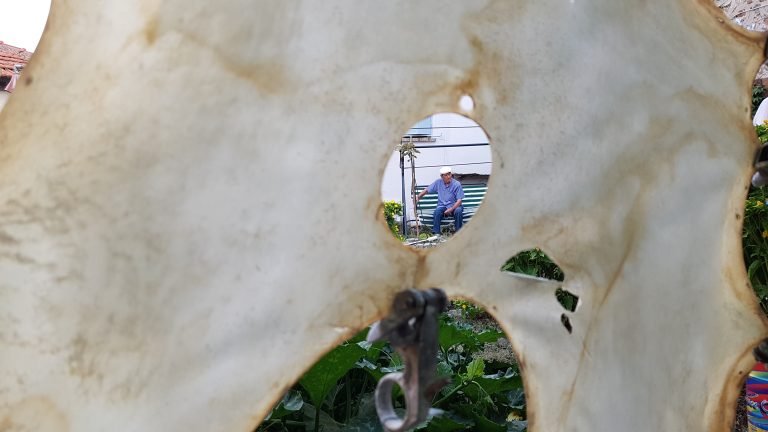
“Two girls came, they said they want to be my apprentices,” said Araç, who was born in 1933 and has been tanning leather in Bergama for almost 70 years. At first, he did not accept their request, as he believed that it was “a man’s job, and very dirty work”. All of his male apprentices would quit after a few weeks when they found out how difficult the job was. But the two women persisted.
“They kept coming and going for two years, they never left me. In the end, I accepted,” said Araç, adding, “I’m glad I did. The men couldn’t do it, but these two could.”
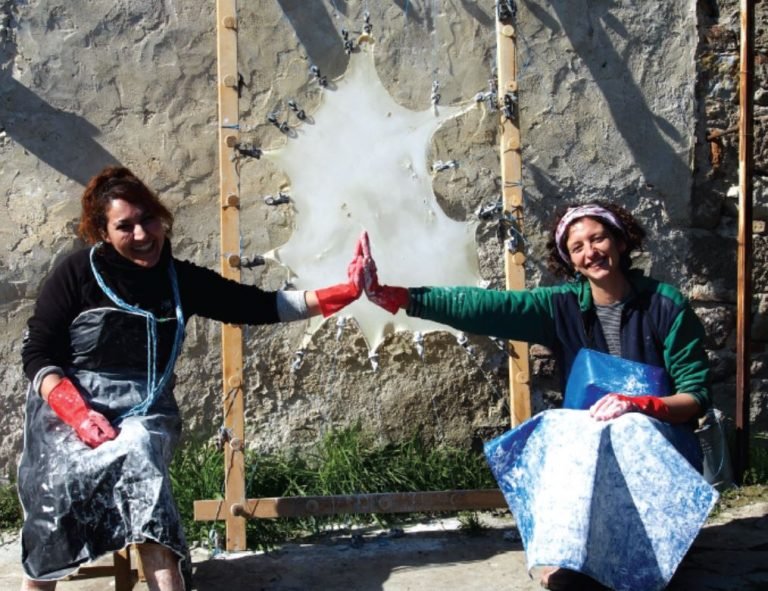
Pavlis and Tokbay began their apprenticeship in 2014. Araç put the dirtiest skins in front of them as tests and had them do the heaviest labour. Pavlis told Inside Turkey that she remembered their first day like it was yesterday.
“Demet and I had just put on our gloves, we were ready and waiting. Our apprenticeship started by being scolded by our master who said: ‘What is this, do you think you do it with gloves? Take them off!’”
Araç said they are the only parchment-makers left in Turkey who still use knives for cutting and cleaning the skins.

“It is a very difficult job, it requires attention – everyone else does it with a machine now,” he said. “We use a razor-sharp blade, and if you slip a little or your hand trembles, a huge hole is ruptured in the skin. After that, they’re wasted.”
After testing his apprentices, Araç was convinced that both of the women had learned the craft properly. In a traditional ceremony held with other craftsmen from Bergama, he conferred the titles of mastership to Tokbay in 2017 and to Pavlis in 2020. Since Tokbay moved to the UK, Pavlis is the sole remaining traditional parchment-maker in Bergama.
“It’s a very demanding job,” she said. “We remove the hair, meat and fat remnants from the skin with special knives, without using any chemicals other than lime water solution, and then we scrape it and make it as thin as possible.”
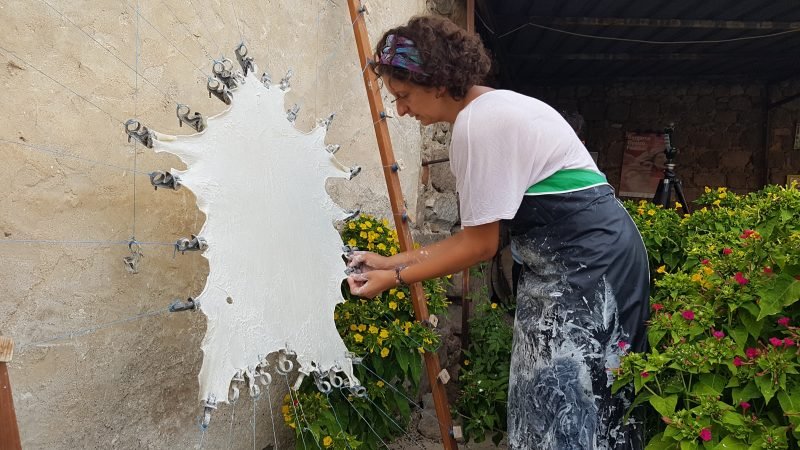
No animals are slaughtered specifically for the production of parchment. Pavlis uses the skins of animals that are slaughtered for meat.
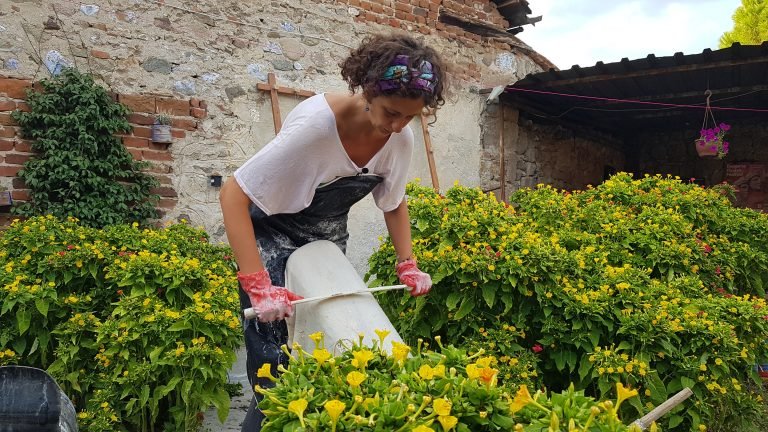
“This is a profession that is not seen as suitable for women. Even my family thought it was very strange at first. ‘Why are you doing this dirty, difficult work?’ they protested. But now they are aware that I preserve this historical value and they are proud,” she said.
The use of parchment has been declining in recent years, mainly because of cost, even though it is still used for some official and ceremonial documents. Some university diplomas in other countries, for instance, are inscribed on parchment. But the use of parchment is even less common in Turkey, Pavlis said.
The process of making parchment. (Credit: Onur Yıldırım)
“I’m really concerned about the indifference to the disappearance of this historical heritage in the lands where parchment was born,” she added.
Parchment production in Turkey is not included on the ministry of culture’s list of intangible cultural heritage. It can’t be taught in schools and apprenticeship training centres either, as it is not legally recognised as a craft.
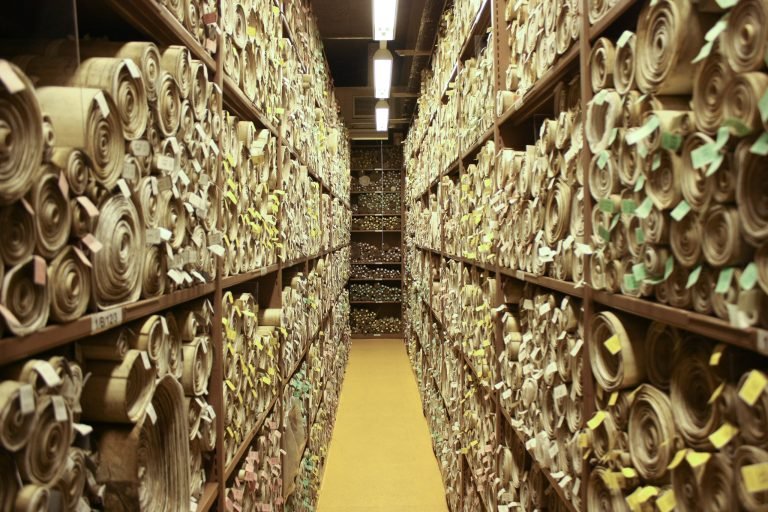
“The production of parchment has no financial value and this is why it is simply left to perish,” Pavlis said. “We have to create a new space for parchment to revive it. Maybe we have to make it a part of art and design. That’s what I’m aiming for.”
Pavlis tries to encourage artists, conservators and other specialists to use parchment as an alternative material. Her main focus is parchment production, to continue the practice herself, and teach skills in the workshops she organises. At the moment, it’s something of a lone effort. Pavlis told Inside Turkey that she has recently applied to the ministry of culture and tourism in order to be recognised as a bearer of intangible cultural heritage.
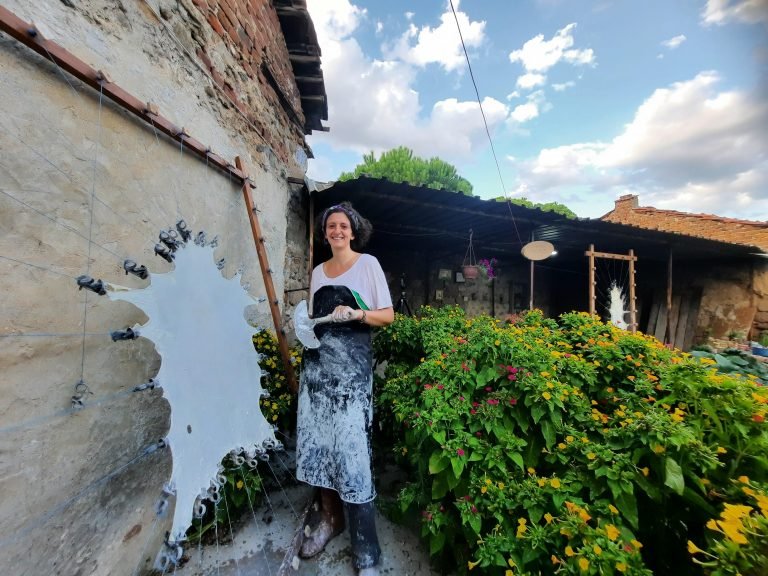
Araç told Inside Turkey that he followed the efforts of his former apprentices proudly.
“In the past, everyone despised our profession. It is a dirty job with little money and they called us ‘black tanner’ because our hands and face were all black from working,” he said.
During his years producing parchment he had no idea of its cultural value.
“Now,” he said, “professors come from all over the world to see me, and journalists do interviews and take photos. Thanks to these girls, my profession has begun to be appreciated.”
Baha Okar