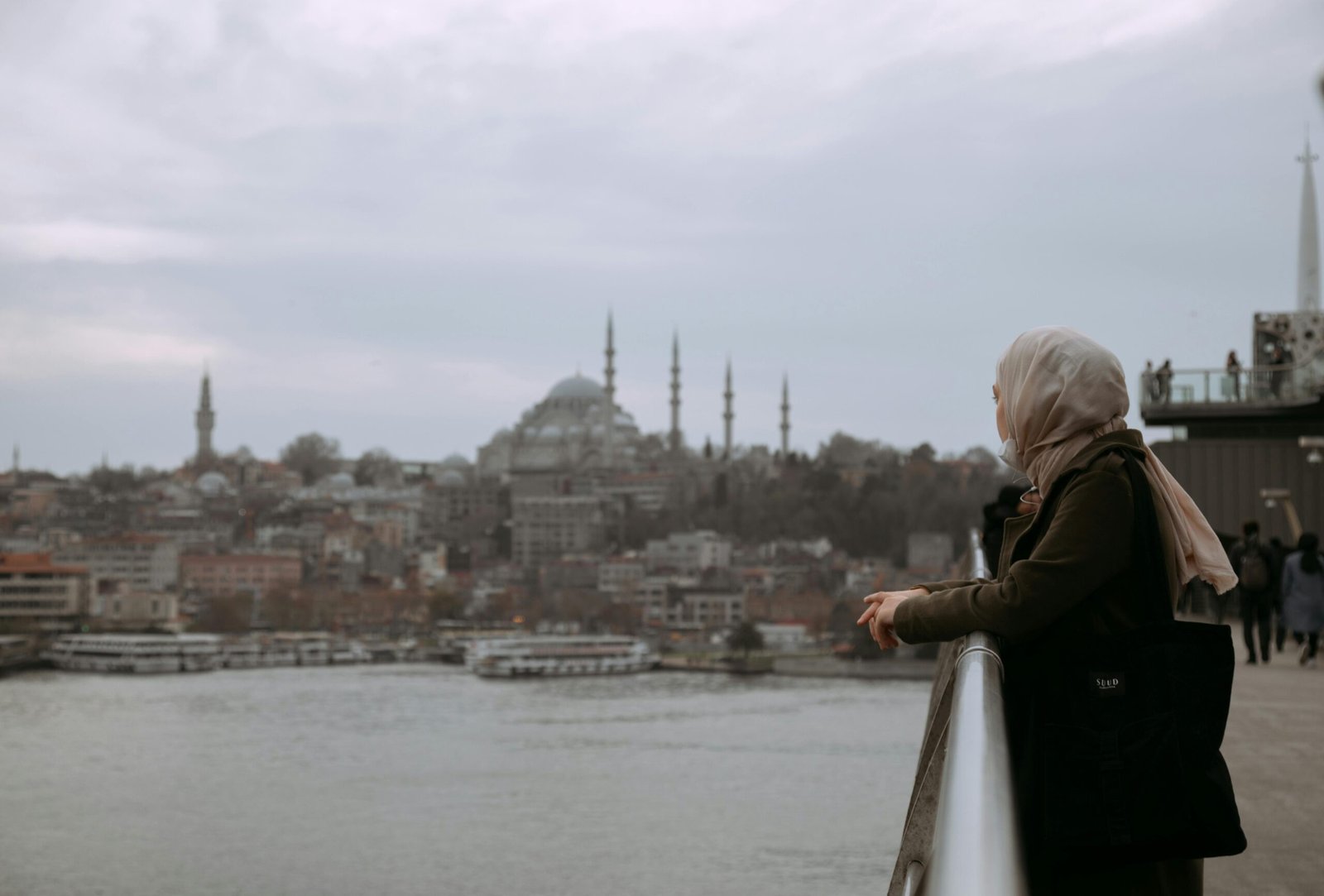

Recent statements by Turkey’s state-backed Islamic authority, the Presidency of Religious Affairs (Diyanet), have inflamed long-running debates about women’s rights and the role of religion in public life.
The Diyanet’s Friday sermons, delivered simultaneously in nearly 90,000 mosques each week, function as a religious guide for millions in Turkey. Yet recent sermons have carried messages that appear to align with the government’s stance on a range of social issues, from women’s clothing and personal freedom, to inheritance rights and LGBT+ identities.
Significantly, the increasingly strict tone has drawn criticism from some prominent religious commentators, as well as secularists. In recent months, the feminist author Berrin Sönmez and the theologian Emine Yücel – both of whom previously wore the hijab – have said they will remove their headscarves in protest at the Diyanet’s rhetoric.

Credit: Her own archive
Sönmez was prompted to do so by a sermon in August, in which the Diyanet criticised “inappropriate clothing in public and especially institutional spaces”. She told Inside Turkey that she saw this development as part of a move towards “theopolitical government” under president Recep Tayyip Erdoğan’s leadership – and a mirror image of the ban on the hijab in public institutions that existed between 1982 and 2013.
For Sönmez, coercion or peer pressure in either direction is the problem, as it leads to discrimination. In her recent reporting, she says, she has collected examples of how a renewed pressure to wear the hijab is affecting people at work. “A deputy director of a public institution was told by her superior that she would have been made director if she had worn the hijab,” says Sönmez. “Another woman who worked at a private bank was let go when it was revealed that she didn’t wear a hijab outside of work.”
Freedom to choose
The headscarf issue question goes to the heart of Turkey’s history as a secular democracy – and the efforts of its current governing party, the Islamist Justice and Development Party (AKP), to give it a more religious flavour.
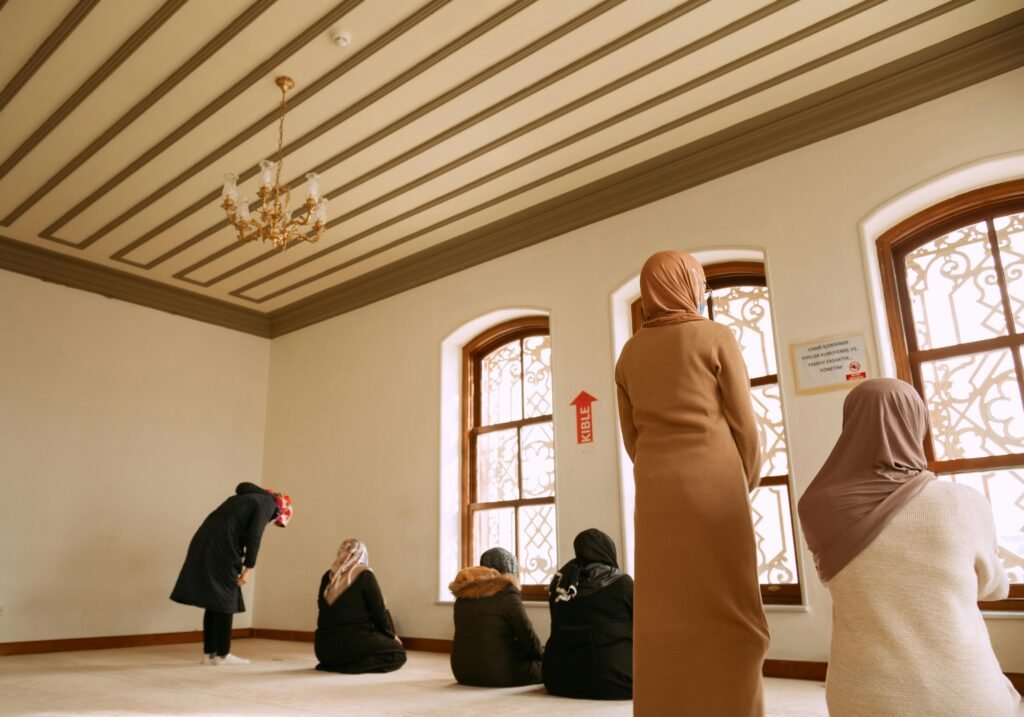
Hijabs were banned from public buildings after a military coup in 1982. In the 1990s, it became a political symbol, through large-scale protests, after women who wore the headscarf were banned from universities and government jobs. Erdoğan appealed to the memory of these protests – and the police violence they prompted – as he rose through the political ranks, framing their struggle as a fight for freedom.
Credit: Pexels
In 2013, with Erdoğan as prime minister, the AKP government repealed the ban. But as Erdoğan has encouraged a wider return to traditional Islamic values, for critics like Sönmez – who had previously said she would stop wearing a hijab if it was ever mandated by the state – the pendulum has swung too far in the opposite direction.
Since the mid-2010’s, the Diyanet’s institutional power and financial reach have been expanded by the AKP government. Its budget for 2026 is 174.4 billion Turkish lira (£4.4 billion), larger than that of eight government ministries. The Diyanet’s role has been extended to providing religious services in schools, student halls, hospitals, prisons and other public institutions – an expansion that critics say contravenes Turkey’s constitutional principle of secularism.
Yücel, a human rights advocate as well as a theologian, tells Inside Turkey that she wore a hijab for 51 years before removing it recently. She says her decision to take it off was not just a personal choice, but motivated by responsibility towards future generations.

Credit: Her own archive
“I hope younger generations don’t face mandates from those who say ‘hijab is a farz [a religious duty],’” says Yücel, who now regrets the outcome of the hijab protests of the 1990s.
“The hijab issue was an attempt to prepare for the rise of political Islam,” she says. “As hijab women, we unknowingly contributed to that, which made me sad.”
Yücel dislikes the use of religious custom as a political tool, and argues that an overemphasis on the hijab crowds out ethical principles such as justice or merit – ideas she says are also at the heart of Islam. The Diyanet, in her view, is choosing to interpret scripture from a narrow conservative viewpoint, which in turn holds back equality.
“There is a very important verse in the Quran that says ‘One who hurts a life unjustly has hurt all humanity,’” she notes. “Diyanet has limited this verse to only mean humans. But ‘life’ includes animals and nature. A law was passed last year in Turkey, a country where Muslims are a majority, that allows the culling of stray animals. How does that fit?”
“Keeping women in line”
The Diyanet also drew criticism for another sermon in August that called on women to accept the Islamic custom that male heirs receive twice the share of inheritance as females. Turkish law allocates shares equally.
Hülya Gülbahar, a lawyer with the Women for Equality Platform (EŞİK) campaign group, tells Inside Turkey that in her view, the Diyanet is targeting women’s equality across the board. She says that a sermon delivered on 12 September, on “the preservation of the institution of the family” contradicts article 41 of Turkey’s constitution, which declares equality between spouses in a marriage. In recent years the government has proposed reforms to laws on divorce and abortion that women’s rights groups have claimed are an attempt to weaken gender equality.
According to Gülbahar, a common thread in the Diyanet’s recent rhetoric is that it seeks to task men with “keeping women in line”. The sermon on 12 September also made reference to Manifest, a girl band recently prosecuted for public indecency.
The risk of these moves, says Gülbahar, is that “women become the targets of violence and hatred when they demand equality and freedom”.
Ayşe Saktanber, a professor of women’s studies at the Middle East Technical University in Ankara, believes the Diyanet’s rhetoric is likely to entrench the existing patriarchal structure of Turkish society and make it harder to challenge.

Credit: Her own archive
“The [administration’s] goal is to shrink space for social movements. The current attitude towards women is part of that strategy,” she says.
Saktanber adds that social media has become a key battleground, with stories posted by women who take off their hijabs having become common since 2018, during an earlier period of debate over religion in public life.
“Abandoning the hijab requires intellectual effort, because it’s not just about personal choice but also about challenging the way women are represented,” she says.
There are also conservative women who disagree with the Diyanet’s rhetoric, but consider abandoning the hijab “extreme”. For Sönmez, this divide represents a conflict within Turkey’s religious circles, adding that conservative women should realize that pressure on secular parts of society shrinks their space as well.
“Nobody should remain silent in the face of pressure on freedom of expression and faith,” she says. “Because every intervention they ignore today will later be turned upon them.”