
Nearly three decades after global pledges for gender equality in the media, women remain severely underrepresented in news content. According to the latest Global Media Monitoring Project (GMMP) – the world’s longest-running study on gender in the news – in 2025, women accounted for only 26% of all news subjects and sources worldwide.
Although this is a gradual improvement from 2005, when the figure stood at 14%, it still reflects persistent structural imbalance.
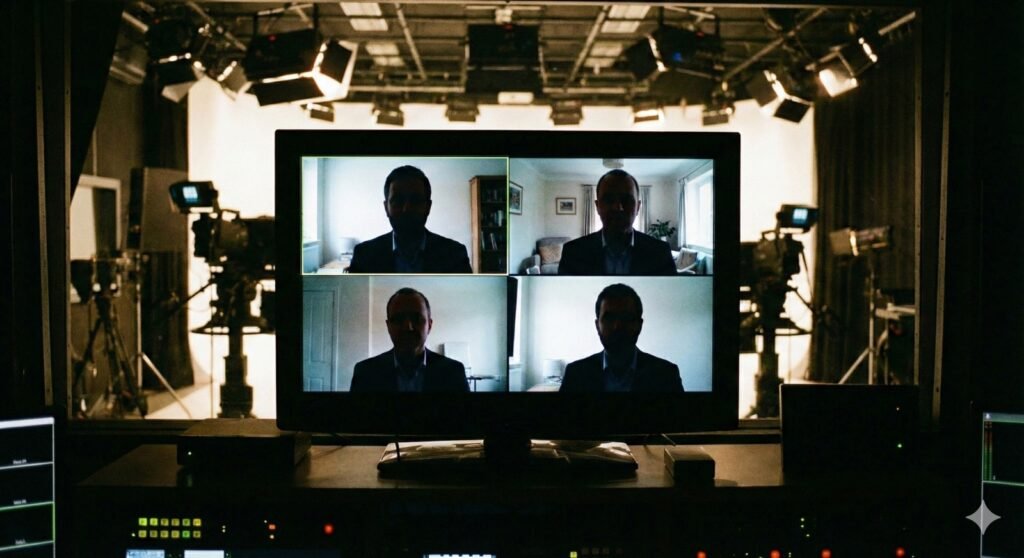
While GMMP’s 2025 findings also reveal that women constitute only about a quarter of expert voices globally, in Turkey, the gap is even more visible on television news, where all-male panels continue to dominate discussions on everything from politics to public health. This approach often sparks public frustration, with viewers calling it out on social media for its lack of representation.
Credit: AI generated via Gemini Nano Banana
To address this problem, journalists Semin Gümüşel Güner and Ayşe Karabat launched the Sensiz Olmaz, Sessiz Olmaz (“Not Without You, Not Without a Voice”) initiative in 2021 to promote gender equality in media sourcing.
Their goal was simple: increase the visibility of women experts and make it easier for newsrooms to find them.
Realities of the newsroom

Credit: Her own archive
Gümüşel tells Inside Turkey that their initial idea was to create a searchable directory of women experts that media organisations could call on for comment. “Take earthquake science,” says Gümüşel “Of course, there are male experts like Naci Görür. But is there a woman expert in this field? The database allows you to find that out quickly.”
For Gümüşel, understanding how media organisations work – and presenting her initiative as a way to make journalists’ jobs easier – is key. “In my 30 years of experience in journalism, at this point, I really don’t think that newsrooms are willingly trying to only talk to male experts,” Gümüşel says.
She adds that many women experts have doubts about talking to the media. That might be due to previous negative experiences, caring responsibilities and other commitments – meaning they don’t have time to spend an evening in a TV studio – or traditional gender stereotypes.
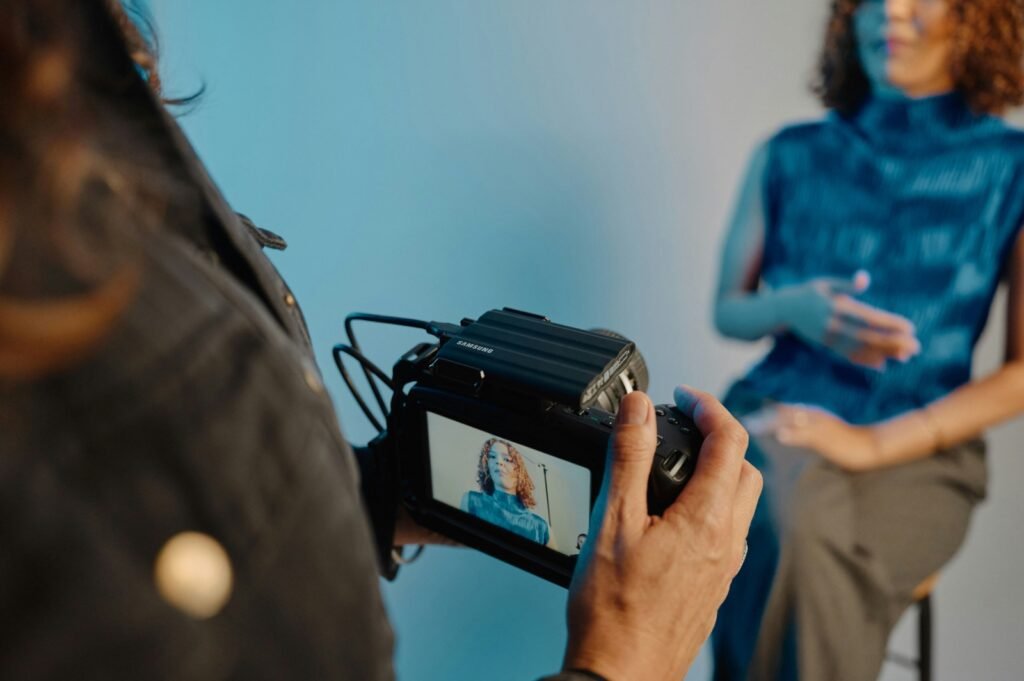
The initiative aims to change that by providing media training to women experts. Gümüşel, who says that women interviewees tend to be questioned and criticised more than their male counterparts, explains that by training academics and professionals to speak to the media, they aim to help them feel safer in front of an audience. “We always underline that this is not for their personal PR; there is a need out there. Young girls especially need to see more women role models”, she says.
Credit: Unsplash
Research on gender dynamics in Turkey, by the management consultant Evrim Kuran , has shown that women are significantly more likely to experience imposter syndrome, often attributing their success to luck rather than competence. “Men are taught like they are born with the ability to share their expertise; we aim for more women to share their voices and expertise for this disparity to change,” Gümüşel says.
Tracking progress
While projects like Sensiz Olmaz, Sessiz Olmaz focus on increasing women’s representation among expert interviewees, is there more that can be done to achieve gender parity in the media? The BBC’s 50:50 project is a global initiative launched in 2017 to improve gender balance in media content. It encourages newsrooms to track and increase the number of women who appear or are credited in programs and articles. The project has since expanded across the BBC and beyond, with hundreds of partner organizations worldwide adopting its model.
The GMMP 2025 report shows that women are still underrepresented in all forms of news, but digital outlets do slightly better than traditional ones. Online newsrooms often have more women journalists, which helps increase the number of women featured, but only by a small margin.
Credit: AI generated via Gemini/Nano Banana
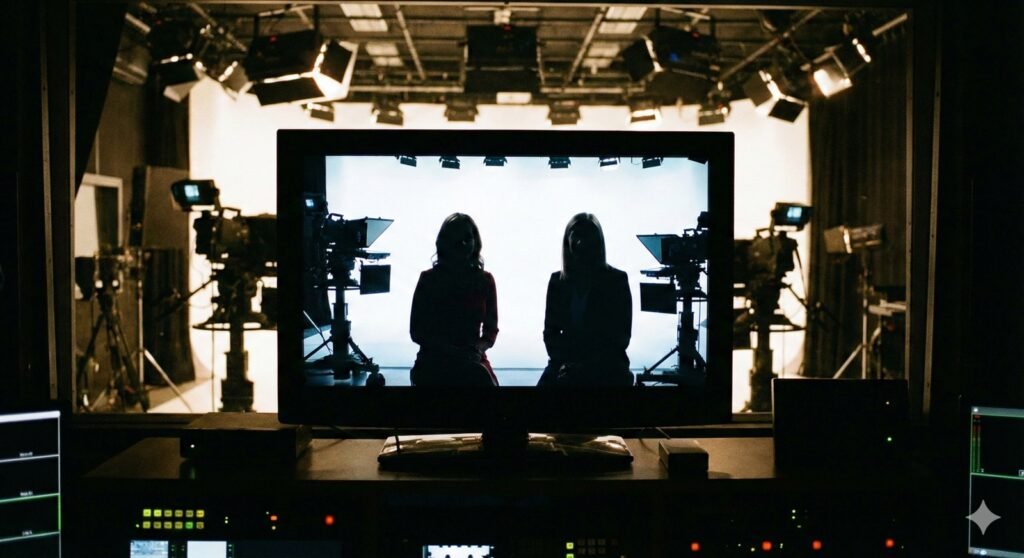
Berrak Güngör, a TV journalist with a digital background, underlines that programmes produced by men have more of a tendency to feature all-male panels. “Men in particular don’t really consider gender balance,” she says. Thinking of her own experiences, Güngör recalls a familiar response whenever she raised a lack of female experts: “We can’t find anyone available”.
That’s precisely what initiatives like Gümüşel’s are aiming to change.
Elif Melis Karaca