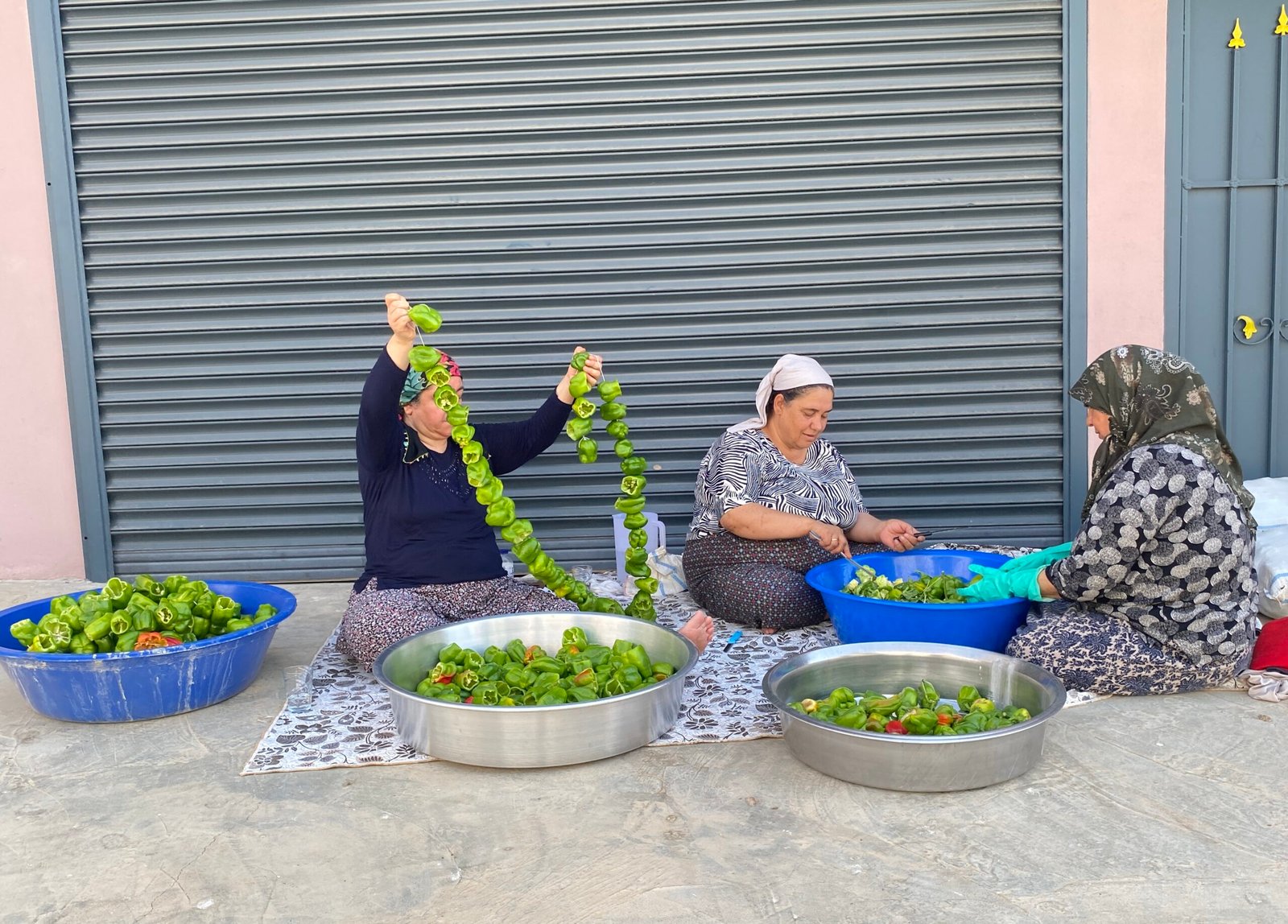
“The only thing we care about is finding cleaner, more affordable food for our families,” says Yaşar Kaygısız, a retired teacher in Istanbul. Her words sum up what autumn means to many people in Turkey: the season of food prep.
As food prices soar each winter, autumn becomes the busiest time of the year in Turkish kitchens. Many households turn to age-old methods for preserving food: making tomato paste, pickles, dried vegetables and jams. People stock up before prices rise again.
According to the Turkish Statistical Institute (TÜİK), food inflation has long outpaced overall inflation. In some cases, fruit and vegetable prices have increased by as much as 400% year-on-year. For low and middle-income families, the most practical response has been to buy and preserve food early, before prices climb further.
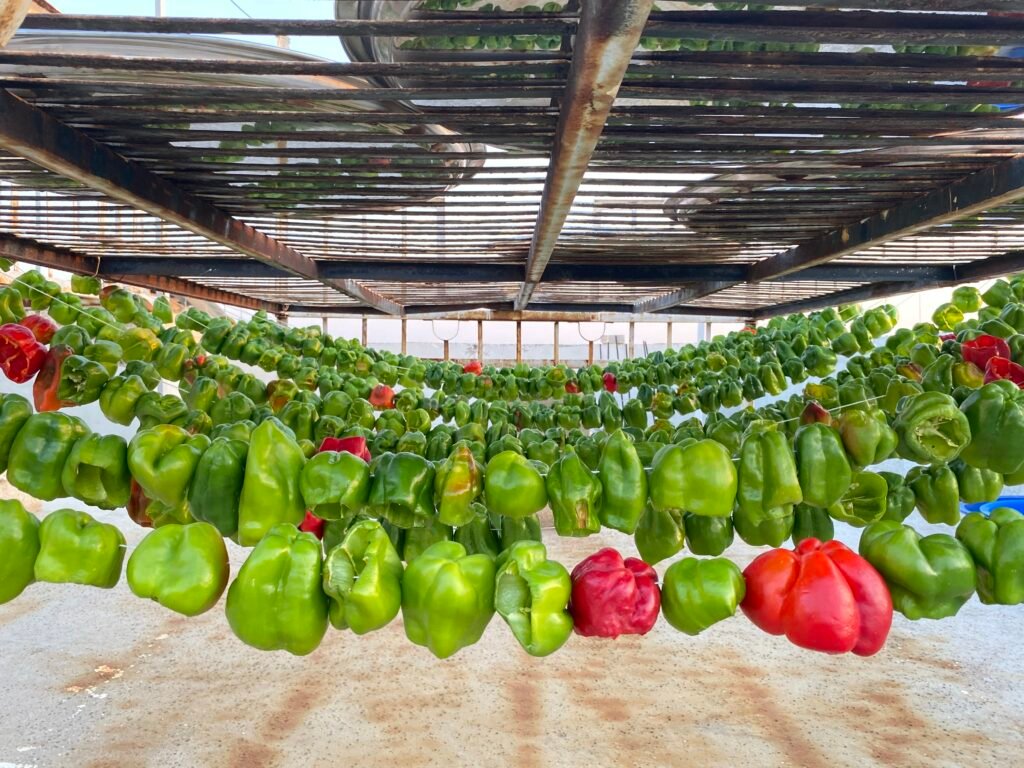
The form of these preparations varies across regions. In the humid Black Sea area in the northern part of the country, drying vegetables is less common. In the sunnier east and southeast, aubergines, peppers and tomatoes are strung up and dried on rooftops and balconies. In central Anatolia and the Aegean, residents prepare tarhana (a fermented soup base), pickles and jams, staples of any winter pantry, and making tomato paste and freezing produce is widespread.
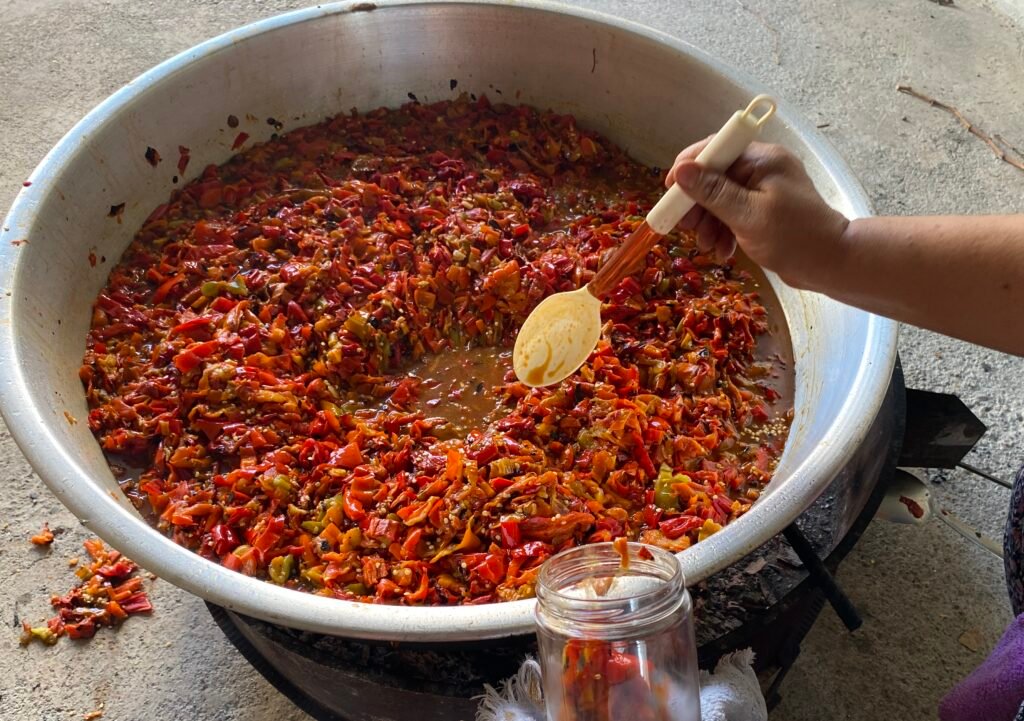
Credit: Rabia Çetin
In villages, these rituals often take the form of communal gatherings, while in cities they are smaller scale. Yet they are not merely acts of thrift; they are a continuation of cultural tradition.
For Kaygısız, 54, these rituals are both a family tradition and a survival strategy. She learned them from her grandmother, who used to say, “Every leaf you save in summer keeps you healthy in winter.”
“Back then, it was about tradition,” Kaygısız says. “Now it’s about necessity.” She points out that tomatoes sell for 50 lira in summer but can reach 150 lira a kilo in winter. “Drying peppers and aubergines, curing olives and making tomato paste are not just about food,” she says. “It’s about being able to turn the heating on without panic.”
Coping strategies
Data from the Economic Policy Research Foundation of Turkey (TEPAV) confirms this trend. Even though the pace of increase slowed during 2024’s summer months, annual food inflation still stood at 49 percent. Prices didn’t fall; they just rose at a slower rate than before.
In Şanlıurfa, south-eastern Turkey, lawyer Fazilet Taştan, a mother of two, continues the same practice despite being solidly middle class. “Winter preparations are both a cultural thing and an economic measure,” she says. “Vegetables are cheaper and tastier in summer. In winter, they’re expensive and often full of hormones. By preparing our own food, we eat better and spend less.”
Credit: Rabia Çetin
Every September, Taştan and her family make an outing of it: visiting the market together, buying in bulk, and filling jars. For her, it’s as much about family bonding as saving money.
In the surrounding villages, the process is even more collective. Melek Çetin, 52, lives in a village outside Şanlıurfa with her retired husband. All five of their children have moved away for work or school, so she now prepares for several households at once.
Gesturing to rows of jars in her kitchen, she says, “These are for four homes besides ours. Vegetables are too expensive in the city. What we send helps our kids save money for rent or heating instead.”
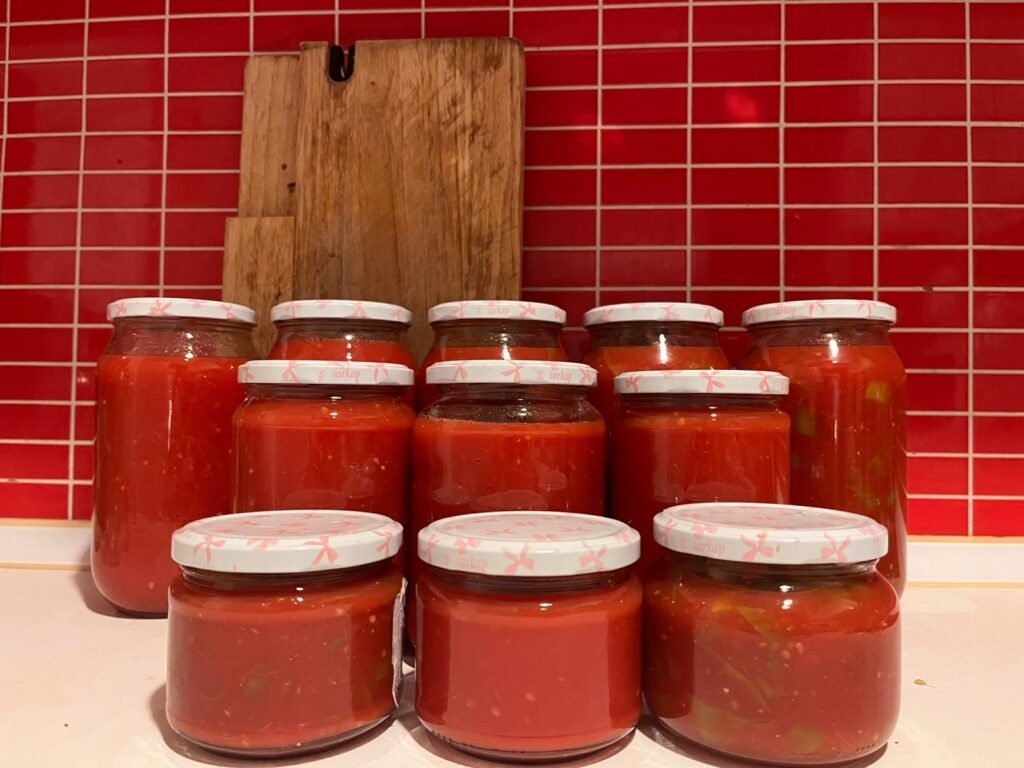
Credit: Rabia Çetin
She explains that her recipes have changed along with the economy. “At first, I only made tomato paste, tarhana, and dried peppers. But as prices rose, I started preserving more – beans, aubergines, anything that could stretch the budget.”
TÜİK’s Agricultural Input Price Index supports her observation: rising fertiliser, fuel, irrigation and transport costs all push up consumer prices during the winter.
“Fifty or sixty kilos of tomatoes is too much for one person,” Çetin adds. “That’s why the women in the village all work together. We chat, we pray for health while the sauce cooks. It’s work, but it’s also togetherness.”
For Dilek Çoban, 45, from Gaziantep in southern Turkey, these rituals are less about heritage than survival. She lives with her son, who works at a factory, and relies on a small widow’s pension.
“I used to prepare only tomato paste and dried vegetables,” she says. “But in the last five or six years, prices have gone so high that I’ve had to expand what I make. In winter, going to the market every week is impossible.”
She now processes whatever is cheapest at harvest time. “If tomatoes are cheap, I buy a lot and make breakfast sauce, chopped tomatoes for cooking, and dry some of them. That way, at least a few weeks of winter meals are covered,” she says.
In 2023, Çoban couldn’t do much because of back problems, and she still remembers that winter vividly. “Fresh vegetables were so expensive we could only buy them two or three times a month. We lived mostly on lentils and beans.”
Market forces
On a Wednesday morning in Kağıthane, Istanbul, the local market is still quiet. Among the stalls stands Halil Aktaş, a vegetable seller for more than 20 years.
“People come later in the day when prices drop,” he says. “We lower them before closing, so we don’t have to haul everything back. That’s when the rush starts.”
He’s noticed the pattern repeat every August and September: “People buy more in summer to prepare for winter. Once the prices go up, they buy less: maybe one kilo instead of three.”
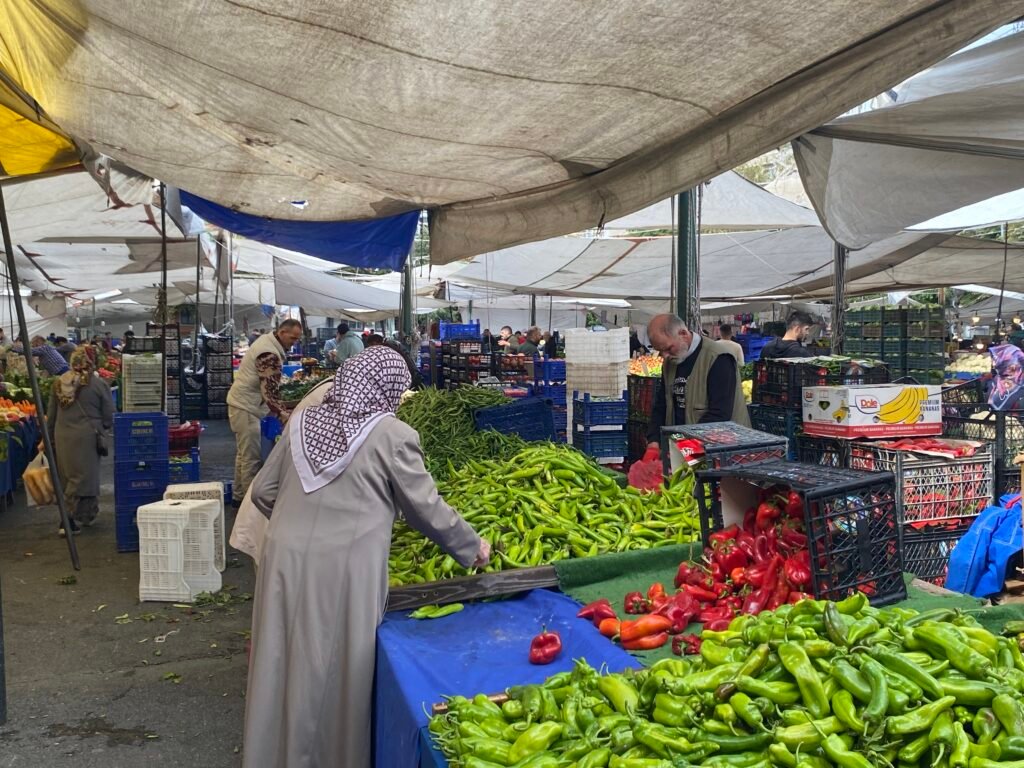
Credit: Rabia Çetin
Some can’t afford even that. “There are people who come at night to pick up what’s been thrown away,” Aktaş adds. “They take the good parts of bruised vegetables home, clean them, and make preserves. Everyone finds their own way to cope.”
According to the Istanbul Chamber of Commerce (İTO), the city’s food inflation reached 56% in autumn 2024, meaning nearly half of all food items cost twice as much as the previous year.
At the same market, 62-year-old Zeynep Ateş has just finished shopping for peppers. A homemaker married to a retired teacher, she lives with her husband and university-age daughter.
“We used to prepare less for the winter,” she says. “We did those preparations just to have something special on the table. Now it’s a necessity. The house is full of jars waiting for winter.”
With one pension and growing bills, Ateş has stopped making jams and focuses on vegetables instead. “We used to do it for variety,” she says. “Now it’s about survival.”
Rabia Çetin