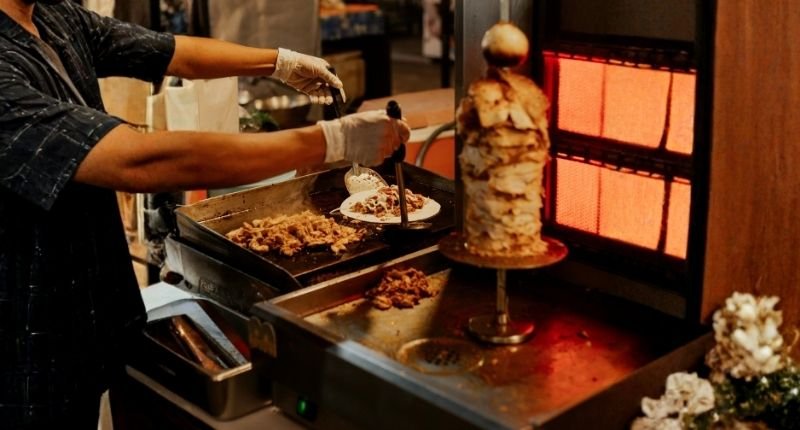

Shortly before her flight landed in Istanbul, Sibel’s condition took a turn for the worse. She’d been feeling sick since eating a chicken shawarma in Hatay earlier in the day, and had started vomiting. By the time the plane was nearing Istanbul, it had become so bad that the cabin crew alerted the pilot, who made an emergency landing.
“My hands started cramping up, my blood pressure dropped. My pulse was apparently weak, I thought I was going to die right then and there,” says Sibel, who was carried off the plane in a stretcher.
After receiving medical treatment, Sibel recovered quickly from the food poisoning. But the experience has changed her eating habits: the shawarma place in Hatay was one she’d been to before, but now she hesitates to eat out anywhere.
Elif had a similar experience in spring 2025, when she got ill shortly after having chicken wings near an expo center in Istanbul.
“I started breaking out in cold sweats and threw up a few minutes later,” she says.
In both cases, Sibel and Elif suspect the cause was the same: rising costs, which they think are pushing restaurant and take-away owners to cut corners.
“Prices just keep going up and they want to avoid hiking prices to keep their customers. But they have to compromise somewhere,” Sibel says.
Stretched resources
Experts say that food safety is an ongoing issue in Turkey. High food inflation in recent years has strained the supply chain, leading to poorer hygiene and exposing a lax inspection regime.
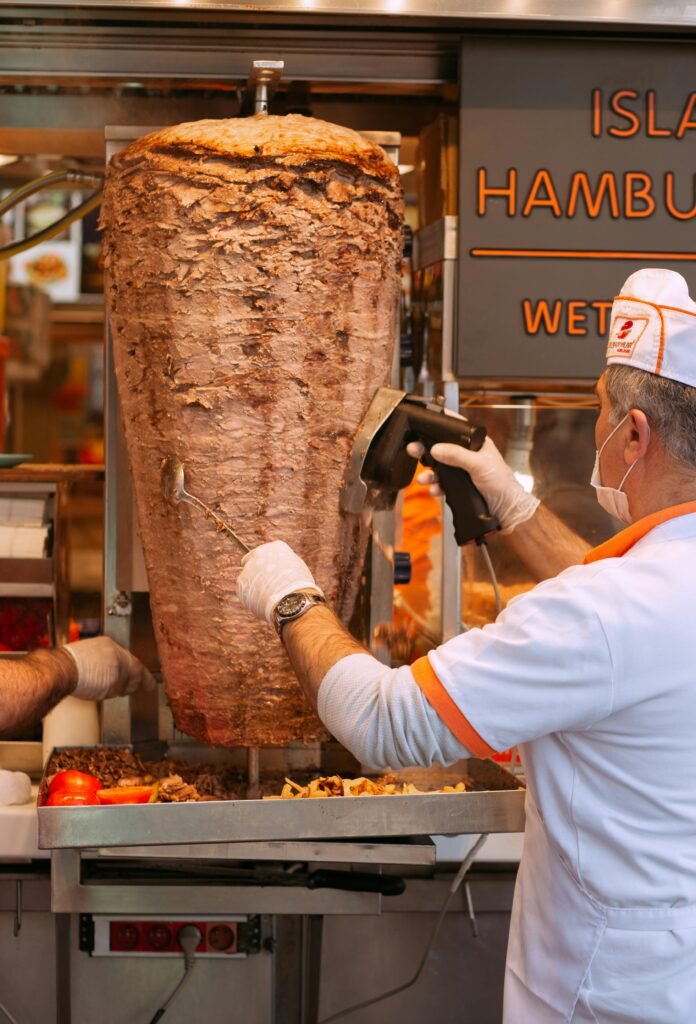
(Stock photo, from Pexels)
In February, a report by the OECD showed that 2025 headline inflation in Turkey stood at 30.9% and food inflation at 28.3%. Although this marks a drop from the previous year, Turkey’s inflation crisis remains one of the most severe among OECD countries.
Assessing the real state of food safety is made difficult by a lack of coordination among health authorities. Turkey lacks a national monitoring system for food-related illnesses. Individual cases in hospitals, family doctors’ records and mass poisoning reports are all recorded in different databases.
However, many doctors and health experts provide anecdotal evidence that problems are worsening. An emergency room doctor of over 15 years, who asked to remain anonymous, says they have observed an increase in food poisoning cases in line with rising prices.
“Patients come in with diarrhea and vomiting but we have to rely on their stories to determine whether it was caused by water or food,” says the doctor.
Coping strategies
Business owners acknowledge that rising prices are causing them problems – but not every establishment skimps on safety. The manager of a cafe in Istanbul’sBeşiktaş district says kitchen spending was hit by price hikes on frozen goods in 2026.
“We supply fried foods with cold chains from large supermarkets. We have to reflect higher costs on prices but every price hike hits a wall with customers,” says the manager, adding that tax rises on alcoholic beverages also increase pressure on the business.
Meanwhile, supply options are also shrinking.
“There are fewer alternatives than there used to be. Large companies have monopolised many brands. We have to stick with our supplier,” says the manager, adding that raising prices for customers is only of limited use.
“Customers still come in, but they spend less,” says the manager.
For this cafe, the pressures mean that instead of hiring new staff, they share existing workloads – and try to limit their menu to save on costs.
“This is very challenging in the long run for many businesses,” says the manager.
Who’s at risk?
Children, the elderly, pregnant women and people who are immunocompromised are the most vulnerable to food poisoning, Nasır Nesanır, public health lead for the Turkish Medical Association (TTB), says. But severe cases aren’t the only risk to public health, according to Nesanır. Low-quality ingredients, too much salt or additives and unfit storage conditions can also increase the risk of cardiovascular disease, obesity and metabolic illnesses.

(His own archive)
People on lower incomes are more exposed to problems with food safety, too.
“Those who depend on food offered in communal spaces like dorms, prisons and workplace cafeterias are especially vulnerable,” Nesanır says.
Funda Uyar Özpınar, the head of the Turkish food engineers’ association, says that prices shape consumer choices regarding nutrition. “Eating one day and then skipping meals for three days is not an option,” she says. “So people have to choose foods that fit their budget.”
While warning against exceptionally cheap goods and pointing out that low prices for items like chicken shawarma, which requires refrigeration, could pose a risk, Özpınar adds. “The price of chicken and meat is more or less known. Anything sold for less is likely faulty.”
“Very cheap chicken goods could indicate that part of its production requirements are not met,” she notes, and the same goes for processed meats.
“Very cheap sausages cannot be made when the price of meat is more or less set. People buy these goods because their budgets are limited, but don’t always know the contents.”
This, in turn, creates a vicious cycle: consumers choose cheaper goods due to budget restrictions, but the demand for such goods keeps them in supply.
How to promote safety
According to Özpınar, prevention requires more than individual caution. “It’s the duty of the law to regulate this,” she says.
(Her own archive)
However, there are still important things consumers can do in the short term. Making sure any restaurant meals are well-cooked and keeping raw and cooked foods separate and at the right temperature are important. Eating home-cooked meals as much as possible can also reduce the risk, but this may not be possible for everyone, Özpınar notes.
For Özpınar, what’s needed is long-term state regulation. Food safety and healthy nutrition should be promoted in schools, starting in kindergarten, she says, noting that teaching children local, seasonal and balanced nutrition can foster higher awareness.
It’s also a question of resources, she adds. Free and healthy meals in schools could also help break the price-driven vicious cycle.
Other experts also highlight Turkey’s inspection regime as an area that needs improvement.
Nesanır says that while Turkish regulations are up to international standards, in practice, inspections aren’t frequent or transparent enough. Those should be pre-emptive and regular, he says, in contrast to the current situation where authorities only intervene after a breach.
Regular inspections would encourage businesses to follow safety regulations to avoid disruption to their production processes, Nesanır believes.
The ER doctor who spoke to Inside Turkey also says inspections should be a strict and constant priority.
Özpınar argues that inspectors should make better use of fines to disincentivise breaches, but warns inspections alone won’t fix the problem.
“You could run inspections every day,” she says. “But food security would still be disrupted without a drop in food inflation.”
Seda Karatabanoğlu