
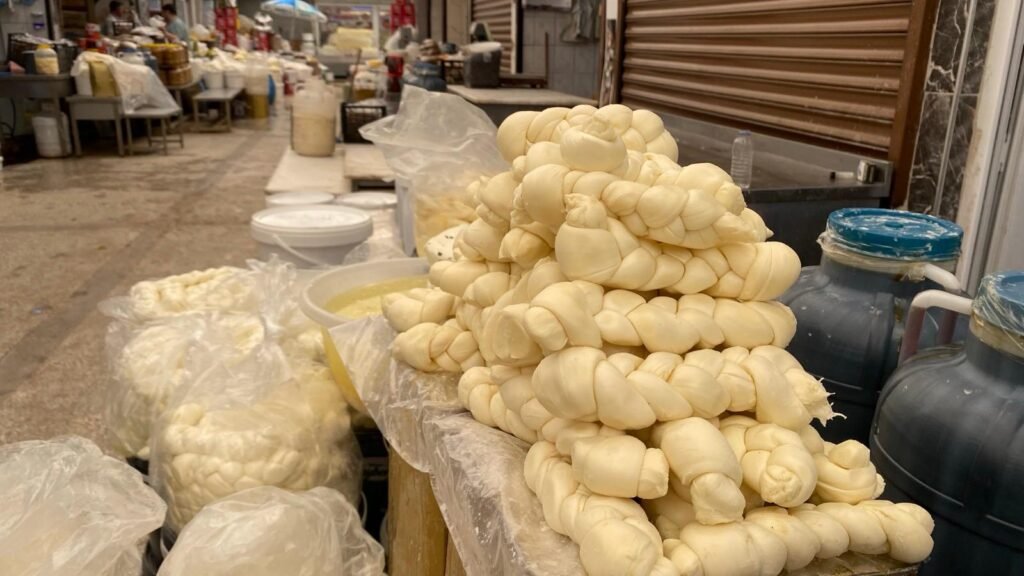
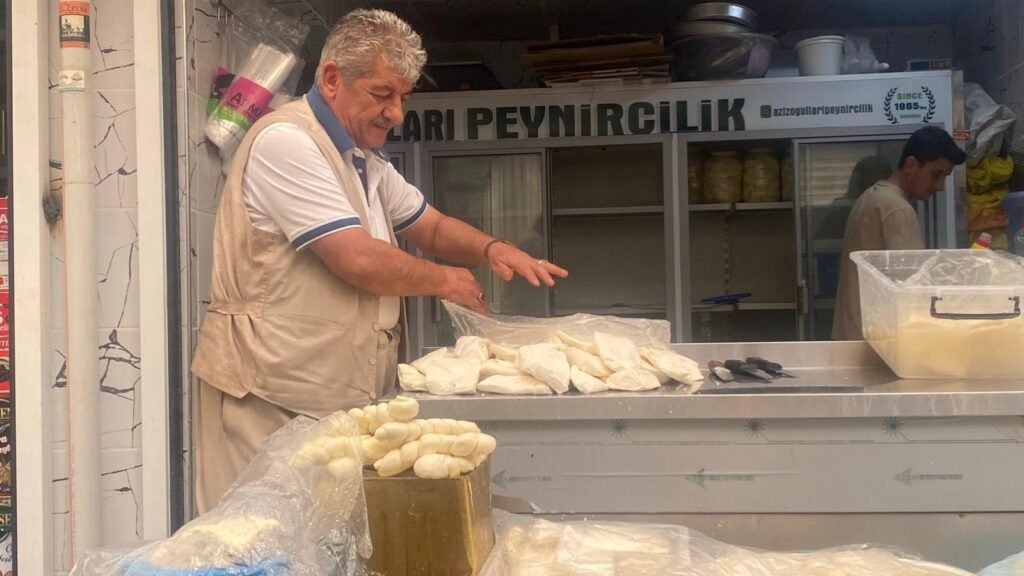
“You can’t have breakfast without braided cheese. I feel like I haven’t eaten if it isn’t on the table,” says 58-year-old Nermin Akay as cheese is weighed out in a shop in the historic bazaar of Turkey’s south-eastern Diyarbakır province.
A couple of shops down, 60-year-old Sinan Kutlu examines a slab of braided cheese he is holding.
“Karacadağ Mountain milk is just different,” he says. “It tastes like my childhood.”
Credit: Gülistan Korban
A vendor of 30 years in the cheese bazaar, Şehmus İla, agrees that the milk is what gives Karacadağ cheese its flavor.
“The sheep and goats that graze there have a specific taste to their milk, it’s fattier and denser. You can differentiate the cheese made from this milk even by the way it melts. Once you buy some, you get addicted,” he says.
Credit: Gülistan Korban
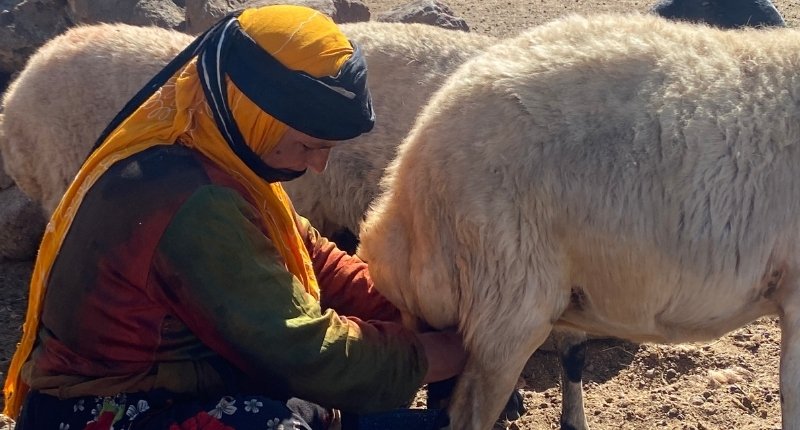
Diyarbakır’s braided cheese is a staple of breakfast tables across town. Given an official geographical indication in 2017, the cheese is unique in its fine, fibrous texture, its controlled maturing process and the intense flavour it leaves behind. But all this is only possible because of the largely unseen labour put into its making. Diyarbakır’s cheese is in fact the work of a few nomadic families who live around Karacadağ.
Not an easy life
Without the handful of Kurdish families who migrate seasonally from nearby Urfa to Karacadağ, the cheese wouldn’t be made.
Karacadağ is 1,957-meters high and located in Turkey’s south-east, at the intersection of Diyarbakır, Mardin and Şanlıurfa provinces. The Tekin family, who migrate to the mountain yearly from Urfa, follow a pattern that has existed for centuries.
Each April, they hit the road with their 300 sheep, travelling for days to reach the foothills of Karacadağ. Gazal Tekin, 65, has practically spent her whole life making the journey.
Credit: Gülistan Korban
I used to come here with my parents,” she says of her early days at Karacadağ. “I kept coming after I got married. It’s not an easy life but it’s the only one we know.”
Tekin stands in front of her tent, which has no electricity, as she tells this story, saying, “There is no power, no water, no resources here.”
She continues: “Women are in charge of both the chores and the animals. We come up here because animal feed is expensive in our hometown during the summer. We stay here for five to six months. We let our sheep and goats graze. We make cheese, yogurt, butter with the milk we get. Whatever milk we have left, we sell to vendors here,” she says.
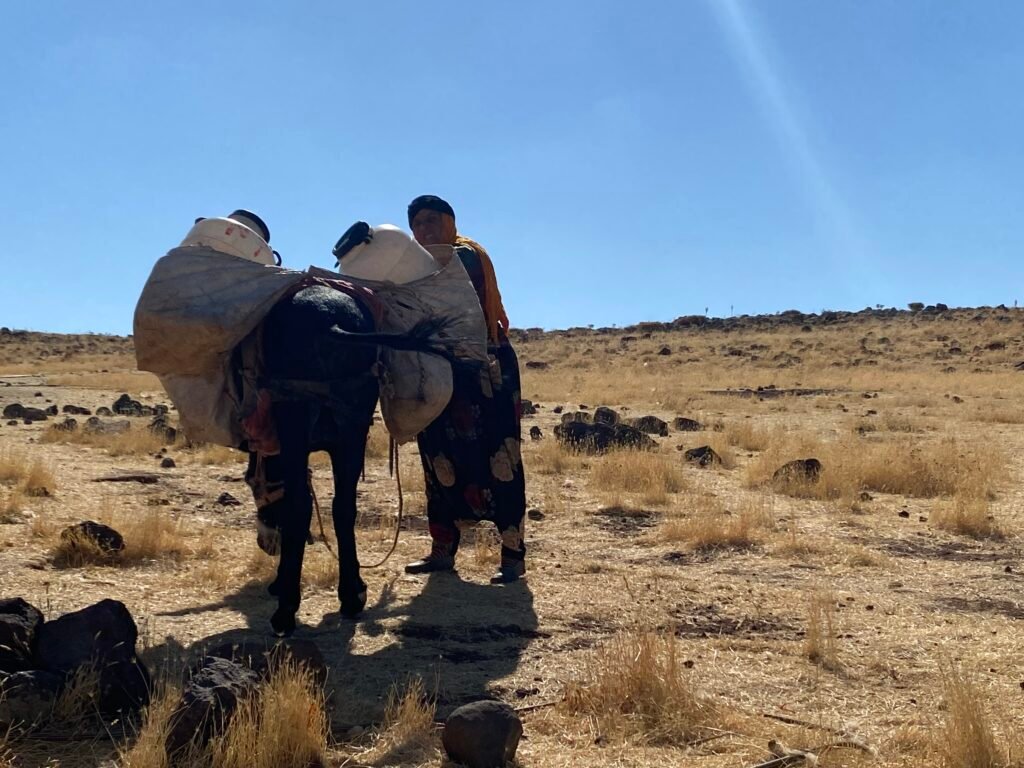
The morning call to prayer kicks off the day for the tent-dwellers. Women walk for miles in the early morning to draw water from the wells. Donkeys carry the water jugs along stone paths, back to the tents. The tents don’t have fridges, so all food has to be cooked daily. The small solar panels they have are only enough to charge their phones.
It’s hard to be young or a woman on Karacadağ. Children take their animals out to graze during school hours. Yusuf, 22, helps his mother carry the water while his brother, 16-year-old Baran, shepherds the animals. Gazal’s daughter, 18-year-old Bahar, spends most of her day cooking and cleaning in the tent. Her brothers completed elementary school, but she wasn’t so lucky.
“It’s a whole issue to go to school here. We spend six to seven months in the mountains, how are we supposed to go to school?” she asks.
Gazal’s husband, Abdulkadir, speeds along on a rough path where most others would struggle to walk straight. Baran walks alongside him, shepherding the herd.
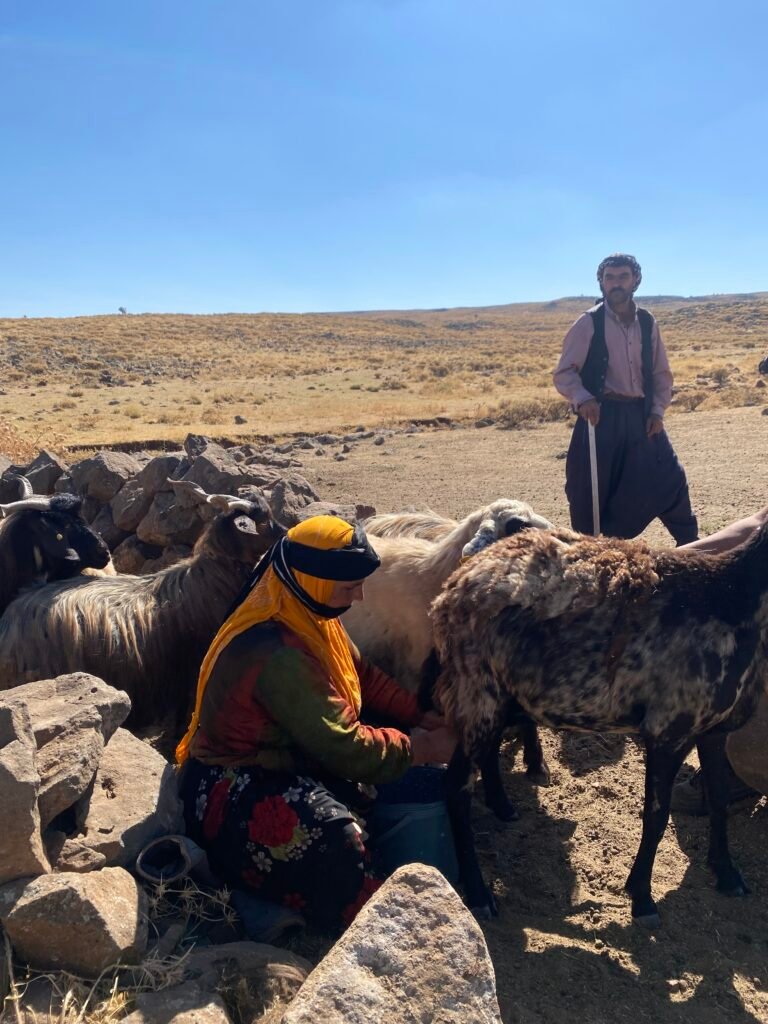
Credit: Gülistan Korban
These are our lands,” Abdulkadir says. “I’ve been here for as long as I’ve been me. I walk among these rocks with no light at nighttime, that’s how well I know the terrain. Of course I would have liked my kids to get an education, go to school, but these are the circumstances. What else could I do?”
Dry seasons
As the weather cools off, there’s an autumn chill. It’s almost time for families to leave the mountain, where they have been living since spring. Tents that were set up in April are taken down one by one in October and the herds take off toward the villages. The wind changes direction and Karacadağ quietens down again.
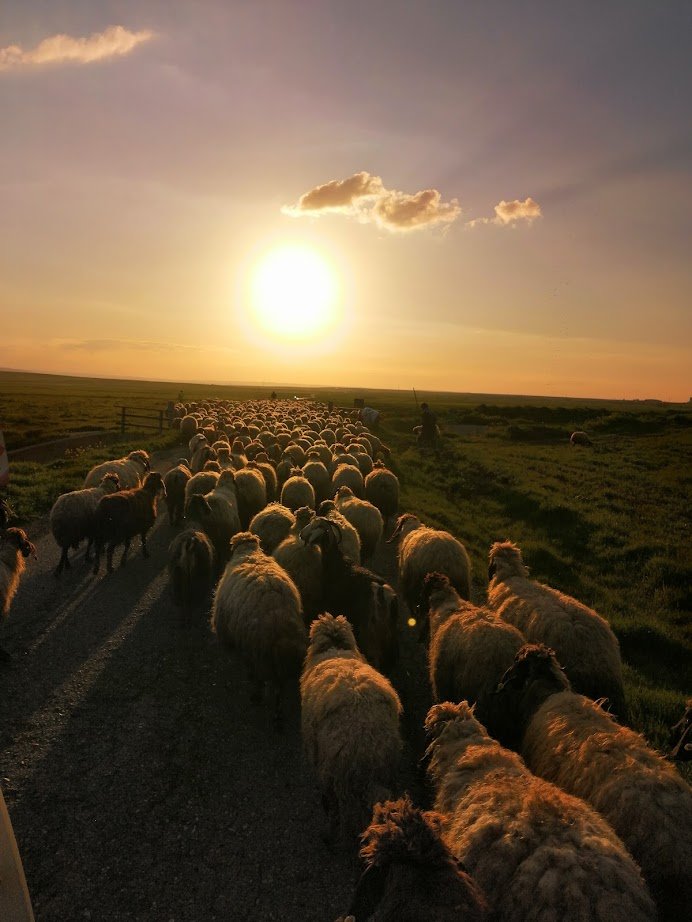
Credit: Gülistan Korban
But the seasons don’t change in quite the way they used to. Karacadağ’s foliage is drying up earlier each year – a hint of the climate crisis.
“The milk isn’t what it used to be,” Gazal says. “It’s not as fatty: there are no greens, it’s harder to find water. Just like humans, sheep get sick without water.”
Drought has affected families’ migration patterns, but so has human intervention. According to Gazal, each year the number of nomadic families decreases due to the harsh nature of the work and other challenges, such as tensions with locals over access to land. As cultivable land expands, so does hostility toward nomads, and these conflicts sometimes lead to deadly confrontations.
If the number of nomadic families continues to fall, then the future of braided cheese, the much-loved breakfast delicacy, grows uncertain.
Gülistan Korban Rençber