

“Being a stay-at-home youth makes me feel like I’m not self-sufficient, like I’m dependent on my family,” says 24-year-old Atlas Ay in a cafe in İstanbul’s bustling Beşiktaş district.
Staring at a cup of tea in front of him, shoulders hunched over, his voice trembles when he speaks.
“It makes me depressed and angry, first at myself and then at the circumstances of the country where I live.”
Ay is a university graduate – but, he says, that’s no longer the route into a career it once was. “In the current Turkish economy, the number of university graduates has risen while jobs have shrunk. So, university grads are not as valuable as they once were.”
Instead, Ay has joined the ranks of the ev genci – a play on the Turkish term for ‘housewife’ – in other words, the stay-at-home youth.
Hesitating for a moment, he says: “It is beyond a dream to have what my family has, even if I do the same work they did.”
Lost generation
Ay’s problem is facing millions of other young people in Turkey. According to the International Labour Organisation, one out of five young people worldwide is not in employment, education or training (NEET). But the problem is more acute here, where the rate is one in four.

(Credit: Envato Elements)
Turkey holds the highest rate of NEET youth among countries in the Organisation for Economic Cooperation and Development. According to the Turkish Statistical Institute, a third hold university degrees.
Slow economic recovery from the pandemic and a rise in insecure employment have made it harder than ever for young people to transition from education to work.
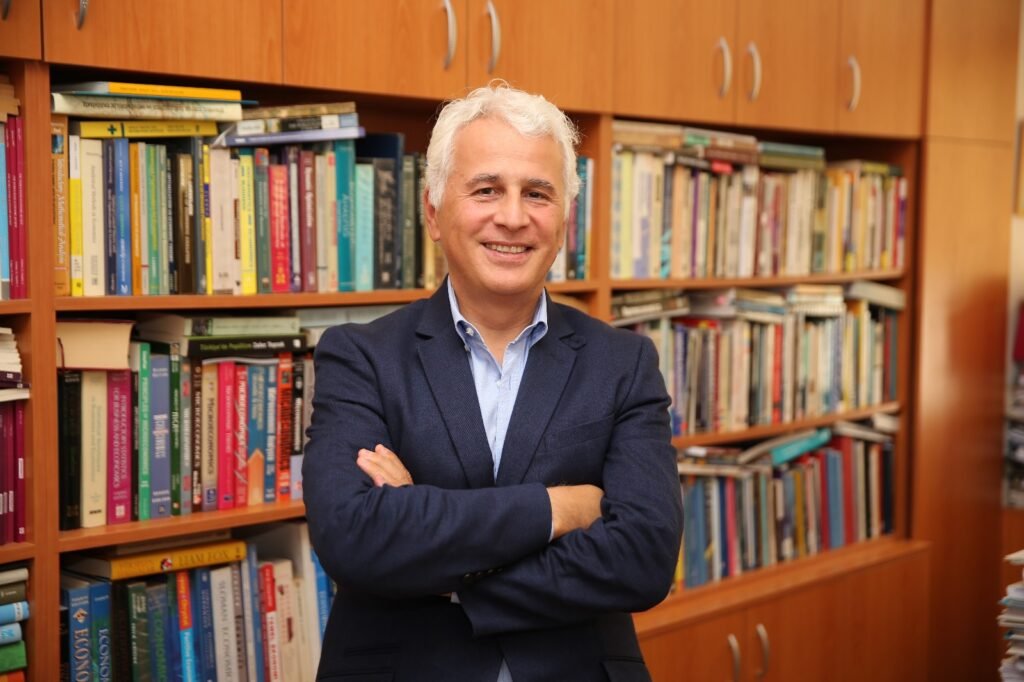
Öner Günçavdı, a professor in management at İstanbul Technical University, tells Inside Turkey this cycle is driven by the shrinking middle class and growing wealth inequality.
“Higher-income groups reaped the most benefits from Turkey’s growth after 2017, while the middle- and lower-income groups barely benefited,” Günçavdı says. “This directly impacts young people’s participation in the job market and creates intergenerational disappointment.”
(Credit: His own archive)
Economics journalist Barış Soydan presents a similar theory. Although Turkey’s employment market has grown in the last few decades, production has focused on low and meduim technology, while the rate of unskilled labour remains high.
“Most of the jobs created in the service industry are unskilled work like private security guards, supermarket employees or delivery personnel,” Soydan says. “This prevents job creation for graduates.”
As an example, he points to an excess supply of engineers in Turkey’s manufacturing sector.
“Industry needed workers who would do jobs that do not require technical training more than it needed engineers,” he says. “Companies struggled to find these kinds of workers and technical personnel, while there was an unnecessarily large supply of engineers. This led to engineers’ wages falling short.”
With a diploma, without a job
The number of universities in Turkey rose from 93 in 2002 to 208 in 2025, but has not led to better prospects for all. According to 2025 data from DİSK, Turkey’s Confederation of Revolutionary Trade Unions, unemployment among university graduates aged 15-24 is close to 25%. Universities founded under the government’s policy of “a university in each province” policy often lack the necessary academic infrastructure.
“Young people have become unable to find jobs in their area of study or are unmotivated by the wages offered in those fields,” Soydan says.
“You start to think ‘I must not be good enough,’” says 26-year-old Semra Demir, a graduate of the İzmir High Technology Institute. “You don’t even get a call back from any of the places you applied to.”
After a job search in İzmir, Demir eventually returned to Kocaeli province – also in western Turkey – to live with her family. Now, her days all look more or less the same: morning coffee, gaming, texting, sometimes a walk outdoors.
“I went to school with great expectations but I still haven’t received the return. I’m just another young person sitting at home,” she says. “It’s as simple as that.”

(Credit: Envato Elements)
A journalism graduate in eastern Sivas province, 23-year-old İsmail Güvenç is stuck in a similar cycle. He wakes up early and opens up his books to study for the Turkey’s civil service entrance exam, but gets distracted after a few pages.
“I make an effort but I don’t know when it will pay off,” he says.
Güvenç held various jobs as a student, which postponed his graduation by two years.
“Construction, cafes, delivery jobs, marketing… I worked whatever job I could get,” he says. “But the wages were never enough for me to make a living.”
This continued after his graduation when a local newspaper offered him a salary below minimum wage. “It’s not like people don’t work,” he says. “But the wages are not enough to survive on.”
The guilt of staying at home
A 24-year-old resident of the capital Ankara, Ceren Kesemen is a business graduate from the TOBB University of Economics and Technology.
“Home was always my safe space,” she says. “But these days, it’s anything but peaceful. My family keep saying, ‘look, your friends are going to work.’”
Kesemen left the world of business following a few short-lived experiences after graduation.
“For me, it’s not just about finding a job, but also feeling like a person at my job,” she says.
Ekin Yılmaz, a 26-year-old İstanbul resident, is feeling a similar kind of exhaustion as she sits at her desk with her laptop, a couple of notepads and a cup of coffee, now cold.
“I have a hard time falling asleep until late at night, I wake up late in the morning. It’s both easy and hard to pass the time at home,” she says.”
Yılmaz measures a “worthy job” not just with wages, but also by the respect and trust it brings.
Beyond ‘stay-at-home youth’
İstanbul Bilgi University professor Pınar Uyan Semerci believes “stay-at-home youth” is a better term for Turkey’s young unemployed than NEET. The play on “housewife”, she says, highlights “gender-related vulnerabilities, the burden of caregiving and the limitations faced by young people”.

(Credit : Her own archive)
An emphasis on academic success, paired with the uncertainty created by unemployment, increases anxiety and hopelessness in young people, she adds.
“Free access to psychological counseling and cultural activities is crucial,” Semerci says. “But the crux of [the solution] is young people’s participation in political processes and the perception of their grievances.”
Economist Enes Özkan thinks a loss of hope among young people is not an individual issue but the result of a home-made economic crisis.
“Turkey has been grappling with a crisis it created for a long time,” Özkan says, adding that inflation, inefficiency and unregulated labour affects not just the unemployed, but the workforce as well.

(Credit: Adam Weinberg)
Half of workers in Turkey are paid close to minimum wage, Özkan says.
“Minimum wage should allow a person to live humanely but it doesn’t fulfill that purpose any more,” he says. “It’s discouraging when a university graduate is offered minimum wage.”
Özkan continues: “Young people are looking not just for jobs, but for meaning as well. However, the system fails to offer them that.”
*Some names have been changed to protect individuals’ privacy
Gizem Çetimen