
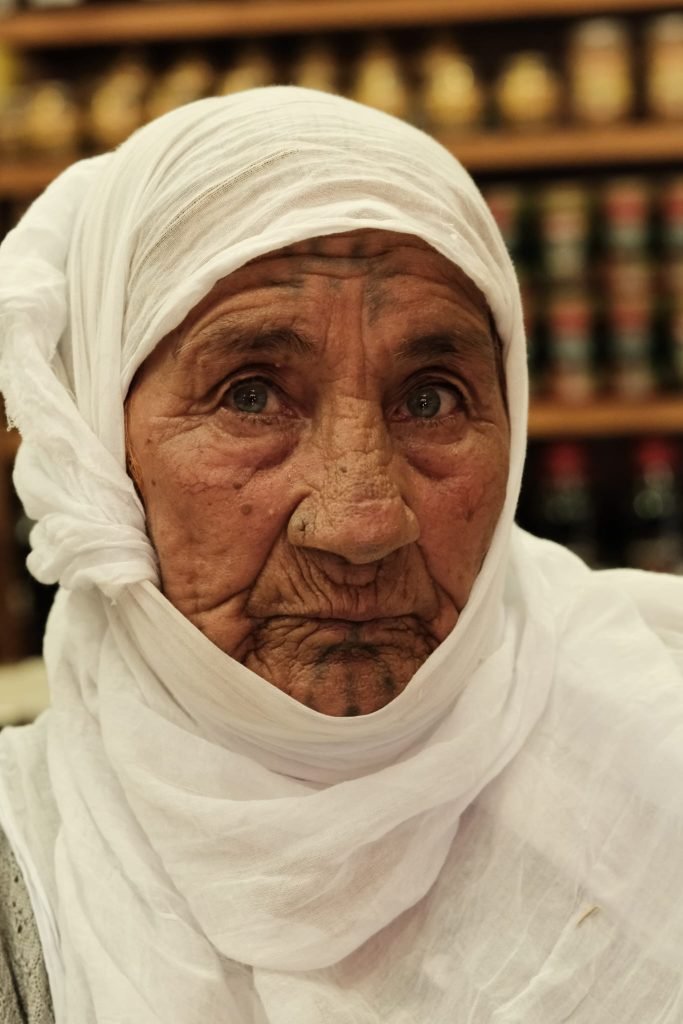
A group of women sit and chat in front of their stone-walled homes, wearing brightly-coloured floral dresses and traditional white headscarves. When the setting sun hits them, it lights up the lines inked onto their hands and faces – as well as images of the sun itself, tattooed onto their foreheads.
A common practice in the Mesopotamia region that straddles Turkey, Iraq and Syria, especially among Kurds, “deq” is the Kurdish word for tattoo. Prevalent in Turkey’s south-eastern provinces of Mardin, Diyarbakır and Şanlıurfa, it involves injecting a special mix of ink, which includes breast milk, under the skin. It’s most popular among women.
Kurds in Turkey are believed to have learned the practice in pre-Islamic times, but today the art is on the verge of dying out, due to modernisation and religious bans. Some younger members of Kurdish communities are trying to keep their culture alive, however.
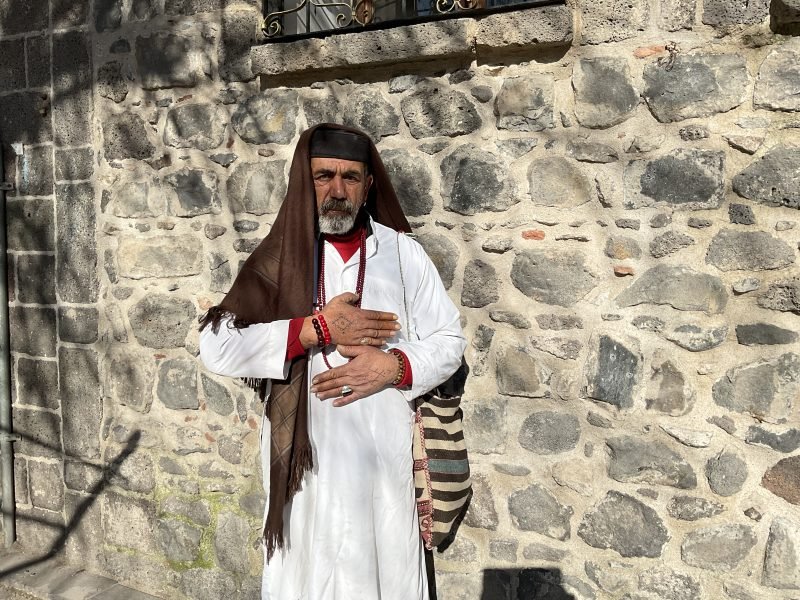
Mehmet Sait Tunç is an researcher and documentary film-maker from Mardin. In Tunç’s hometown, deq is widespread among Assyrian and Kurdish women, and curiosity has inspired him to record their stories. Tunç’s documentary, “Tell Me: Tattoos and Laments”, focusing on the stories of Mardin’s tattooed women, was screened at the Cannes Film Festival in 2012.
Tunç tells Inside Turkey that Kurds learned the art of tattooing, which goes back thousands of years, from their Arab neighbours. The tattoos these two peoples make carry both similarities and differences, he says.
“Arabs have larger motifs in their tattoos and the bottom lip tattoo is seen exclusively on Arab women. Yazidis, on the other hand, carry the sun symbol more often, as the sun is the object of their religious worship. Assyrians might use a motif of Jesus or a cross as a religious homage.”
Deq is carried out when a person is young and the tattoos age with their body. Even now, strolling through the narrow streets of Diyarbakır’s historic Sur neighborhood or among the stone houses of Mardin, it’s not unusual to meet a Kurdish woman with a sun on her forehead – or Arab, Yazidi and Assyrian women with their own unique motifs.
According to Gülizar Anşin, an academic who studies Mardin-specific tattoos, women use deq to reflect thoughts and feelings that they can’t verbalise, almost like weaving it on their bodies. “[Women] weave their joy, rage, hurt and sometimes love onto their bodies,” she wrote in a recent article.
Tunç explains that each motif carries a separate meaning. The tree of life, a holy tree located either at the centre of the Earth or in heaven, is believed to bring health and a long life. Three dots are for protection against the woman’s husband marrying second or third wives. Scorpions symbolise heroism.
One of the few young deq artists, Mardin local Fatma Temel, says that while the tattooing technique allows for any motif to be created, deq has repeating motifs.
Temel works in her studio Deq Art, located in Diyarbakır’s Sur neighborhood, known for its Armenian stone houses. She also works as a journalist. Her interest in deq took hold when she started asking women in her village about their tattoos. The older women taught her the tattooing technique and the meanings of the motifs; Temel practiced by tattooing her relatives. She defines deq as a “cultural tradition”.
“You need the breastmilk of a mother who birthed a daughter, soot and animal bile for the mix, which you then apply under the skin with needles,” Temel explains. “You don’t have machines or chemical dyes like in tattoos.”
Tunç says that the tattoos are created for social status, as much as they are for aesthetic pleasure, adding that some are even believed to protect the owner from the evil eye.
Rıweyda Sağlam, a resident of a village in Nusaybin, thinks that the motive is much more simple. “Think about how women wear makeup now; tattoos used to be women’s make up,” she says. “We used to do it for beauty.”
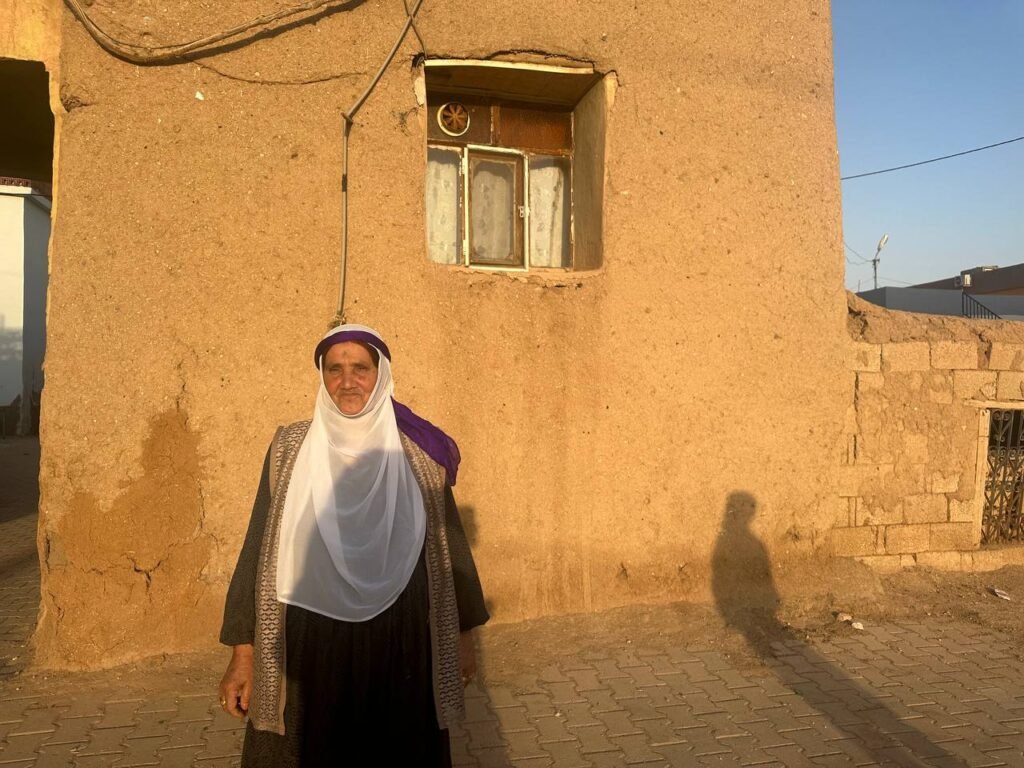
Sağlam’s body carries deq in multiple places. Even though the tattoos have faded as she has aged, they still catch the eye. The woman who tattooed Sağlam and other young girls in their village used a technique similar to the one Temel describes.
“They would take milk from a mother who had birthed a girl, they would burn the peels of a pomegranate and mix the soot in, then they would poke each and every one with a needle,” Sağlam recalls, pointing to the tattoos on her hands and face.
Some men who are sitting across the courtyard from Sağlam in this village also carry deq. A man displays a scorpion on his hand as he picks up a cup of mırra, the local, long-brewed coffee. He says it was inked when he was younger, and that it is believed to symbolise strength.
Although deq is common across south-eastern Anatolia, Tunç notes that many of his sources for the documentary have since died. “We may not run into any women or men in 20 years who carry tattoos of this tradition,” he says.
Temel is also worried that the last deq carriers will pass away before she is able to travel the Kurdish region and archive each motif for a book.
But hope persists. As Temel talks about her worries, three young men from medical school walk into her studio. They want to get deq but they are undecided. They make up their minds after Temel explains the meaning of each motif.
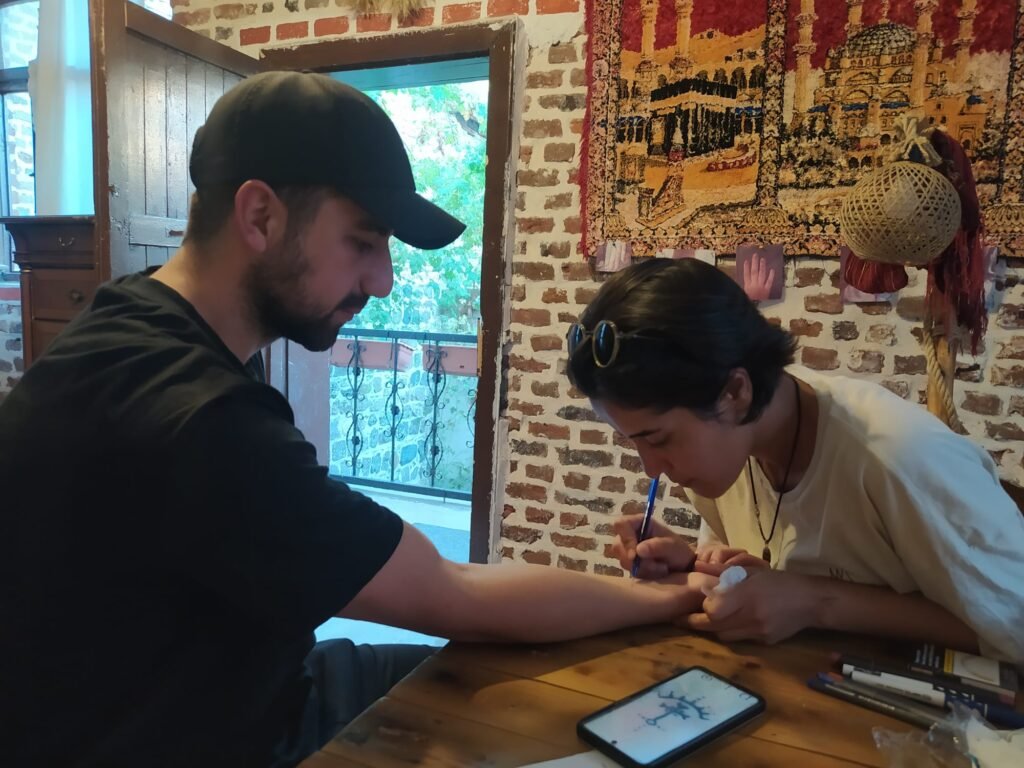
Mehmet Yoldaş is among the recipients that day. He receives a motif symbolising the four elements on his wrist. He says that he was impressed not just with the visual aspect, but with the wholeness of its meaning.
“I like tattoos but I wanted it to be something from my own culture, that’s why I decided on deq,” he says. “I am from Diyarbakır and I’m Kurdish. I will enjoy talking about my culture when someone asks about my tattoo.”
Melek Demir