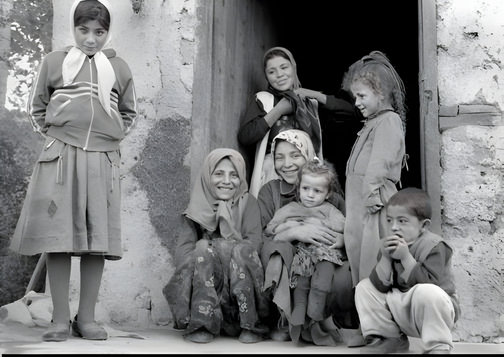
A house in rural Van province, south-eastern Turkey, is built around a small courtyard. Three generations live under its roof: grandad and grandma Mustafa and Emine Harun, their son Ali and their daughter-in-law Şennur, and finally, the grandchildren.
This way of life has gone unquestioned in the home for years. The elders would decide and the younger family members would abide. The crowded home was not a burden but a safety net.
Today, a new question is whispered around the house: is it possible to move out?
It’s not just the Harun family. These questions are being asked in traditional communities across Turkey, a sign that family structures that have persisted for generations might be dissolving.
Therapist Ferhat Men points to differing generational needs as the root of this familial tension. Generation X – people born between the mid 60s and the early 80s – grew up in a more collective culture built around communal living. Generation Z, now young adults, were born into a world prioritising individualism and personal space, he says, adding that these two approaches clash within the household.

Credit: Instagram user @mikslife
Social worker Rengin Uçkan thinks this shift can’t be explained solely by individual preferences, but that it’s accelerated by economic and social conditions. Rising educational levels and an increase in the number of university-educated young people, alongside growing urbanisation, are changing family dynamics, she says.
“In the past, people were focused on surviving. Today, they are wondering what kind of lives they want to live,” Uçkan says.
Shifting attitudes
“In my day, nobody would live on their own,” says grandad Mustafa as he recalls his childhood.
“The grandpa, grandma, uncle, auntie were all together back in our day. Even if they lived in separate houses, they shared a courtyard. Nobody would say I’m going to move out.”
Life was harder in the past, he says, but there was more order to it.
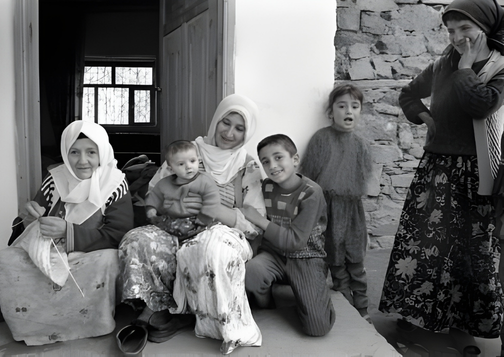
Credit: Instagram user @mikslife
Grandma Emine has lived in a large family since childhood. She was given domestic responsibility from a young age, but little say in household affairs. That didn’t change even after she got married.
Today, she’s conflicted about her relationship with her daughter-in-law.
“I’ll support my daughter-in-law in whatever she needs,” she says, but she’s unsure about the younger generation’s desire for more individual freedom.
A house divided
The Haruns’ house has four bedrooms, one for the grandparents and one for Ali and Şennur. The four children share a bedroom, which has become increasingly challenging for grandson Serkan, who is now at university.
Serkan sees himself as an adult and doesn’t like sleeping in the same bedroom as his sisters. He’s the most vocal about wanting to move out.
The house also has a family room and a living room, which is reserved exclusively for guests. The Haruns spend most of their time in their rooms. The balcony provides an escape, especially for the children, to take a breather.
Şennur, the daughter-in-law, takes on the majority of the housework. She wakes up early, airs out the house and sets the breakfast table. She starts cleaning after breakfast, followed by lunch and dinner.
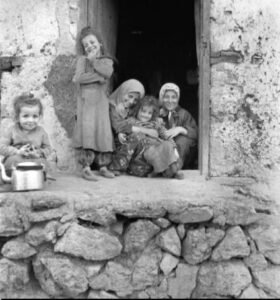
Credit: Instagram user @mikslife
Şennur finds time for her crafts, embroidery and stitching after cooking. If they have guests, she is in charge of entertaining them. She goes out to pick up groceries if needed, and her day flows through these duties.
When Şennur was young, she had a burning desire to live in her own home. She dreamt of her own space and a life that she could move through freely.
But she is worried about the prospect of her own children living by themselves. She thinks children should only move out once they’re married. Anything else is risky, financially and socially.
Hard work
Şennur’s husband, Ali, is the family breadwinner. He opens up his shop early in the morning and works until night. He doesn’t strongly oppose Serkan’s wish to move out, but also doesn’t think it’s economically feasible.
“I understand his wish to move out,” Ali says. “But it’s not easy to support a home these days. Rent, bills, life are all expensive.”
Ali tries to be understanding of his son, but cannot forget the burden he himself has shouldered for years.
Serkan and his sister Sueda, both university students, think their lives are limited compared to their peers. Sueda wishes her family were not so strict, but Serkan speaks out more boldly.
“I want to move out,” he says. “My family thinks this is a bad thing but I don’t think it is. Living together and respecting each other are not the same thing.”
Their younger brother Suat, still at secondary school, is quieter and prefers to separate himself from the crowd. The youngest, Sude, is the most privileged family member as she gets all her grandparents’ attention. She’s still too young to question her conditions.
Family values
The dynamics of this rural Van home are a small reflection of a transition that is underway across Turkey as families weigh the security of communal living against their need for personal space.
For grandparents Mustafa and Emine, this house is still “home”. For the kids, it’s maybe a stop along the way.
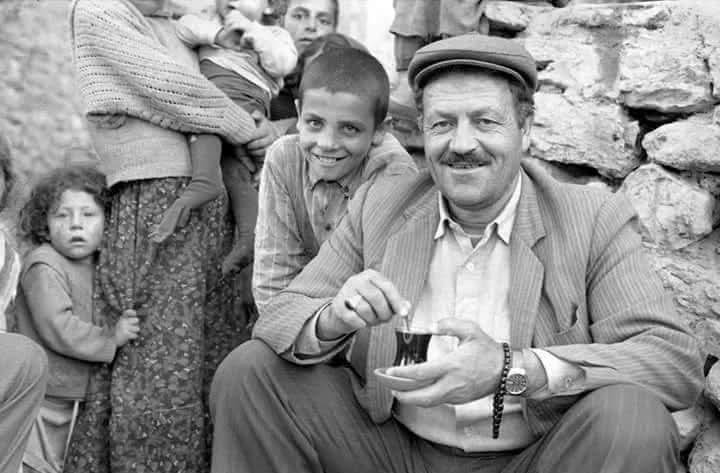
Credit: Instagram user @mikslife
It doesn’t spell the end of the extended family. But it’s changing.
Therapist Tuğana Akyürek agrees that this shift points to a deeper intergenerational restructuring. While past generations used to find comfort in a sense of belonging, the young value individualism and boundaries more.
What’s important, she says, is for each generation to recognise the other’s differing needs.
“A healthy societal structure is built not on generations judging each other,” Akyürek says. “But on them attempting to understand each other.”