

Since late summer, the abduction and murder of Narin Güran, an eight-year-old girl from Diyarbakır in south-eastern Turkey, has captured public attention. Güran’s body was discovered in a stream near her home village of Tavşantepe on 8 September, 19 days after her family initially reported her missing and a lengthy police search.
The case took a further twist, however, when Güran’s uncle, mother and brother – and a neighbour – were among the suspects arrested in connection with her death. The four are now on trial for her murder, accused of conspiring to hinder search efforts.
The murder and subsequent trial have prompted heated debate, not least because Güran’s uncle Salim is the village’s elected head, and the Güran family are rumoured to have connections to Turkey’s governing parties. Some observers have suggested that his political contacts helped delay the police search – while others believe the case has attracted disproportionate attention because it took place in a Kurdish area of the country.
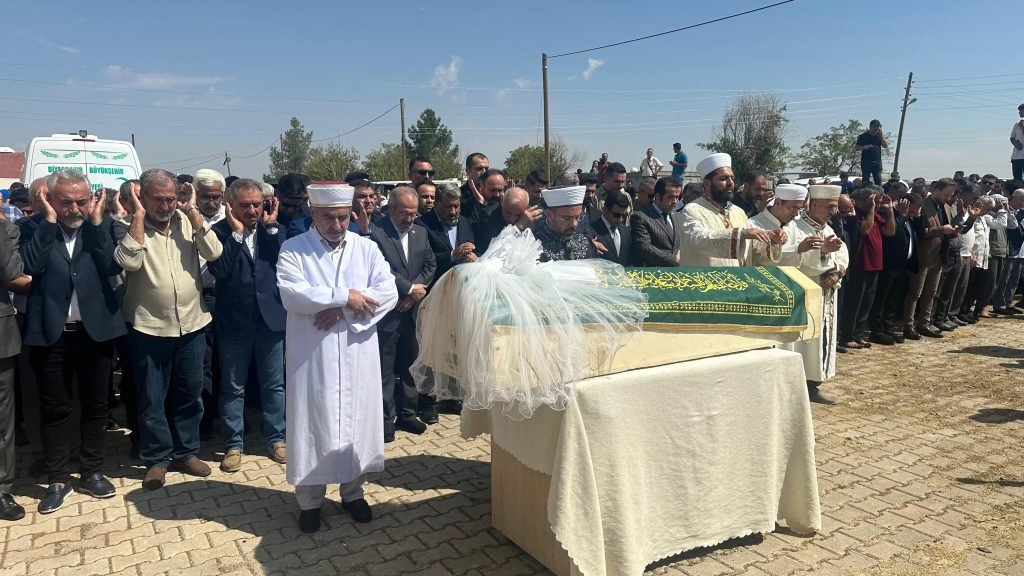
During the trial, which began on 7 November, neighbour Nevzat Bahtiyar claimed he had been pressured into hiding Güran’s body by her uncle Salim. Bahtiyar said that Salim killed the girl because she had found out he was having an affair with her mother. Salim, Güran’s mother Yüksel and her brother Enes all deny involvement, instead accusing Bahtiyar of murder.
For Meral Danış Beştaş, an MP for the pro-Kurdish People’s Equality and Democracy Party (DEM) from the eastern province of Erzurum, the case “speaks to us of the rot in Turkey”. Beştaş, who is also a lawyer, argues the police took an unreasonably long time to find Güran’s body.

Tavşantepe, a village of 445 people, has only 90 households. Many of Güran’s relatives live there, and family members led search efforts in the first few days after she went missing. When 22 members of the Güran family were later arrested, the family made a public statement claiming that their village was of “strategic significance” and was being “targeted by external powers”.
“There has still not been an answer to the question of what the gendarmerie did for 19 days after Narin’s disappearance. There is clearly negligence and a misuse of office,” Beştaş says.

Eren Keskin, a human rights activist and former chairwoman of Turkey’s Human Rights Association (İHD), adds that there was a lack of urgency from senior officials in ensuring the case was investigated properly.
“The search efforts had weak spots,” Keskin says, “And the reason was that the government trusted this family. Everything they said, each one of their statements was taken for truth when there should have been suspicion.”
“Because the family are also our friends, the issue is very delicate,” a local MP for the governing Justice and Development Party (AKP), Galip Ensarioğlu, told journalists while the investigation was ongoing. “There are things that we sometimes don’t know, and sometimes know but should keep to ourselves. Because the family are also our friends, the issue is very delicate.”

Diyarbakır Bar Association chairman Nahit Eren says that the investigation lacked “suspicion”. He explains: “The investigation was initially run on the assumption that Narin had been kidnapped … and there also wasn’t enough suspicion directed at [Narin’s] social circle, family and neighbours.” According to Eren, the delays meant that crucial forensic evidence could not be gathered, since Güran’s body had decomposed in the water by the time it was found.
For Keskin, Güran’s murder “showcases how deeply embedded a military and feudal mindset is in almost all parts of the Turkish landscape”. She believes Güran is a victim of “the local moral code” and that Turkey’s withdrawal from the Istanbul Convention on violence against women and girls – which stipulates that no custom or tradition can justify gender-based violence – has made dealing with these issues more difficult.
According to Diyarbakır journalist Gönül Morkoç, some of the media coverage has played into the stereotype of the “wild Kurds”. After Güran’s body was discovered, she says, “some ‘intellectuals’ connected it back to the area where she lived, the local customs and traditions, to the culture and the sociological texture, going as far as to say that Kurds have lords of the land and that they are a feudal community”.
What’s more, says Eren, TV coverage of the case – in which details were aired before the investigation had concluded – gave suspects an opportunity to destroy evidence and alter their statements. The public circulation of documents really hurt the chances of the investigation being executed in a healthy way,” he said.

According to Morkoç, “Forensic scientists, retired murder investigators, and attorneys shared scenarios of all kinds with the public, without any evidence. As a result, residents of the village had their privacy, their homes and their lives exposed. The presumption of innocence was severely damaged”.
“So-called experts were supposedly resolving a case that couldn’t be cracked by judges, prosecutors and law enforcement, by making up scenarios and putting names on it as well”, she added.
Morkoç suggests that a strict broadcast ban should be imposed in murder cases until they are resolved.
“They could have taken the route of having the relevant offices give public statements periodically, in a manner that would make sure not to restrict the public’s right to information, and that would not hurt the investigation,” she says. The refusal to employ this strategy leads to “mouthpiece experts” taking center stage in TV broadcasts.
For Keskin and others, the case is also a wake-up call about the way Turkey deals with violence against women and girls. “When you look at morning talk shows, you see that there are hundreds of unsolved murders and that the cases were closed. It shows that these murders and violence are not taken seriously,” she says. Between 2008 and 2016, some 104,531 children went missing in Turkey. Data on missing children has not been made available to the public by the Turkish Statistical Institute (TUIK) since then.
Journalist Tolga Şardan, an expert on security and law enforcement, also says that there has been an erosion of standards within police forces in recent years, which in turn affects cases of violence against women.
“Most police officers are selected among pro-government figures, they are not sensitive to violence against women,” Şardan said in a recent speech. “The same thing goes for gendarmerie officers. So, it’s essential that security forces are trained in the matter.”
Rabia Çetin