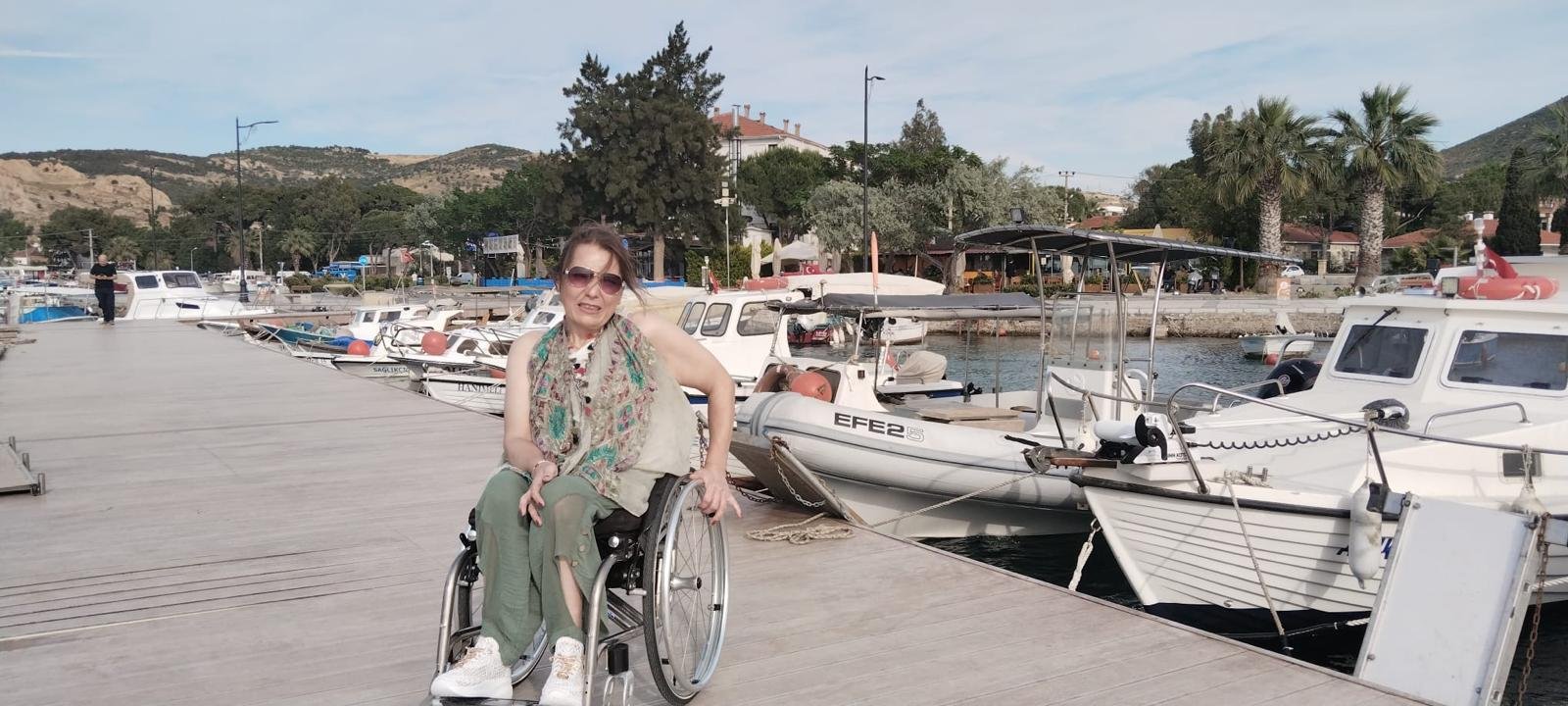
Vahide Çakır starts the day early in her apartment in Ankara, where she lives alone. She’s showered the night before and has her morning prep done: make-up is the only thing she has left to do before work.
She takes a final look in the mirror before leaving the apartment and moves over to her “active” wheelchair, which she uses outdoors. She gets into the driver’s seat of her car and the security guards in her apartment complex fold the wheelchair and put it into the boot. At the other end of her journey, at the TV station where she works, the process is repeated in reverse.
Çakır has been a wheelchair user since she was paralysed by polio at the age of three. She was unvaccinated.
“Three drops of the vaccine into my mouth could have prevented me from spending my life with a disability, could have given me a typical childhood,” she says.
Today, she is worried by the recent global rise in anti-vaccine sentiment. Like elsewhere, vaccine scepticism has risen in Turkey since the Covid pandemic: between 2019 and 2020, according to a study in the medical journal The Lancet, the rate of vaccine scepticism almost doubled, with around 2.5% of Turkish people saying they regarded all vaccines as unsafe.
Several experts and officials in the Turkish Medical Association also told Inside Turkey they believe anti-vaccine sentiment is on the rise.
“Why am I not down there?”
Vaccination rates are more than just numbers on paper. For Valide Çakır, her family’s lack of awareness about the polio vaccine was life-changing.
In 1977, aged three, Çakır was hospitalised with a fever, which turned out to be polio. She was left partially paralysed.
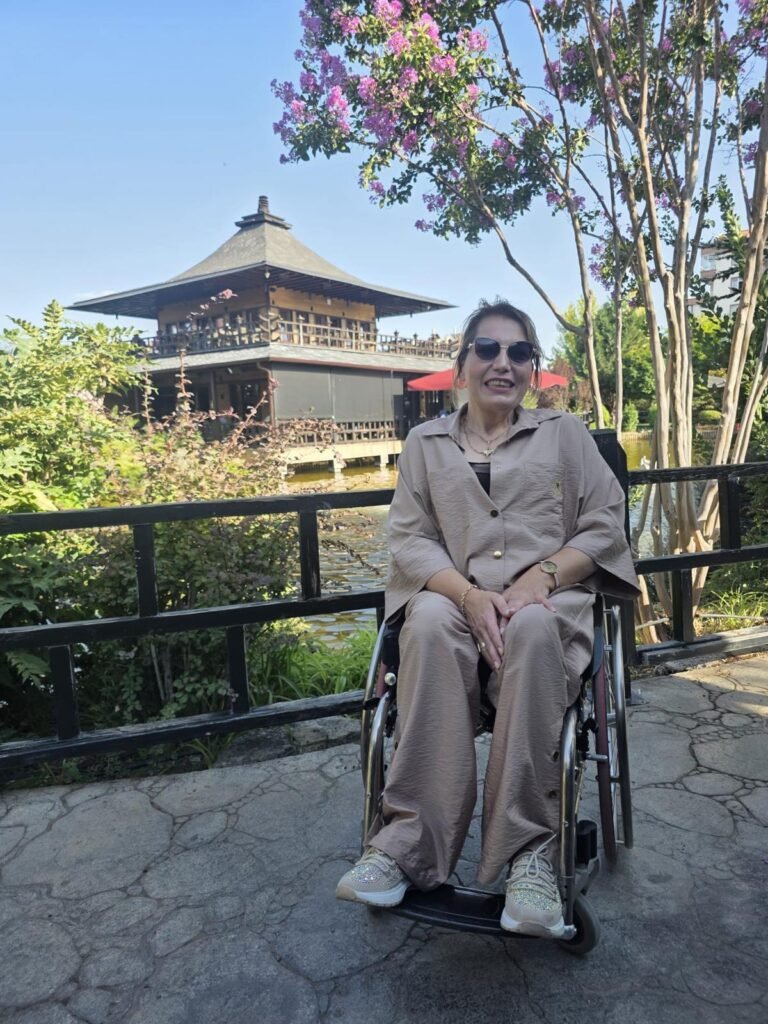
Credit: Her own archive
“Half of my body didn’t exist,” she says, remembering how she felt back in those days.
She would crawl around the house after being discharged, as she didn’t have a wheelchair. Her school life was practically over before it began: Çakır taught herself how to read and write.
“My friends would play outside and I would watch from the balcony,” she says. “I kept asking the same question in my head: Why am I not down there?”
She overheard the answer in a conversation between her mother and a neighbour about the polio vaccine, which is given orally.
“I took the kid to get vaccinated,” the neighbour said. “They just put in three drops.”
That’s when Çakır understood where her life went astray.
“Those three drops would have been my childhood,” she says.
Several medical experts told Inside Turkey that today’s vaccine scepticism risks the resurgence of other diseases.

Credit: His own archive
Haluk Çokuğraş, a board member of the Turkish Paediatric Institution, said that a combination of opposition to vaccines and migration from countries without comprehensive vaccine programmes was responsible for a recent rise in chickenpox cases.
Meliha Çağla Sönmezer, an infectious disease expert at Hacettepe University, explains that it’s not just a country’s overall vaccine rate that matters, but how it’s distributed.
“For highly contagious diseases like measles, a vaccination rate of 95% is suggested for the population’s protection. Even if 2.5% [of infected individuals] is grouped together in a school/district/community, local immunity drops below 95% and an outbreak begins. If grouped together, seemingly small ratios [of infections] can bring the public immunity below the threshold and prompt outbreaks,” Sönmezer says.
“I wanted to live”
After years of spending her life at home, in 2005 Çakır began a course of hospital treatment. She took part in a rehabilitative service offered by the government to remedy injuries she suffered to her knees from years of crawling.
“They tried to get me back on my feet. It didn’t stick, but it still changed something,” she says about her experience. “After the hospital, I wanted to be a living Vahide, not a serving Vahide.”
Çakır began to use a wheelchair – and a year later, got her elementary school diploma. Her drivers’ licence, her first car and her first job, at a call centre, followed.
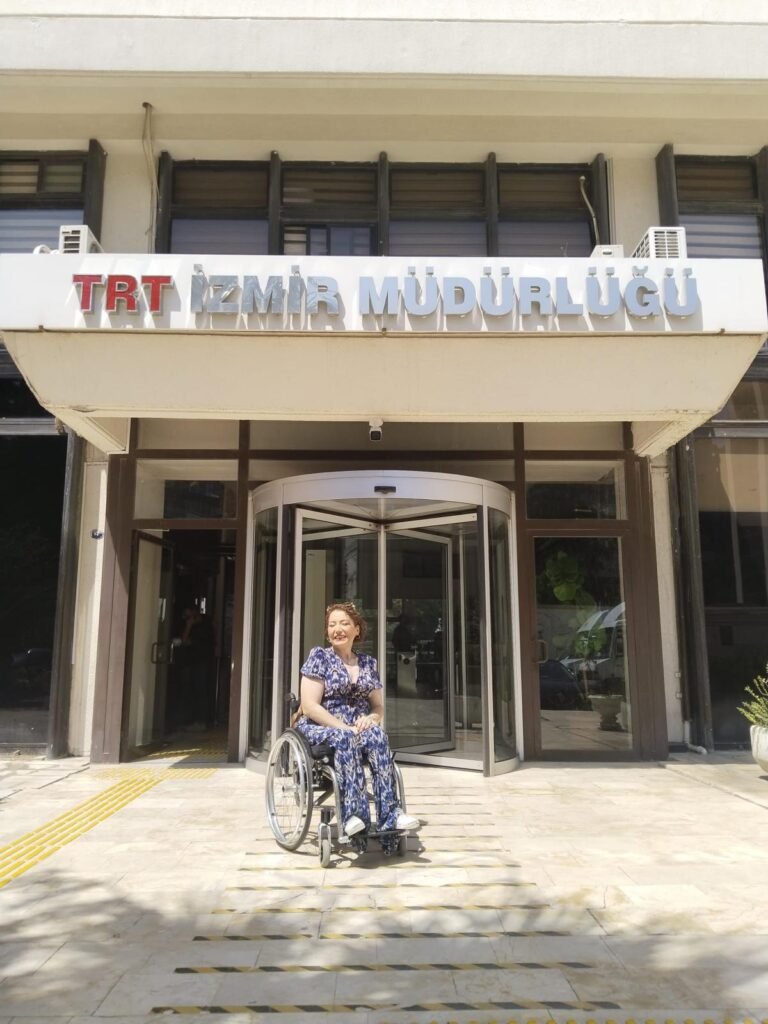
Credit: Her own archive
She did well in her job, but it was the offer to host a radio programme in 2011 that really changed her life.
“I didn’t spend my childhood playing, I spent it listening to the radio,” Çakır says.
Çakır called her show “Three Drops of Happiness” – after her neighbour’s overheard comment. She became a spokesperson for disability rights, after the programme was picked up by other broadcasters.
“Families have told me that they put their kids in special needs education or in sports training because they were inspired by me,” she says. But she thinks that she shouldn’t need to be an inspiration.
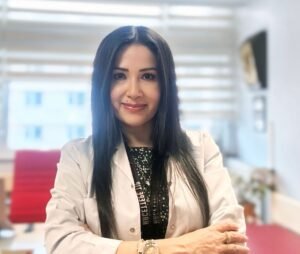
Credit: Her own archive
Turkey was declared polio-free in 2002, but Çakır worries that growing anti-vaccine sentiment might even jeopardise that success.
“Anti-vaccine sentiment is not some abstract concept,” says Hacettepe University’s Meliha Çağla Sönmezer. “It is an attitude that is embodied in intensive care units, in children hooked up to ventilators, in lives lost.”
Çakır adds: “Nobody can say ‘I didn’t get it done, you shouldn’t either.’ Every child deserves to have their chance. If we want children to live as children, they should get vaccinated.”