
In a global environment shaped by political tensions, economic pressures, technological transformation and restrictions on press freedom, women journalists face gender-based discrimination and harassment as they carry out their jobs.
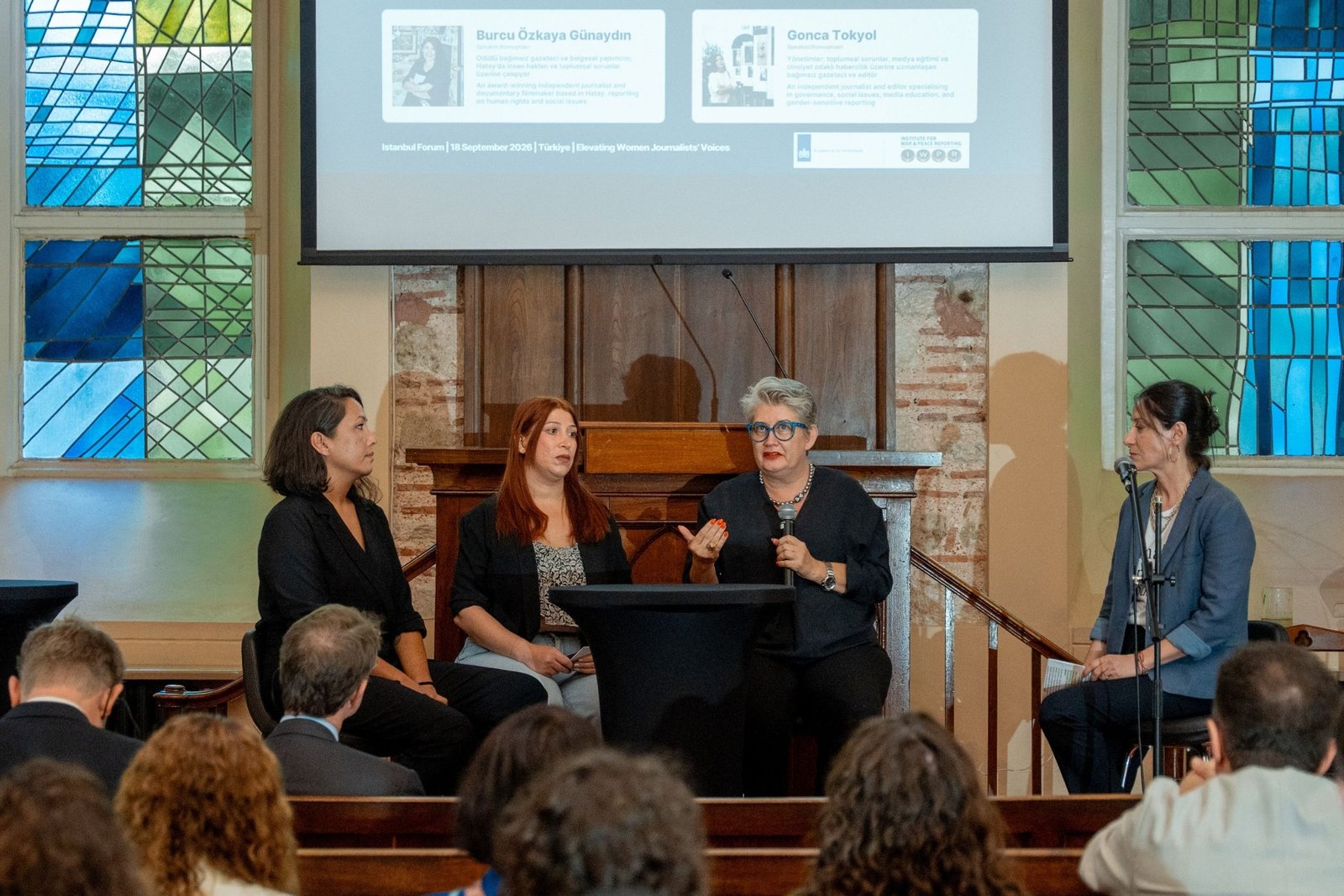
At the Istanbul Forum, held on 18 September within the framework of IWPR’s Empower Women Journalists project and hosted by the Consulate General of the Netherlands, women journalists and media professionals from across Turkey discussed strategies for working effectively in this period of uncertainty.
This was a first-of-its-kind event bringing together women journalists, media leaders and key stakeholders to explore the challenges women journalists in this country face today.
Through a panel discussion and two masterclasses, participants explored the cost of being a woman in journalism, building trust with audiences, and staying afloat in a rapidly canging media landscape.
“Women journalists are frequently subjected to harassment and restrictions while doing their work. As the Kingdom of the Netherlands, we will continue to support press freedom at home and abroad,” the Netherlands Consul General Daan Huisinga said in his opening remarks.
The challenges of being a woman in journalism
The first panel of the day, moderated by Banu Tuna, secretary general of the Journalists’ Union of Turkey, began with a message of solidarity for journalist Tuğba Tekerek, who was detained in early September amid the recent raids on LGBTQ organisations in Turkey.
Panellists included journalist and television producer Güldenay Sonumut, freelance journalist and documentary producer Burcu Özkaya Günaydın and freelance journalist and editor Gonca Tokyol. The three discussed gender-based discrimination faced by women journalists, the economic conditions of freelance journalism, and the need for solidarity among women journalists.
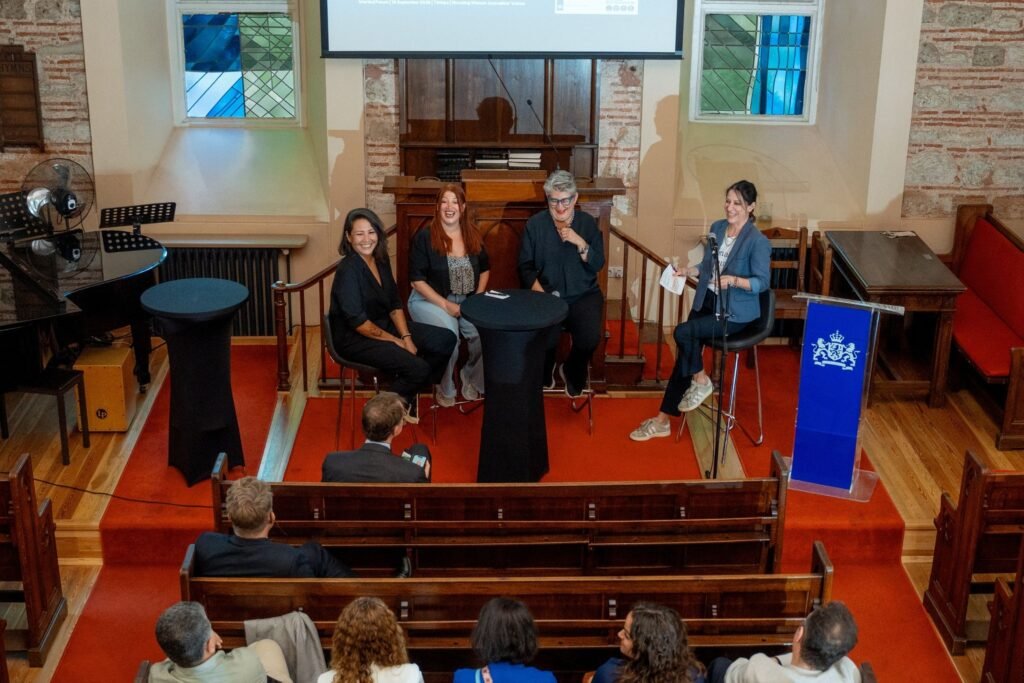
Sonumut said women journalists in Turkey had long been prevented from taking up active roles in newsrooms on a par with their male counterparts, adding that the same was true for correspondents working in the field.
“We had almost no female war correspondents from Turkey until the [1998-99] Kosovo war. I heard women being told, ‘Your hair is too long, something will happen to you.’ My female friends who really wanted these jobs cut their hair in order to be able to work as war reporters”, Sonumut said.
Building trust
Burcu Özkaya Günaydın, an experienced freelance journalist based in the earthquake-struck southern province of Hatay, stressed the need for women journalists to take the lead in reporting on women’s experiences and daily struggles.
Günaydın, who has followed women’s efforts to return to a semblance of “normal life” after the 2023 earthquake, said the relationship between grief, trauma and daily life in this process may not always be understood when viewed from the outside. The forms of communication and solidarity women establish with one another are an important part of this experience, she added.
Günaydın also spoke about her documentary Araf, which focuses on hairdressers serving women in the aftermath of the earthquake. Conversations held in hairdressers were not merely a form of socialising, she said, but a way for women to draw strength from one another and continue the ordinary flow of life.
She added that her role as a woman journalist in the field was crucial to her understanding the experiences and forming a rapport with the women she reported on.
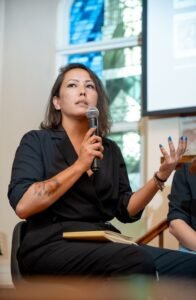
Freelance journalist and editor Gonca Tokyol, meanwhile, drew attention to the economics of journalism, particularly for freelancers. A sustainable economic structure has still not been established for freelance journalism, she said, adding that a recent contraction in the media industry and the deterioration in working conditions made it even more difficult for freelance journalists to continue the profession.
“It is not possible to live a good life as a freelance journalist,” Tokyol said.
Günaydın and Tokyol argued that solidarity among colleagues is a vital defence against economic insecurity, noting that during a period when they both worked in Hatay, they regularly kept one another informed, supported each other, and tried to overcome various problems they encountered together.
Both said that when freelance journalists lack the support provided by an institutional newsroom, communication and solidarity between colleagues help get the job done.
Staying afloat in a changing media
Much of the day was taken up with professional workshops, which addressed the effects of technological change on journalism and aired ideas on how to keep working in a challenging environment.
Journalist Filiz Gazi, who specialises in human rights and justice reporting, said that amid rapid technological change, colleagues should not lose sight of the basics. To stay afloat, she said, it is important to produce original work – and to do that, a journalist needs to stay connected to the world they are reporting on.
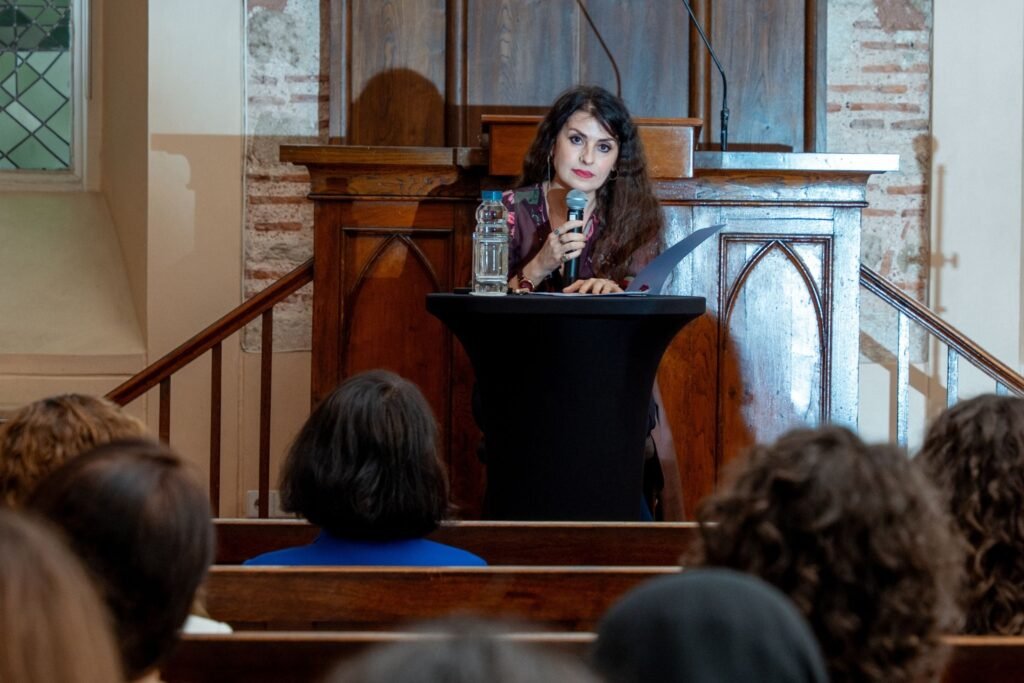
Arguing that a comprehensive understanding of social problems is indispensable to sustaining quality journalism, Gazi said class inequality needs to be understood by media professionals. Journalists “should be disturbed by the gap between a rich minority and millions of poor”, she said.
Although technological developments such as AI offer new opportunities in journalism, they also bring confusion, she said, adding that journalists should not lose sight of the need to get out and speak to people, and carry out research first-hand.
How the “attention economy” is changing the industry
In the final session of the event, the journalist and media educator Orhan Şener discussed the effects of social media platforms, which are increasingly the means through which members of the public consume news. Şener argued that news nowadays is shaped by the “attention economy”, which is changing both the way news is produced and the nature of the news itself. Instead of producing and distributing content directly to audiences through traditional channels – such as printed newspapers, independent websites, or broadcast networks – media creators increasingly rely on platform infrastructures and algorithms to reach people.
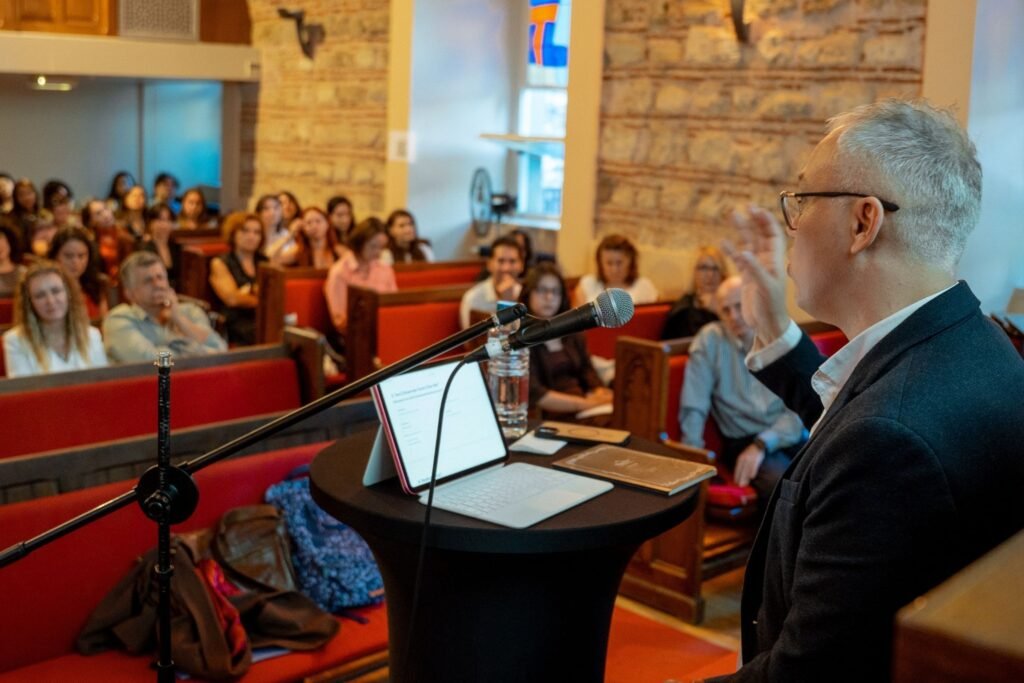
The media sector is going through a serious process of “platformisation”, Şener said, adding that the mediums through which news is produced, alongside user behavior on these mediums, are transforming the nature of journalism.
One participant said at the end of the event, “Being reminded of the power of being a woman, and the way it brings us together, was truly inspiring”.
Many of the challenges raised at the Istanbul Forum are shared by women journalists around the world. The conversations started here will help build a foundation for continued dialogue and solidarity, strengthening and supporting women in journalism in Turkey, across the region and beyond.
This report was produced within the scope of a project supported by the Kingdom of the Netherlands’ MATRA Fund. The responsibility for the content belongs to Inside Turkey and does not reflect the views of the Consulate of the Kingdom of the Netherlands.
Deniz Doğan