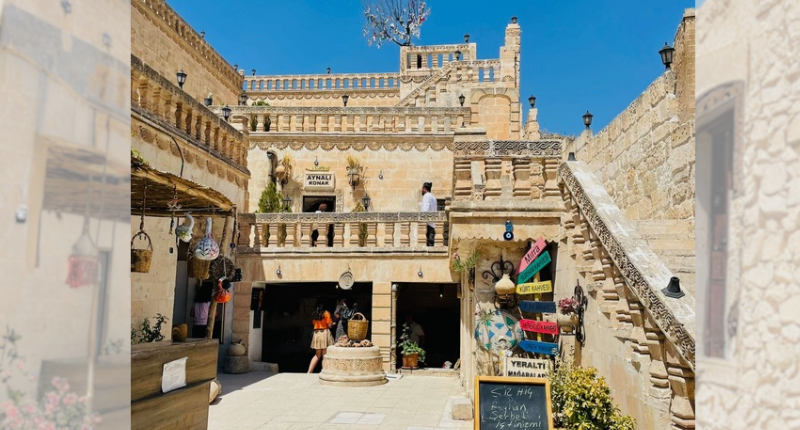
“There used to be a very small number of visitors in Midyat, but they would be people who knew what they were looking for,” says local tour guide Mehmet Ali Konak.
Born and raised in the southeastern province of Mardin, home to the Midyat district, Konak says that foreign tourists and researchers used to come in looking for Assyrian masons, telkari masters and the pastors in the local churches. Today, a growing number of visitors seem to have different priorities.
“Now, herds of people who disembark from buses are mostly looking for one of two things: taking a picture in front of the mansion where the TV show Sıla was filmed and a quick visit to the telkari shops to get souvenirs. The cultural depth of the town has turned into a photo backdrop,” he says.
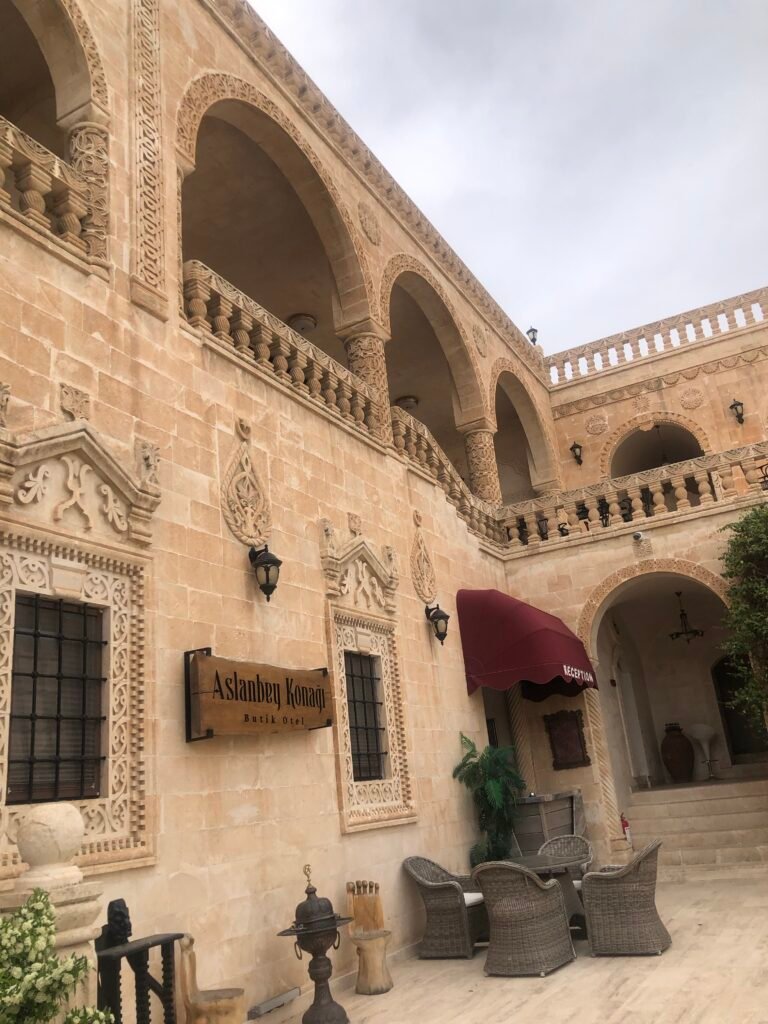
| Credit: Rengin Uçkan
Sıla, which aired in Turkey between 2006 and 2008, is the story of a young woman who grew up in İstanbul but was taken to Mardin where her family forced her into an arranged marriage. It drew large audiences in Turkey and was sold to 97 other countries, making it a staple of an era when Turkish productions shone in international markets. Midyat’s historical State Guest House was used in the show, later becoming a popular tourist destination.
Tour buses that stop in Midyat frequently drop off their passengers in front of the building. The crowds are often made up of weekend visitors and young travellers. They form long photo queues on the steps that lead up to the building, as well as on its terrace. The average wait time can be up to 45 minutes, after which tourists are led by their guides to nearby souvenir and silver shops. However, these visits are not so much detailed observations as they are a quick window-shopping and souvenir purchases.
Midyat’s tourism boom
According to data from the Mardin Provincial Culture and Tourism Directorate, more than three million people visited Midyat in 2025. That number is up from 300,000 to 400,000 people a decade ago.
Besides its star turn on television, Midyat is known for its stone mansions, historic churches and local handcrafts. Although the transition gives the town economic momentum, it’s also changing the fabric of the district.
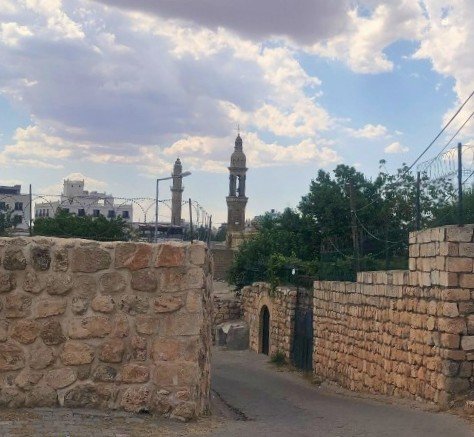
The rising number of tourists has prompted new businesses to open up, allowing touristic use of historic structures and the expansion of the local service industry. However, some locals worry that the district’s cultural heritage is being turned into a consumer product for tourists. Meanwhile, the craftspeople, religious communities and others who created this heritage are faced with the consequences of transition.
Telkari, for instance, is an ancient Mesopotamian craft that involves the shaping and welding of fine silver strands, requiring great patience and sensitivity. It’s considered the most profound of the region’s distinctive jewellery arts.
In the past, the local market was filled with the voices of the telkari masters and a traditional piece of jewellery could take up to days to be made, Konak says. These days, impatient tourists prefer mass-produced goods instead.
“The tourist bus stops, the guide gives them 20 minutes to shop,” Konak says. “Nobody is looking for original telkari products in those 20 minutes. They just pick up whatever’s cheap and readily available.”
Some masters have shuttered their stores, while others have resorted to selling souvenirs, he continues.
“They can’t raise apprentices, because young people consider selling ready goods to be more profitable than taking hours to work silver. It’s all about demand.”
Changing tastes
A telkari specialist with over 30 years of experience, Alfret Engin Gürkan agrees that the craft has changed with tourism. A member of the Assyrian community, Gürkan was named a “telkari master” by Turkey’s Culture and Tourism Ministry.
The number of telkari shops in the local market has risen from a dozen some 20 years ago to 50, he says, adding that the recently opened shops mostly don’t carry original handmade goods.
Gürkan also finds that handmade and mass-produced jewellery differ in quality. Traditional handmade jewellery is made with 950 silver – a brighter, high-purity alloy – while mass-produced ones use lower-quality 925 or 850 silver, he says.
Demand from tourists has livened up the local market and generated profit for local businesses, he acknowledges, but Gürkan is not optimistic about the future of his craft.
“The demand is really good for production and sales. Some business owners make a lot of money. However, I don’t think it contributes to the future or the preservation of the craft at all. The ancient art and craftsmanship is not offered in these [new] shops,” he says.
Melting pot
Midyat has historically been a place where Assyrian, Armenian, Yazidi, Kurdish and Arab communities have lived side by side, making it one of the most unique cultural hubs of the region thanks to its linguistic and religious diversity. However, emigration over the years has significantly altered the demographic and social fabric of the town.
Local teacher Ahmet Demir is also interested in the construction of stone mansions. He says that some of the Assyrian and Yazidi villages in the region, which used to house tens of thousands of people, have been nearly completely emptied, prompted by security concerns and economic pressures.
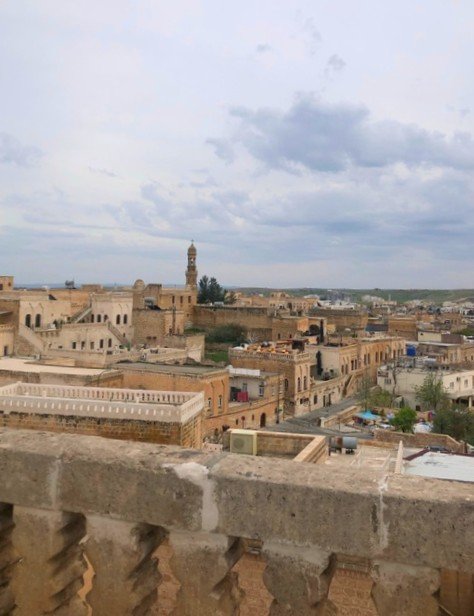
Demir also invests in restoration projects in Midyat, which he says was motivated by his desire to preserve the town’s stone architecture. Everyday stone mansions of his childhood are not tourist destinations, but the preservation and use of these structures is crucial to carrying on the town’s past into the future, he argues.
Having improved his work on stone mansions, Demir works on more than just construction. The need for local mason masters’ craft contributes to the preservation of this tradition and to economic vitality in Midyat.
“For me, stonework is synonymous with touching the town’s memory,” he says.
Demir argues that increased tourism in the town also broadens people’s interest in the region’s history.
“Visitors ask about the different faiths and cultures that live here,” he says. “The tourists try to learn about Assyrian, Yazidi, Kurdish and Arab culture. They’ve never heard of it before, they have no idea. This culture, which is thousands of years old, is impressive to people. It changes people’s perspective of the region.”
Cultural sensitivity
A local and a tour guide of the Mor Gabriel Monastery, Assyrian Favlus Kurkunç, is pleased with visitors’ interest in the historic and religious legacy of the monastery. However, he adds, the large crowds can sometimes be disruptive to worship.
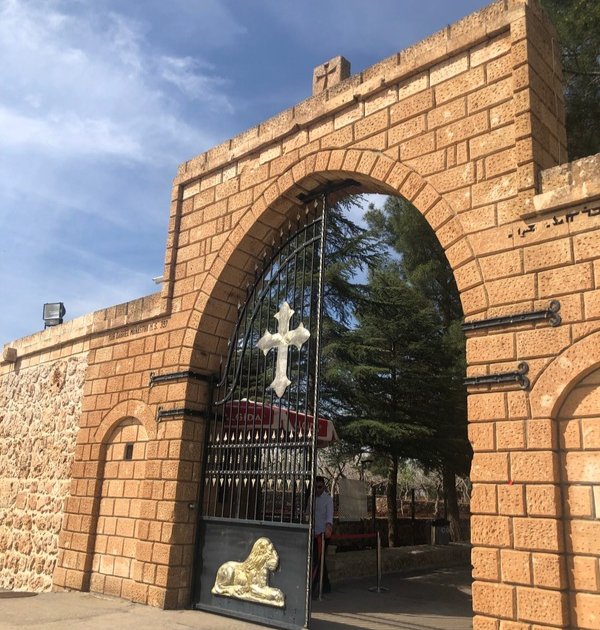
“The doors of the monastery are of course open to all,” Kurkunç says. “It’s pleasing to us when visitors feel the spirituality of the monastery and make contact with the ancient culture of faith here.”
Credit: Rengin Uçkan
However, it is lost on some visitors that the monastery is not just a historical structure, he says, adding that visitors in Midyat should keep in mind that the local holy spaces are not museums but active houses of worship.
“Trying to take pictures during hours of worship, violating the rules around silence or entering holy spaces without permission disrupts the monastery’s routines, prayers and rituals,” he says.
Coming home
Tourism worker Aslan Tan notes that TV series and the district’s increased visibility have prompted former locals who migrated to larger cities or to Europe to return to Midyat to invest, including some Assyrian, Yazidi or Arab families. Employing locals in the investment process helps distribute the added value generated by tourism across the region.
“The town, which suffered from out-migration, has gained inward financial momentum thanks to tourism,” he says.
Returning locals, who moved to Europe or elsewhere years ago, experience the town’s transformation most vividly. Aylo Aslan of Aynverd (Gülgöze) village is one of them. Aslan moved to Germany with his family in 1992 but returned five years ago with his wife after she retired, driven by his sense of belonging and his desire to care for his homeland.
Now, they live in a new home they built in Aslan’s village. Their children spend most of the year in Germany for school, but visit during summer holidays.
“In my childhood, this village was bustling throughout all four seasons. It was so crowded with locals. Now, the winters are so quiet. We had Yazidi locals who were placed here from nearby villages that were evacuated in the 90s. But they left before the end of the decade and I haven’t seen them return since,” he says.
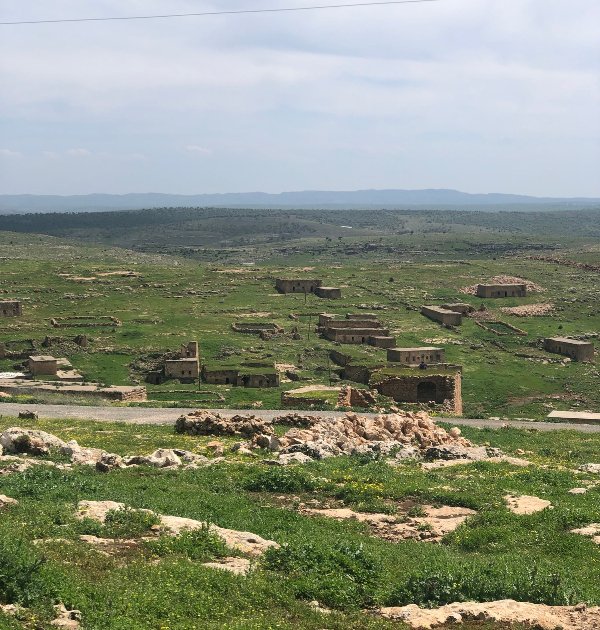
Aslan thinks that the changing dynamics in the town and the increased outside attention have also altered the faith rituals in his village. The historic Mor Hadbşabo Church that he remembers from his childhood still serves worship and educational purposes, but visitors these days have varied intentions.
“The church is still open and there are prayers, but people mostly visit to see the church. In fact, some visitors believe that the historic key to the church can help mute children speak, so they knock on the door just for that,” he says.
Demir, who is trying to keep Midyat’s legacy alive, believes the region’s transformation must be based on preserving locals’ stories.
It can work, he says, “so long as these houses don’t become places where only photos are taken, and the stories inside them live on too”.
Rengin Uçkan