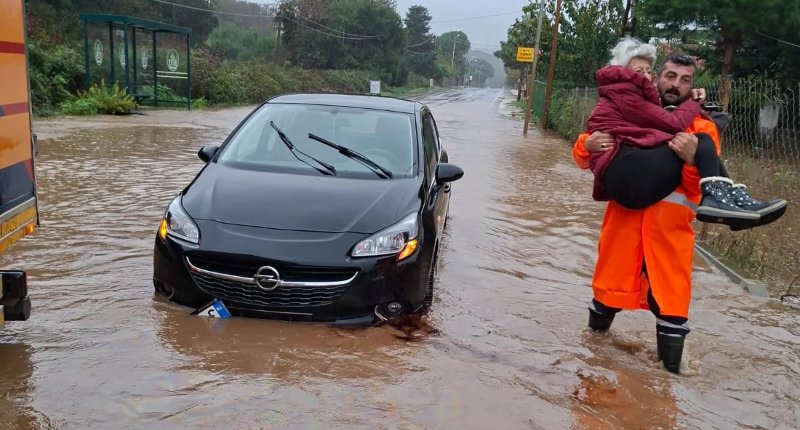
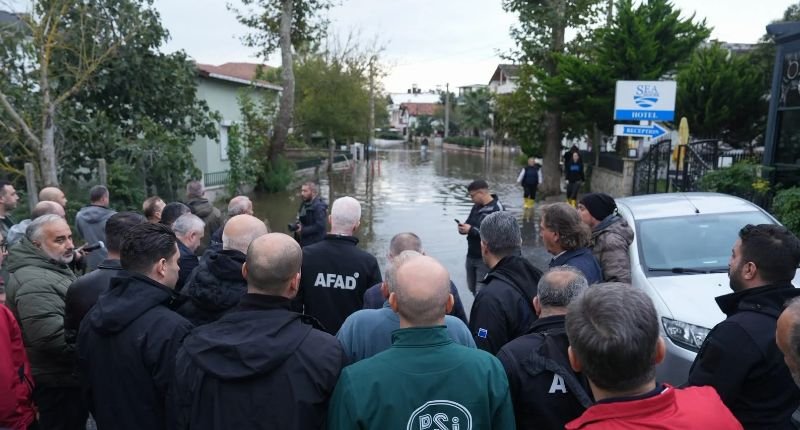
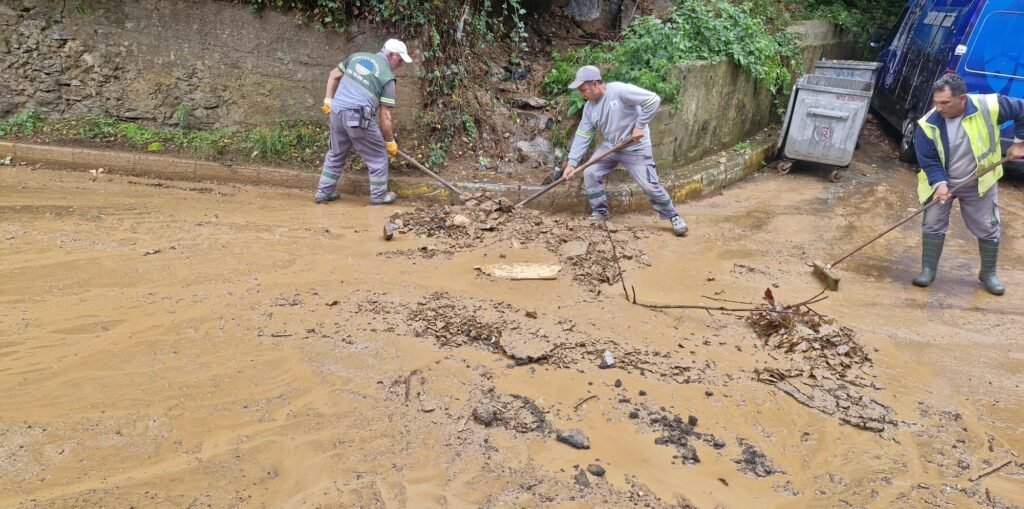
In late October, construction work was still underway on the road leading to a cemetery on Istanbul’s European side where 63-year-old Ahmet Derin was to be buried. Crews were clearing roads that were damaged in a flood the week before, moving damaged vehicles off the path.
Nine people died after torrential rains that hit Istanbul’s northern districts on 14 October. Derin was among the commuters who got swept up in the floods on his way home from work. His body was discovered six days later in the waters of Istanbul’s Golden Horn, 10 kilometres away from where the waters overtook him.
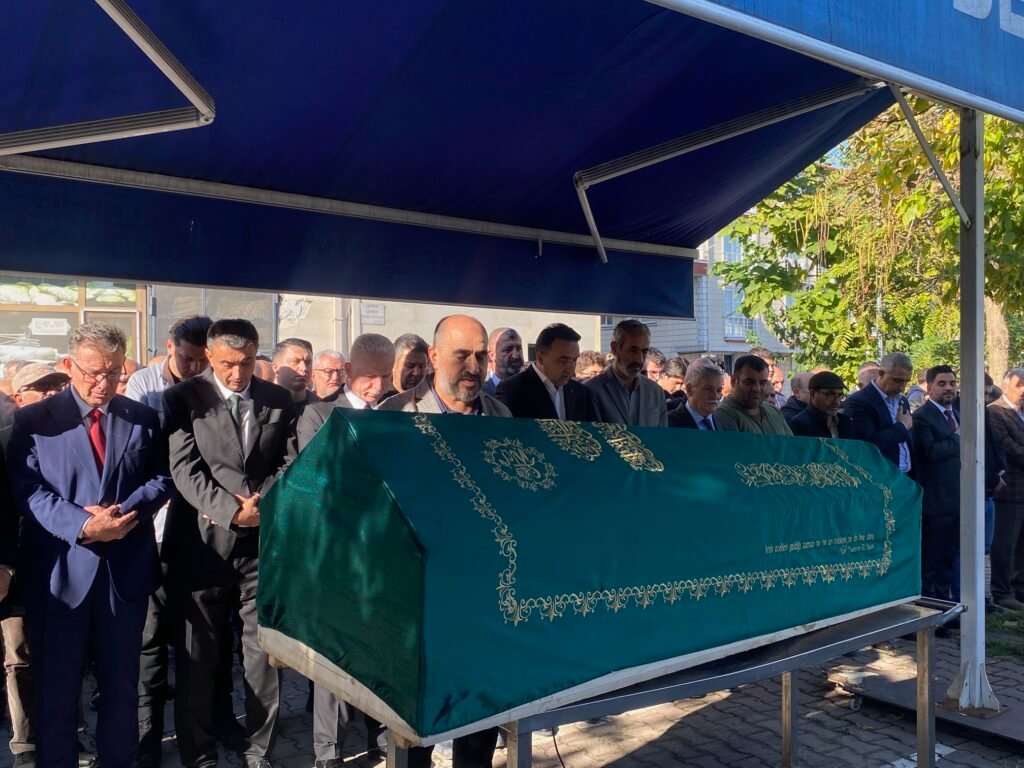
Derin’s family had issued a missing person’s alert on social media when they couldn’t reach him. The days-long search efforts first led to his damaged vehicle, then his lifeless body.
“We’ve never seen rains like those,” one of his relatives told Inside Turkey at his funeral. “It’s like the cars and the roads were made of paper. The water was swallowing everything up as it flowed.”
Another relative criticises the construction permits that were given to the valley where Derin died.
“Don’t they know that you’re not supposed to build houses on riverbeds that have been there for years?” they say. “When they were building houses in the valley, did they not imagine that something like this would happen one day? They knowingly sent people off to die.”
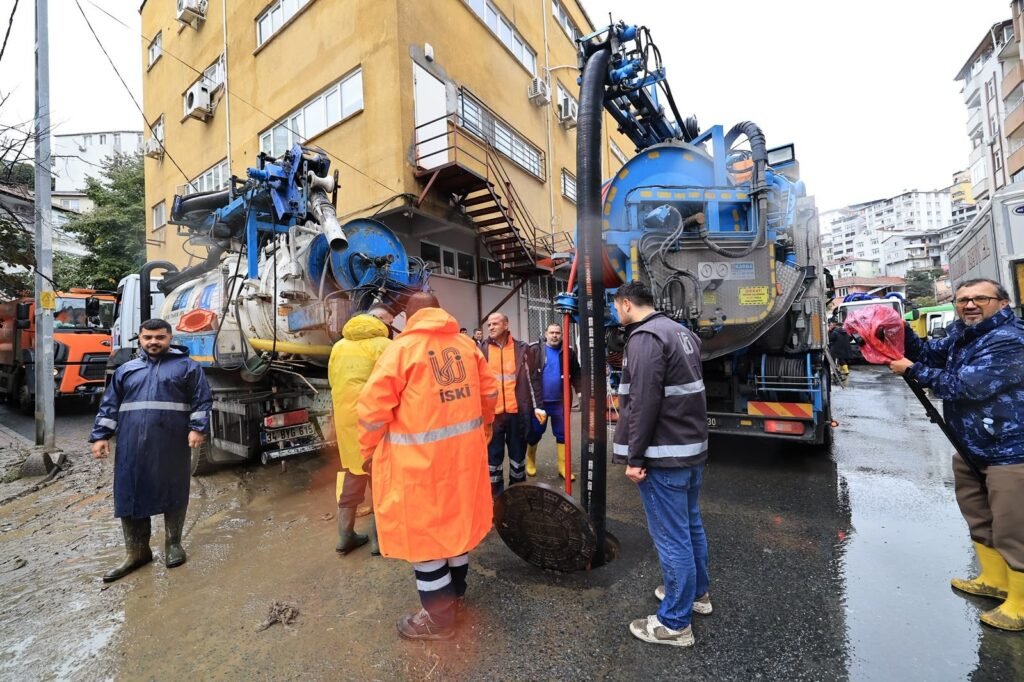
The Istanbul Governor’s Office said that the rains of 14 October were among the heaviest downpours of the last 84 years. More than 3,000 people had to be rescued and 9,755 people called into emergency hot lines. The Istanbul Metropolitan Municipality had to intervene in 19,761 cases and said they saved 859 people. Hundreds of homes, business and vehicles were damaged, tallying up a financial toll of nearly 20 billion Turkish Liras.
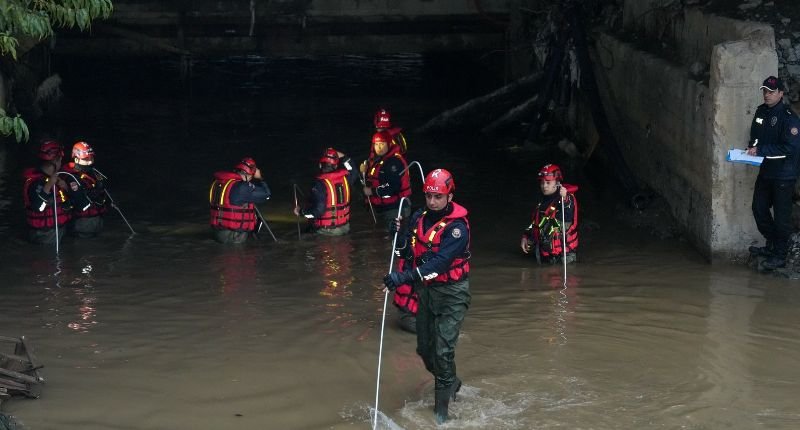
However, the intensity of the rainfall alone does not explain the loss of life and the scale of the material destruction. Experts say that decades-long urbanisation in Istanbul’s riverbeds, valleys and natural water collection areas renders the city vulnerable in the face of increasingly heavy rains.
Natural events, human decisions
Istanbul Technical University Climate and Meteorology Engineering academic Mikdat Kadıoğlu says that human decisions determine the impact of weather events.
“A flood in a desolate valley is a natural event, but it becomes a disaster when it occurs in a neighbourhood built in that valley,” he says.
A problem facing Istanbul is that urban expansion has made it harder for the landscape to absorb rain safely. Non-porous surfaces in Istanbul’s Northern Woods increased by 63% between 2009 and 2017, Kadıoğlu says. Some 108 of the city’s 168 riverbeds lost their natural structure partially or completely. Around 900 kilometres of the city’s 3,344 kilometre-long stream structure has been altered.
Part of the problem has been a 2013 decision to allow construction to come as close as 10 metres to riverbeds in potable water reserves, a limit that used to be as high as 100 metres, Kadıoğlu says.
“A dry riverbed is only dry on a dry day,” he says. “In heavy downpours, the riverbed and the flood plain are needed [to absorb water]. We opened up those areas to construction.”
Climate change is having an impact too. Increasingly heavy rainfall is another element that Kadıoğlu points to as a risk factor. However, he says that there are measures that can be taken by urban administrations to alleviate the impact of heavy rainfall.
“Istanbul alone cannot stop the climate, but we hold the construction permits,” he says.
Mücella Yapıcı, a former head of the Chamber of Architects’ Istanbul Metropolitan Branch, agrees that decisions around urbanisation have aggravated the consequences of the floods.
“There is a change in the climate, but the disaster can’t be entirely blamed on the climate crisis,” she says. “What created these crises is a mentality that does not take nature into account and focuses solely on real estate production.”
Yapıcı thinks that the Cendere Valley, where the floods were most prominent, was among the most significant ecological corridors in Istanbul until the 90s. The construction permits granted to the area later restricted areas where water naturally flowed.
A national problem
The floods in Istanbul were only one of several extreme weather events and disasters that occurred across Turkey in October.
Residential areas and agricultural land were flooded when a dam in the northwestern province of Sakarya overflowed on 18 October. A tornado that erupted in the southern province of Antalya on 26 October ripped apart trailers where workers were housed, killing four. Heavy rainfall in a popular tourism spot, Cappadocia in central Anatolia, tore apart one of the region’s famous “fairy chimney” rock formations on 29 October, killing three and injuring five.
The head of Greenpeace Turkey’s climate and energy campaigns, Emel Türker Alpay, tells Inside Turkey that extreme weather events affect agricultural production and urban infrastructure, while coal mining and thermal power plants increase pressure on water resources. Although Turkey declared a net-zero emissions target for 2053, its nationally determined contributions declaration shows an increase of 42% since 2019.
Duygu Kutluay, a campaigner with the Beyond Fossil Fuels Network, argues there should be more public resources allocated to climate change adaptability and natural disaster preparedness.
“Investing in emissions reduction and climate change adaptation is much cheaper than maintaining current policies and trying to compensate for the damages caused by individual disasters,” she says.
Yapıcı argues that what happened in Istanbul showed that climate policy cannot be separated from urbanisation policies. She thinks that policies are needed to protect water ways, green spaces and flood plains from urbanisation in order to prevent new disasters.
“A change in mentality and policy is needed as soon as possible,” Yapıcı says. “Without this transition, any preventative measures will be in vain.”
What comes next
Meanwhile, survivors of the most recent disasters must deal with the aftermath. Another victim of the Istanbul floods, 55-year-old Haşim Giritlioğulları, is buried in the same cemetery as Derin. Giritlioğulları was a security guard in Kağıthane and got caught in the flood on his way home that night. His body was also discovered on the banks of the Golden Horn five days later.
His daughter İlayda was also caught in the floods that night as she tried to return home from a friends’ get-together.
“We got caught in the water when we decided to walk as our bus stopped working. People nearby saved us with ropes,” she says.
Giritlioğlu didn’t know her father had gone missing as she took refuge in a nearby business to wait for the rain to slow down.
“We found out hours later,” she says. “My dad didn’t mind the rain and told his colleagues that he would be fine. He thought he could make it home.”
Rabia Çetin