

“After I got married, I looked at my ID card to see that there was nothing left of mine except my first name,” says Oya Ersoy.
Ersoy, now 54, is a human rights lawyer. In the 1990s she became a figurehead for women who want to keep their maiden names after marriage, taking her case all the way to the European Court of Human Rights.
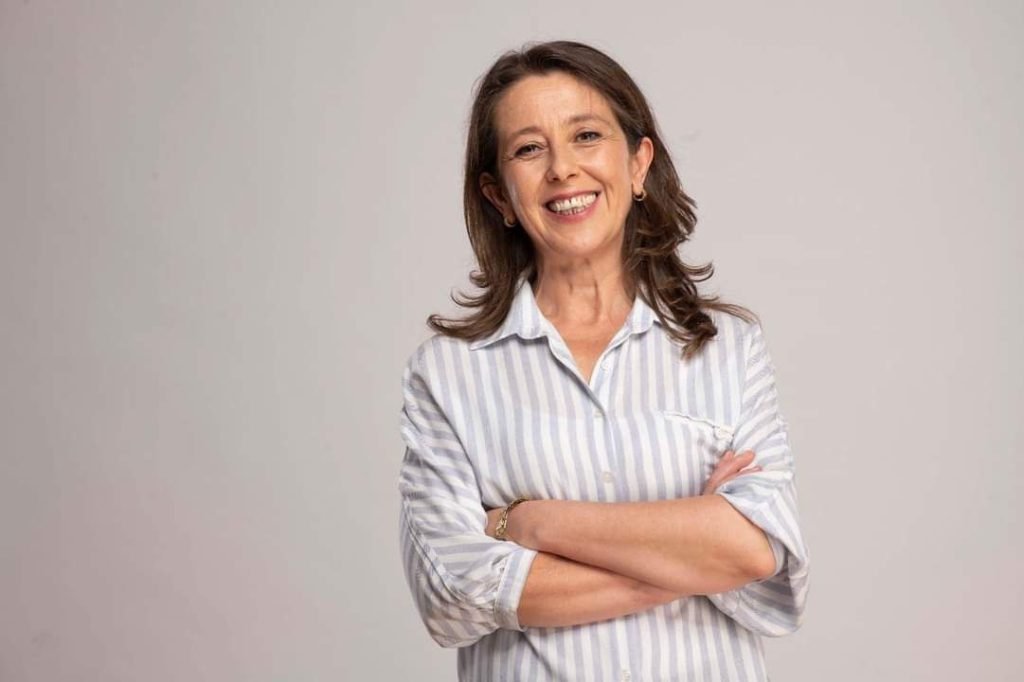
Decades later, that struggle continues. Today, when women in Turkey marry, they are automatically given their husband’s surname and their census records transferred to his family tree. It is technically possible for a woman to keep her maiden name, but it takes a lengthy and expensive legal process.
In April 2023, Turkey’s constitutional court overturned a law preventing women from solely using their maiden name. However, parliament has yet to act to fill the legal gap, even though a nine-month grace period expired at the beginning of 2024. The AKP-led governing alliance even proposed to reinstate the ban, although this was dropped at the last minute.
For many women’s rights campaigners, the difficulties women have in holding on to their maiden names is evidence of discrimination. For married women, the mandatory surname change brings a heavy workload of changing ID cards, passports, driver’s licenses and so on. Any work like published articles, awards or other on-paper achievements that a woman might have gained ahead of her marriage also vanishes.
Ersoy says that when she was made to change her name after marriage, it alienated everyone who knew her by her maiden name, from school friends to clients. She took the Turkish state to court, arguing that the requirement violated the “equality principle” enshrined in the country’s constitution and in international human rights agreements. When her case made it to the constitutional court in 1998, it was unanimously rejected.
“Attempts to restrict women’s freedoms are becoming institutionalised in Turkey, as they are around the world,” Ersoy says of the government’s recent hostility to reform.
“The administration’s attempt to pass a law in parliament that the Constitutional Court has already overturned ignores women’s demands for equality. We have only one thing to say to male administrators who have adopted illegality as a compass for their rule: Our fight for equality and freedom goes beyond anything you pass in parliament.”
Sema Yurtbilir, a lawyer at Women for Equality Platform (EŞİK Platformu) who closely followed the legal process, thinks the surnames issue is really about “a perception of who carries on the family line”.
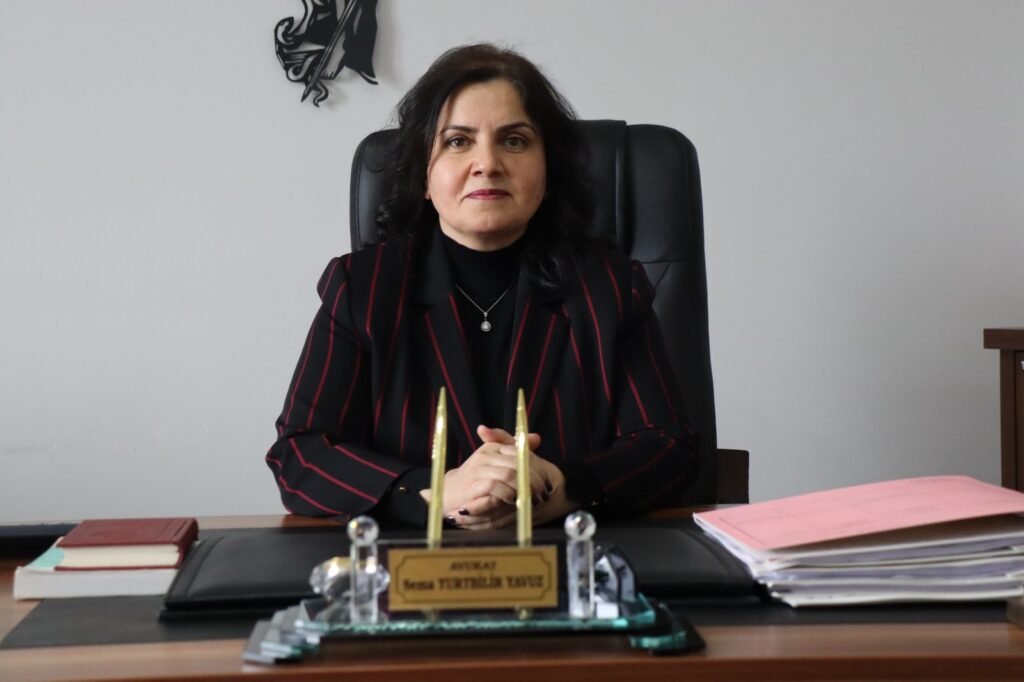
Observing that lawmakers are “brooding on what to do” about the constitutional court ruling, Yurtbilir says: “this is about the administration’s loss of male authority. This is why it’s very difficult for them to make a decision.”
According to official data, only 850 married women out of 20 million use only their maiden name. Yurtbilir says that the arduous legal procedures to opt for using only your maiden name is one of the reasons why this number is so small. Even “the most modern families” are reluctant to take on the bureaucracy – not least because they might face a backlash, she says.
“All these things aside, why am I forced to file a legal case to exercise a basic right, a right that is already mine: to use my own surname?” asks Yurtbilir. “Men get married, get divorced and nothing changes in their status, it is maintained. But mine is not.”
Divorced women also struggle to go back to their “old” surnames. Ersoy, who was divorced in 2003, had to change all of her paperwork, from bank accounts to ID cards. But her professional life was where she experienced the biggest challenge, she says.
“Hundreds of power of attorney documents that my clients gave me as their lawyer, the courts that approved the documents, banks … I had to walk around with my marriage certificate, which I hadn’t touched once when I was married, just to conduct business at debt collection offices.”
Ersoy says that a prominent case she worked on – Ataman-Turkey, which set a precedent for the right to peaceful assembly and is referenced in international literature – displays her former husband’s surname.
“This case of Ataman-Turkey was a result of my legal battle as a lawyer, but it displays the name Ataman. However, I’m Oya Ersoy. There are two Oyas around because my freedoms were infringed on. That shows how the surname law renders women’s labour invisible, to define women through their husbands, to trap them in families.”
When women do keep their maiden names, they have to add them to their husband’s. Academic and legal professional Ceren Akçabay-Karataş has such a long name as a result. She says that defenders of the rule cite “preserving the family union” as justification.
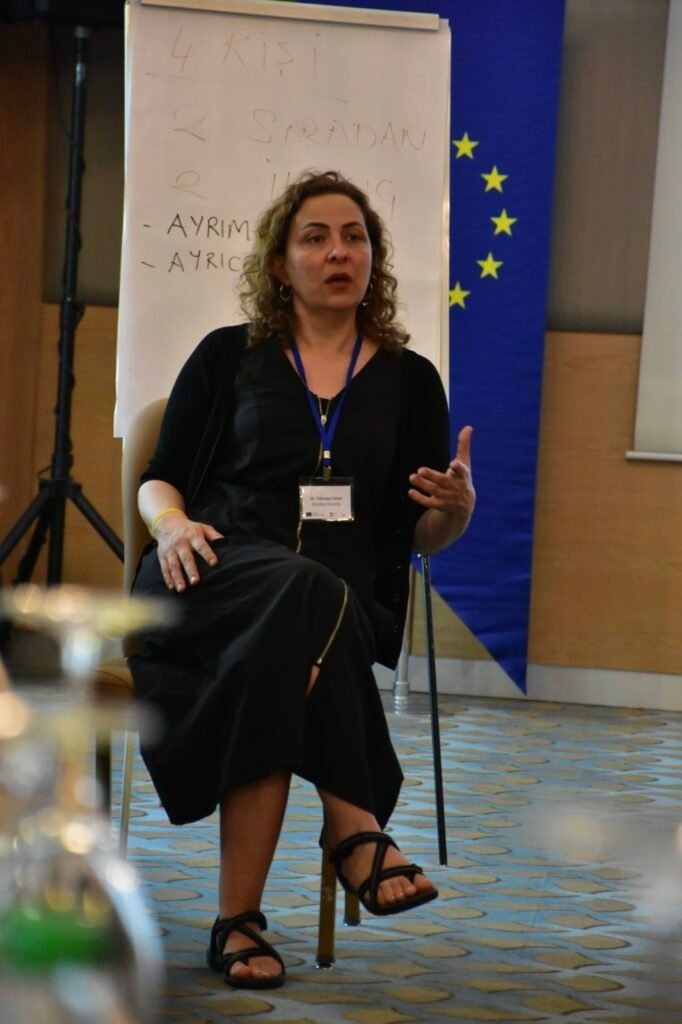
She believes the government finds this patriarchal setup convenient for practical as well as ideological reasons. If women are viewed as “the manager of the household economy and the free caregiver”, it allows the state to reduce its responsibility for social welfare, Akçabay-Karataş says.
“You need daycare for a child? The woman should stay home and take care of them. You have a sick or elderly family member? They are best cared for by wives, daughters and women. If the woman stays at home, the government will be exempt from these demands. That is the simple math behind the love for traditional families.”
For all three women, this is about more than the fight for a name. “The reason for violence against women is the same as the reason for attempting to rob women of their right to their surname,” says Yurtbilir.
“It’s the belief that women are the lesser sex and that men are entitled to domination over women. So, this is a fight for all rights and equalities.”
Emel Altay