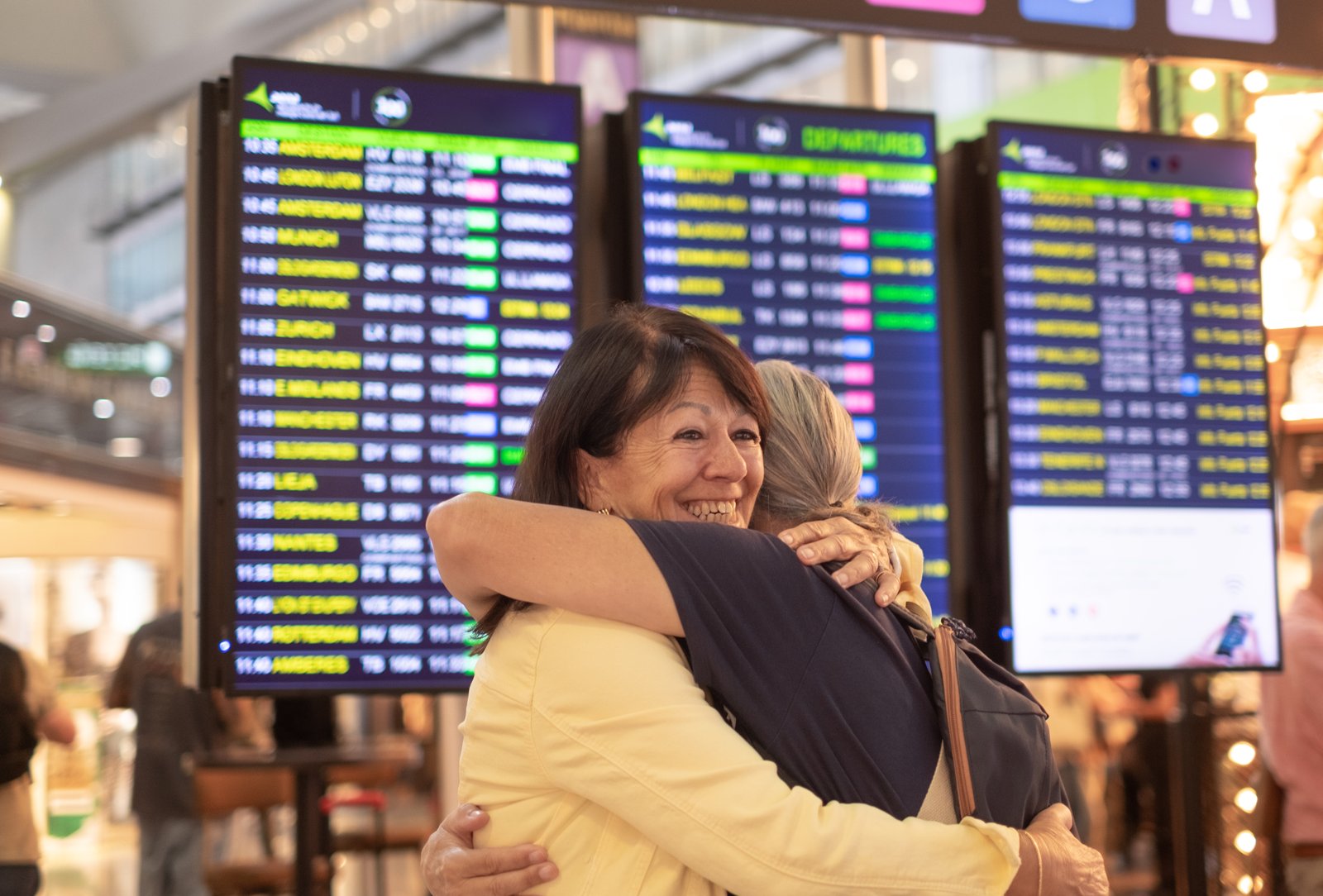

“Everything would end at 7 p.m., life essentially came to a halt,” says Kuzey Işık. “It felt like we had to just wait to be reborn the next day.”
That’s how Işık, a 32-year-old physiotherapist, describes life as a Turkish emigrant in Germany. He moved to Düsseldorf for work in the summer of 2024 and had looked forward to a more active social life than the one he’d had in Turkey. But he was shocked at what he found.
“There was nothing to do after work. There were no lights or any movement on the streets,” Işık says.
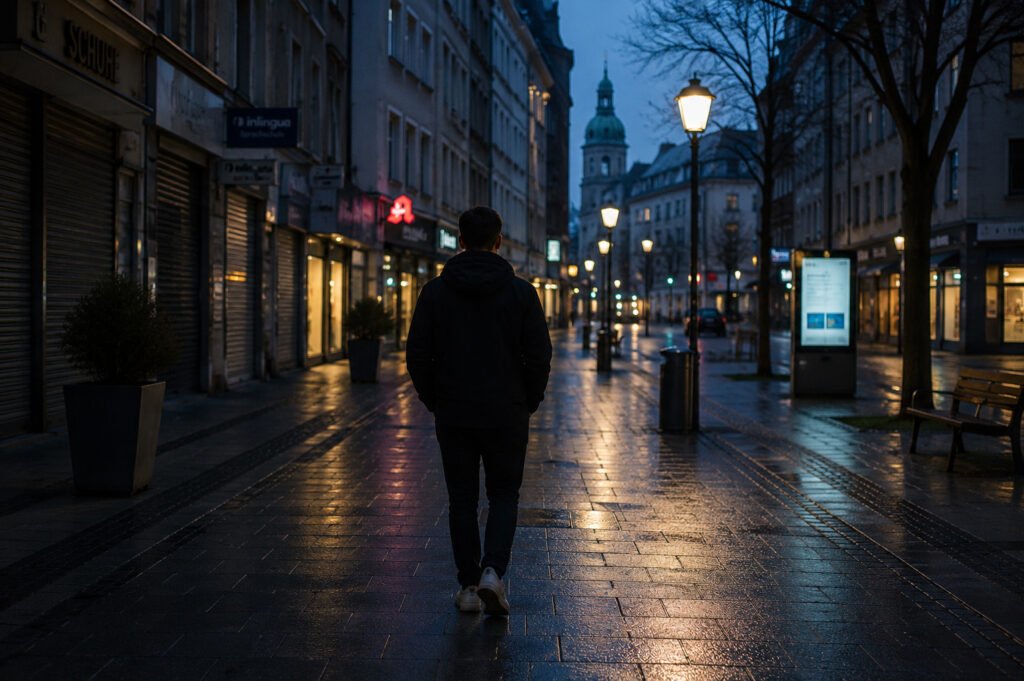
(Credit: AI generated via ChatGPT)
Now he’s back in Turkey – and it’s not for economic reasons.
“Social life was entirely behind the reason I came back,” he says.
Işık’s story is not unique. As Turkey’s economy has struggled, moving abroad has become almost a rite of passage for young people in the country. But many come home again, too.
Data from the Turkish Statistical Institute (TÜİK) shows that 103,732 citizens returned to Turkey in 2024, while 151,140 citizens moved abroad. The largest groups in both cases were people aged 20-29.
Didem Danış, a sociology professor at Galatasaray University and Head of the Center for Social Research (TAM), tells Inside Turkey that young people are usually motivated by three factors when moving abroad: economic and professional opportunities, expectations for a better life and increased freedoms, and a search for a predictable future.
Galatasaray University
and Head of the
Center for Social Research (TAM)
(Credit: Her own archive)
Returns don’t necessarily mean people have given up on their aspirations – rather, Danış says, it’s a complex process of adjustment.
“A return isn’t just ‘unmet expectations’, it’s also a redefinition of expectations,” she says.
Experiences in day-to-day life are the most common breaking points. Loneliness, as well as struggles with integration and with making new social connections, is a common factor.
Danış says that immigration can also prompt young people to revise their opinions on Turkey itself. Some find renewed value in their home country, especially in the context of family, friends and cultural familiarity.
Not a failure
Volkan Özdemir started working in Turkey after graduating from university in 2012.
“Low wages, workplace harassment, unearned professional achievements… I was put off by seeing these phenomena in the workplace,” he says.
Özdemir moved to San Francisco in 2015, hoping to find fulfillment, but his plans fell apart in the first few months of his new life.
“I thought I could work on my English and get a good job,” he says. “None of that happened.”
Özdemir had set off with three years’ worth of savings, but they soon ran out.
“My savings withered away in three months,” he says. An engineer by profession, Özdemir had to work in restaurants and car parks.
“People had a very different idea of me there [in the US]. You feel inferior, unrelated to what job you’re doing,” he adds.
Loneliness, a sense of insecurity and a lack of permanent employment all piled up, Özdemir says – though it was witnessing a shooting that tipped him over the edge. He soon realized that his life in the US had become a fight for survival.
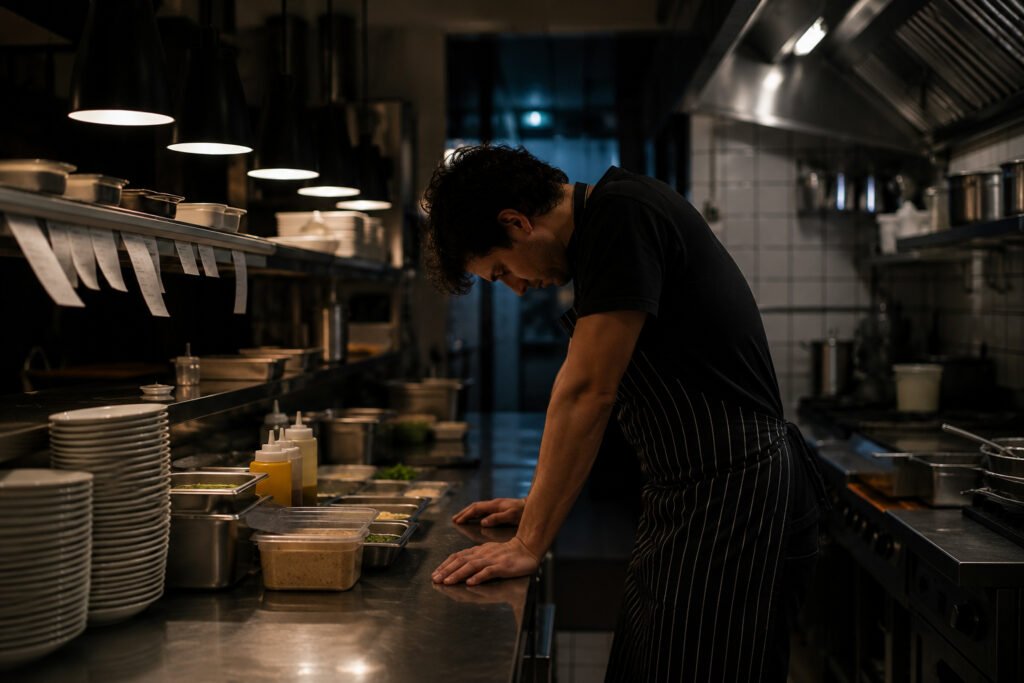
(Credit: AI generated via ChatGPT)
Özdemir says his friends were surprised when he came home, though he doesn’t see his return as a failure. “It’s an experience I would have always wondered about if I hadn’t tried it,” he says.
Like Özdemir, 31-year-old artist Ela Çetinalp left Turkey in search of a better life. After the devastating earthquakes of February 2023, she moved to Berlin with her friends, out of a desire to “turn over a new leaf”.
She spent her first few months in Berlin exploring the city with excitement and dreaming of the possibilities in a city known for its art scene. But it was more difficult than she expected.
Çetinalp says that trying to break into the art world in Berlin felt like “standing at the end of an infinite queue”. She started to miss the relative ease of working and exhibiting in Turkey.
But it’s the loneliness she found hardest. “I was already in a place that didn’t feel like home, so every hardship was amplified,” she says. The legendarily difficult process of finding a flat to rent in Berlin exacerbated these feelings.
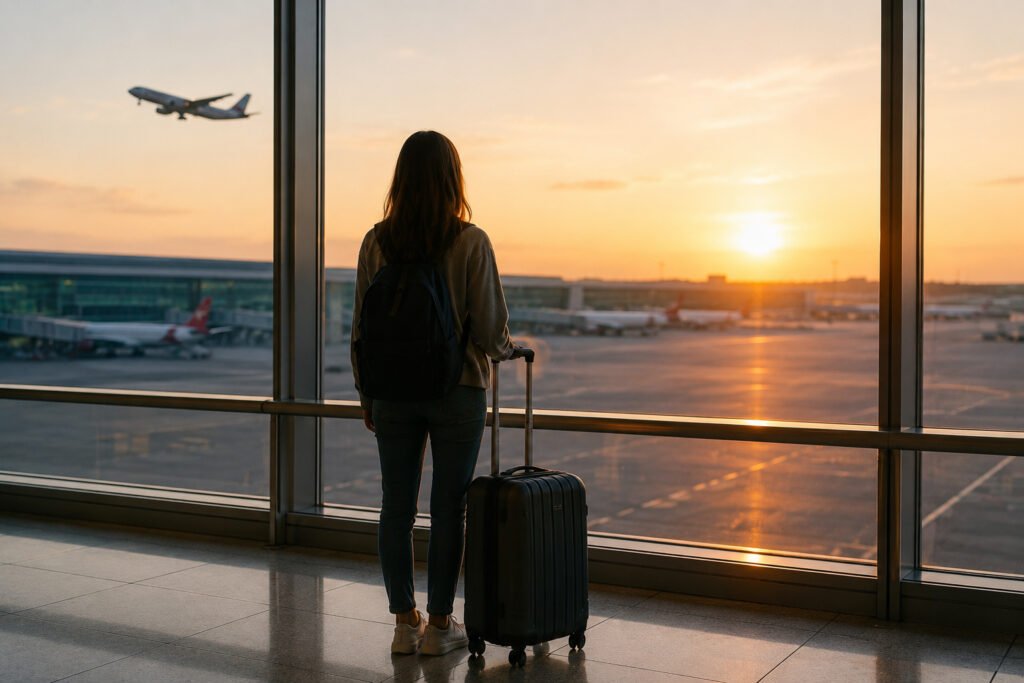
(Credit: AI generated via ChatGPT)
A decision to return to Turkey was forced by her inability to find a job. “I had nothing to hold on to,” Çetinalp says.
It’s comforting to be close to her loved ones again, but readjusting takes time.
“I have a better idea of what I want now,” Çetinalp says. “There’s a greater possibility for me to make art here.”
Nowhere is perfect
Sociologist Gülay Türkmen says growing concern for the future is the main reason why young people are moving abroad. This is as much about concern for Turkey’s social and political direction as the economy.
It’s not just loneliness and job worries that push people to come home, either. When Turkish people move to northern Europe in particular, they struggle with the climate – particularly the relative lack of daylight in winter months – and the slower pace of daily life.
sociologist Gülay Türkmen notes
that stories of reverse migration
have become increasingly
available on social media recently.
(Credit: Her own archive)
“A lot of young people who migrate abroad have a very black and white picture that Turkey is ‘terrible’ and the destination country is ‘great’,” Türkmen says, adding that this image often doesn’t survive contact with reality.
“No country is pure heaven,” she says, noting that bureaucracy, prejudice against foreigners and limited social life often prompt this understanding.
Although there is no data available on the phenomenon, Türkmen notes that stories of reverse migration have become increasingly available on social media recently.
“Why did these young people leave? Why did they come back? What did they hope for and what did they find? Systematic research into these questions could inform policy making,” she says.
Begüm Galipoğlu decided to move abroad during the COVID pandemic and explains it as a desire to “leave her comfort zone”. After living in Slovenia for three years, she found its rather reserved culture more challenging than the language barrier or the cost of living.
“I always invited friends over to my house, but the invitation was never returned,” she says.
This distance was also apparent in daily life, she says, noting that she felt even more isolated after an accident. “I had nine stitches put into my head. Nobody even asked if I was okay,” she says.

(Credit: Envato Elements)
Galipoğlu treated her return to Turkey as a trial period, returning to her native İstanbul without completely abandoning her setup in Slovenia. But she quickly found that being around family and friends once more outweighed her desire to go back to Slovenia.
“It was healing to be able to visit a café I went to at 15, whenever I wanted,” she says. “Coming back was a purely emotional decision.”
Adapting to Turkey after three years was easier than she thought. Now working in the automotive industry, she considers her emigration and eventual return not as a rupture, but as a process where she gained a better understanding of herself.
According to Galipoğlu, the biggest change was not her physical environment, but her outlook on life.
“Life is never black or white, it always has shades of grey,” she says.
Some names in this article have been changed.
Gizem Çetimen