

Two school shootings in quick succession have prompted a debate about the radicalisation of young men in Turkey.
In April, a 19-year-old man shot and injured 16 people at a school in Şanlıurfa, southeastern Turkey, before taking his own life. The following day, a 13-year-old boy in Kahramanmaraş, another province in the region, killed 10 people at his secondary school and died at the scene.
Such incidents are rare in Turkey, but they have raised fears of ‘copycat’ incidents – as well as questions about how to deal with what some teachers and child development professionals see as a growing wave of teenage boys who are unable to deal with their anger.
Deniz* has been a teacher for 14 years and has worked as a school administrator for the last nine. She believes that social media alone is not a sufficient explanation for the growing anger she has observed among students in recent years.
“We have lost our social identity,” says Deniz, arguing that ties between families and their children have weakened. “Families no longer sit down together for dinner or watch TV after they eat. Everyone is in the same house, but on their own screens.”
A 2025 report by the OECD found growing loneliness and decreased social connections among young people in several countries. It says that young people, especially young men, have been socialising less in recent years and their perceived sense of social support has weakened.

Credit: Her own archive
Children and youth psychiatrist Damla Eyüboğlu says attacks like these are the result of long-standing individual and social stresses. She believes loneliness, exclusion and unmet spiritual needs can eventually build into violent behaviour.
Communications professor Aslı Tunç at İstanbul Bilgi University says violence has become increasingly visible in recent years, both on digital platforms and in daily life. She thinks these incidents cannot be seen as isolated.

Credit: Her own archive
“Violence has become such a prominent part of our lives,” Tunç says. “Violence against women, hate speech targeting minorities or daily frustrations… they are all part of the same puzzle.”
According to Tunç, social media allows violent language to circulate. For young people, violent content is no longer limited to the news but is also part of algorithmically-driven online culture.
The copycat effect
After the Kahramanmaraş attack, police sources said that the teenage shooter’s WhatsApp profile picture alluded to Elliot Rodger, a devotee of misogynistic online ‘incel’ culture and the perpetrator of a mass shooting in the US in 2014.
Tunç says these references display how violent narratives travel across countries on digital platforms.
“We know that the Kahramanmaraş shooter was influenced by US shootings,” Tunç says. “We have to see violent incidents in the wider national and global contexts.”
Turkey is not the only country affected by these pressures. Jake Davison, who carried out a mass shooting in the UK in 2021, had also displayed an interest in online incel culture and previous mass shooters.
Tunç says the elimination of editorial filters on social media increases the risk of violent ideas spreading online, and of ‘copycat’ incidents.

Credit: Her own archive
“Unmonitored circulation of violent footage and of the perpetrators’ stories can lead to a romanticisation and aestheticisation of violence,” Tunç says. “Journalism used to filter these news stories through an editorial process. Today, uncontrolled analyses, images and posts on social media unfortunately make violence more visible.”
Clinical psychologist Serap Altekin says the copycat effect can emerge in different ways, allowing a youth who feels like an outsider to feel like they can “be seen”.
A search for belonging
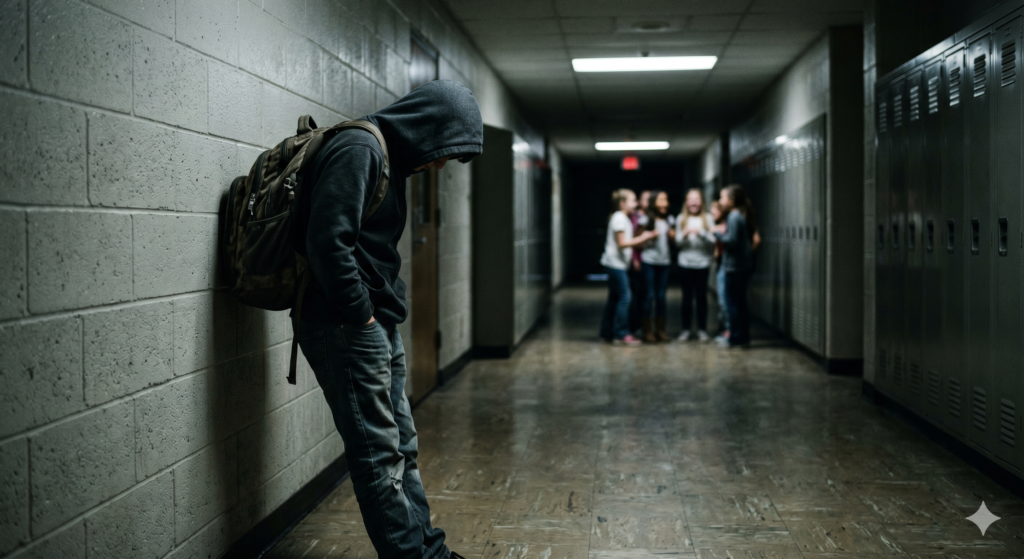
Experts say that the desire for a sense of belonging is a determining factor, especially during puberty. Young people who struggle to feel connected to family or their social circles look for alternative communities where they can feel a sense of belonging. Digital platforms offer a fast and unfiltered response to this need.
“A young person who doesn’t value their identity has no reluctance to waste it away,” Eyüboğlu says, arguing that those who feel alone, excluded and undervalued for a long time can internalize these feelings. Young people who can’t find support or safe spaces to express themselves can settle on anger as an outlet.
(Credit: AI generated via Gemini)
“Young people who are exposed to large volumes of violent content can become desensitised,”Altekin explains. “For some, it collides with fantasies of power and control.”
Yet experts also say that internet use is not enough of an explanation by itself, warning that anger and aggression are increasingly being normalized in Turkish daily life.
The upbringing of young men plays an especially important role at this point, Eyüboğlu says.
“Unfortunately, male identity and aggression are inextricably intertwined in our country,” she says. “Violent behaviour is taught as an acceptable way to resolve conflicts, from a young age.”
Tunç has observed a conservative turn in young people’s attitudes to gender roles and relationships.
“We expect each generation to be more progressive than its predecessor, but that is currently not the case,” she says.
“I see a surprising regression, especially in relationships. Seemingly modern youth can adopt more conservative attitudes toward values and gender roles.”
A study carried out by King’s College London’s Global Institute for Women’s Leadership, in the UK, US, Brazil, Australia and India, found that one third of Generation Z males thought “wives should obey their husbands”. A quarter said that women “shouldn’t seem too independent”. The researchers suggest financial pressures and the expectation placed on men to fulfill traditional ‘breadwinner’ roles have contributed to this shift.
Preventing violence
School administrator Deniz thinks warning signs are often visible.
“Changes in children’s moods can be clearly observed,” she says. “They suddenly become introverted, start displaying different behavior. You can tell by their writing or the examples they give in class.”
However, families and schools often don’t know how to respond to these signals. The prosecutor handling the Kahramanmaraş case has accused the perpetrator’s parents of overlooking their child’s mental state and not fulfilling their responsibilities. The family allegedly ignored a school counselor’s recommendation for the child to receive treatment in a psychiatry clinic.
Deniz says families’ reluctance to accept changes in their children is one of the most critical turning points in the process. Families often respond with “kids will be kids” or “you are labeling my child” when teachers try to point out problems, she says.
Psychologist Altekin claims that the most effective methods of reducing school violence include not just safety precautions, but early intervention and relationships built on trust. Metal detectors, tighter disciplinary guidelines and security-focused policy have become common in many countries in recent years, but have not been sufficient.
Best scientifically proven methods are “team-building” instead of “policing”, Altekin says, urging supervisors to understand children’s needs instead of labeling them as “dangerous” or “problematic”. The key is to notice early on when a child is struggling and to engage support mechanisms.
Eyüboğlu says family communication is a determining factor.
“Youth who feel valued have higher abilities to empathise and control their urges,” she says.
“Children’s relationships to their teachers and peers should be given as much attention as their academic success in school. Identifying children inflicting or suffering from bullying and giving them holistic support is crucial. On a societal level, violence shouldn’t be normalized and acts of violence shouldn’t be glorified.”
Deniz notes the importance of counseling in schools. In her school, group workshops are being held with children who struggle to make friends, she says, adding that these efforts yield positive results in anger management and communication skills.
Seda Karatabanoğlu