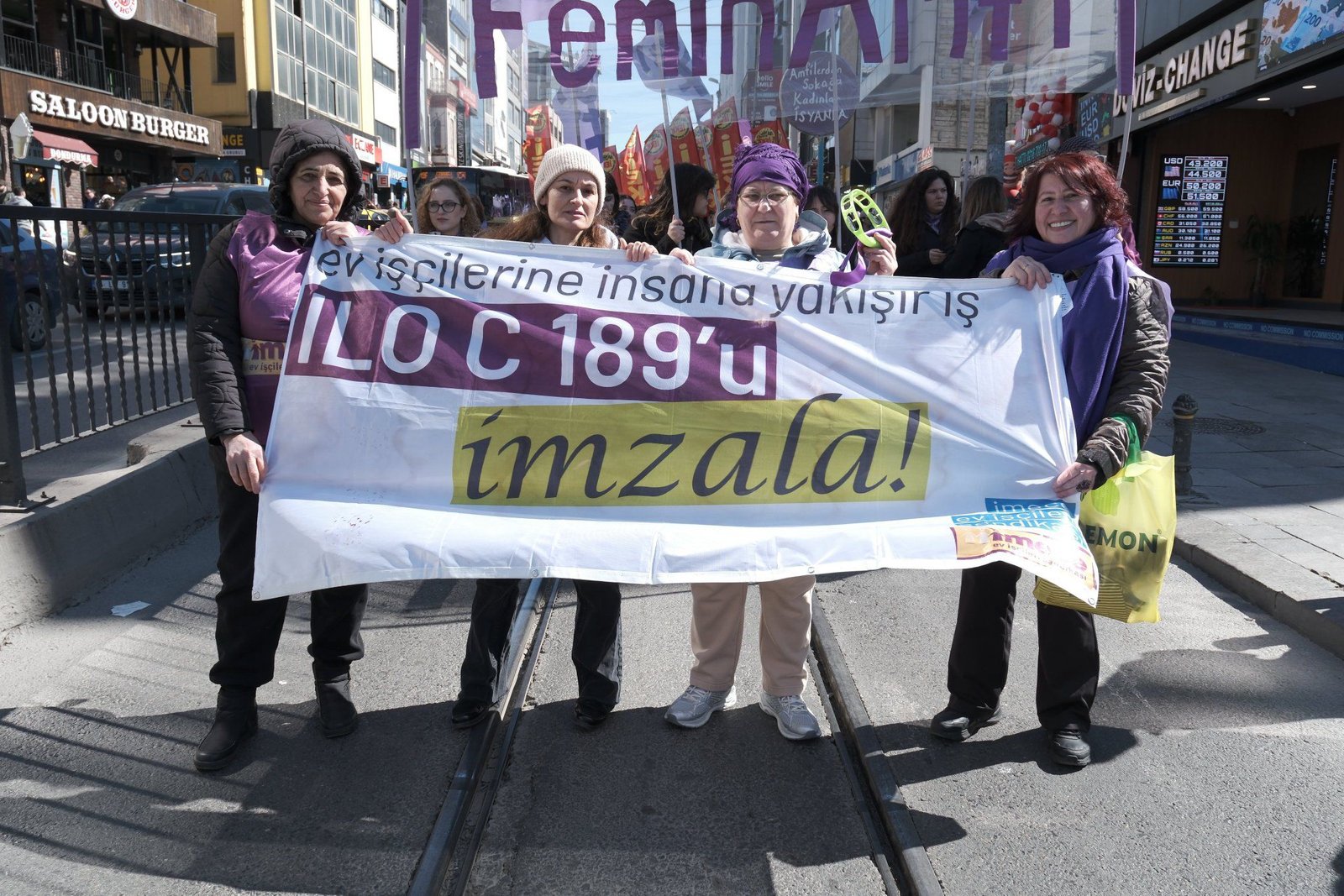

“The apartment that I used to clean was on the sixth floor. I have a fear of heights. When I told the owners that I could clean the whole apartment except the windows, they told me they would take it out of my wages,” says Ayşe, a 45-year-old cleaner in Istanbul.
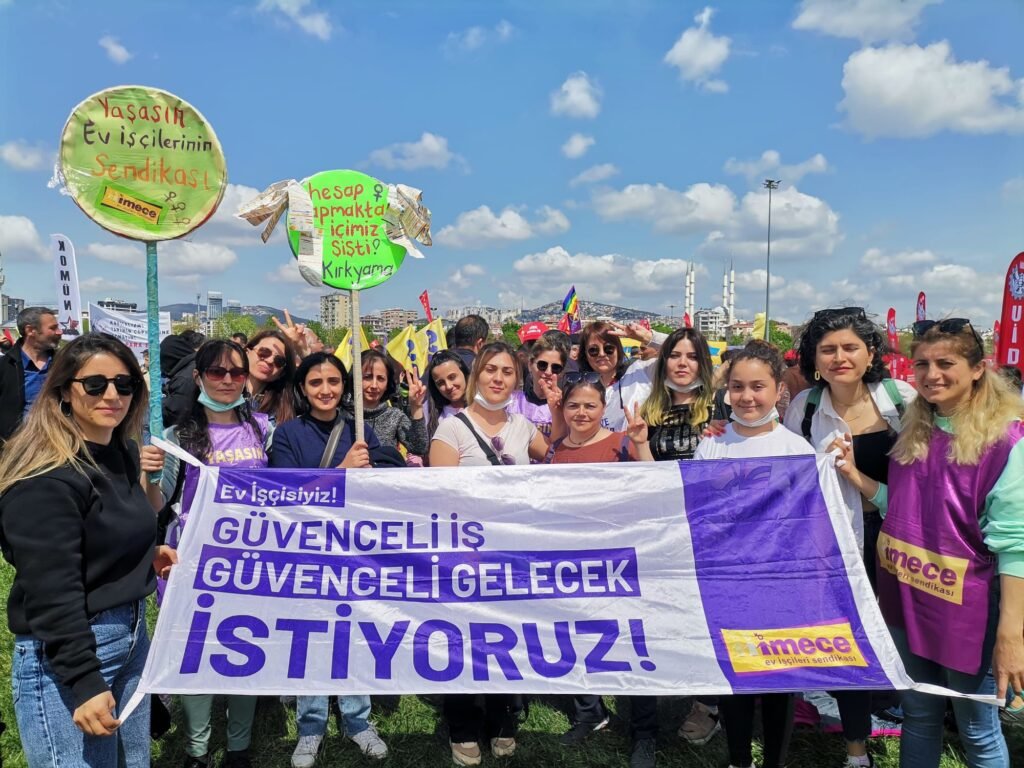
According to data from İmece-Sen, a cleaning workers’ union founded by women in 2013, around a million women in Turkey work as house cleaners. But the official figures are much lower because many cleaners – like Ayşe – are employed informally and don’t qualify for social security. Only 170,000 cleaners were registered as employed in 2026, according to one NGO that monitors workplace safety.
İmece-Sen organisers told Inside Turkey that off-the-books employment, along with a wider perception that cleaning isn’t a “real” job, hurts these workers, the vast majority of whom are women. A combination of informal employment and insufficient labour protections mean most of Turkey’s domestic cleaners lose access to unemployment and holiday pay, pensions and compensation for mistreatment.
(Credit: İmece Ev Sendikası)
What’s more, the risks of the job have been underlined by a series of recent deaths that have made headlines. So why do women take up these jobs, and what can be done to improve their working conditions?
A question of trust
Ayşe earns her living by cleaning apartment building stairwells in her Istanbul neighborhood, as well as the homes of people she was recommended to by acquaintances. Originally from the eastern Turkish province of Siirt, the mother of five works to supplement her husband’s income. She receives about 2,500-3,000 Turkish Liras ($50-$65) per month from each building when she cleans the stairs weekly – around 250 liras ($5) per flat.
“It’s not a lot, but at least it pays for our food costs,” Ayşe says, adding that she would prefer not to clean houses, but she needs the money.
“I wouldn’t clean just any apartment – I also need to trust them,” she says. “I am more comfortable working when the woman of the house is in the apartment. If it’s a man living alone, I go to the apartment around the time when he leaves. That way I can be by myself and work comfortably. I don’t feel comfortable otherwise.”
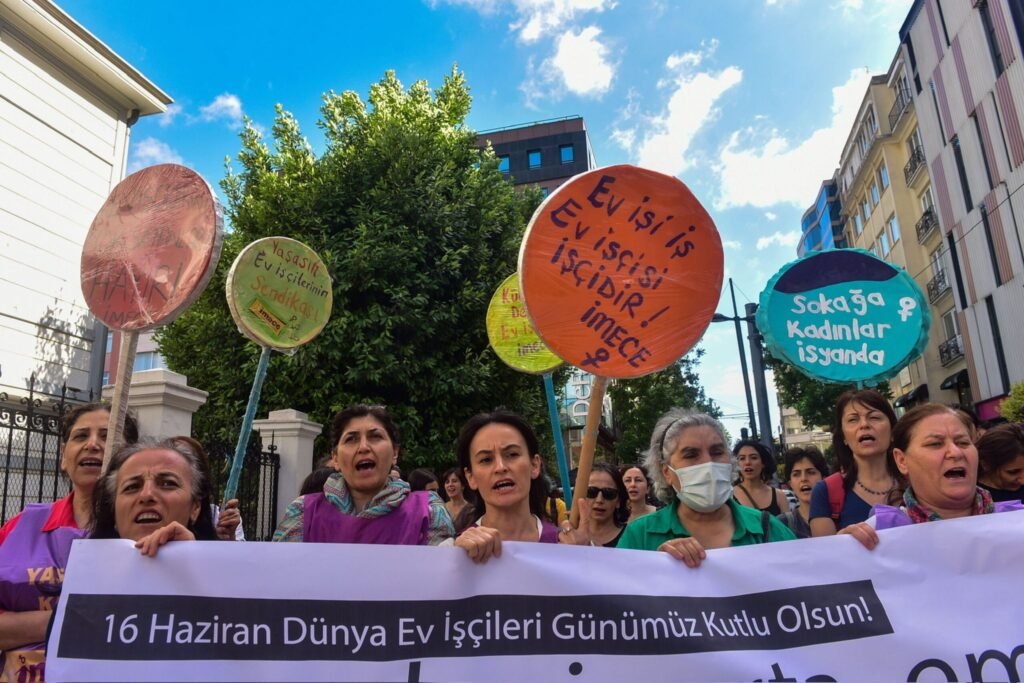
According to İmece-Sen, Ayşe has good reason to worry about harassment. Cleaners often don’t report abuse because they’re worried about losing their jobs – and because the process of raising a legal complaint, not to mention providing evidence of harassment is arduous.
(Credit İmece Ev Sendikası)
In July 2024, 24-year-old Erva Raziye Asar was killed by the owner of an Istanbul house she was cleaning. Her body was dismembered and only found 23 days later.
Many cleaners come from migrant backgrounds, which adds further complications. According to İmece-Sen, employers of unregistered migrant cleaners frequently confiscate their passports so that they don’t complain about poor accommodation, harassment or extortionate working hours.
Fear of losing work
Turkish labour law only guarantees work insurance for those who work less than 10 days a month – and with the part-time nature of domestic cleaning, many women miss out. The law provides for a limited form of per-day insurance for people who work beneath the minimum number of days, but employers often don’t offer it.
Many workers like Ayşe aren’t even aware the option exists. “I’m happy enough if I get paid full wages for a day of work where I don’t clean the windows,” she says. “It’s fine if they don’t pay for my insurance. If I asked for the daily insurance, I would probably work like a slave. Most of the time, I don’t even receive humane treatment anyway.”
One of Ayşe’s most frequent complaints is that residents of the buildings she cleans obstruct her work.
“I have to ask an apartment on each floor for water. The residents react so strongly when I ask them for a bucket of hot water in the winter. They give me cold water. They get mad when I run out of cleaning supplies, as if I kept them myself. But there’s no place for me to make a complaint.”
Zehra, 37, started cleaning homes seven years ago. She works without insurance, and has never asked for it for fear of losing her job. Sometimes she has to take two different modes of transport to reach the apartments she cleans from where she lives in Istanbul.
After a one- to two-hour commute at the crack of dawn, she has to clean before she has breakfast. Some families offer her lunch, but not all of them: she says one employer reduced her hours from a whole day to a half when she asked for lunch.
“Half a day’s work means half the wages. I had to accept but never asked for lunch anywhere else again. I need these jobs to keep up with my three children’s school expenses, rent, food… So I just stay quiet to keep my job,” she says.
Like Ayşe, Zehra also struggles with a lack of cleaning supplies offered to her. She has to make do with whatever her employers provide – even if they use toxic chemicals where less harmful ones would do.
“If I tell them I won’t use it, it sounds like I’m complaining about the work. Some days, I’m nauseous for hours. But what can you do, I have to put up with it,” she says.
Injuries uncounted
Safety is also a pressuring concern. Makbule, a 55-year-old mother of one, described to Inside Turkey how she fell from a sixth-floor window of an office building she was cleaning. She broke her back and was partially paralyzed, remaining bedridden for a year.
“I had always been afraid this would happen. Just as I was thinking of retiring, I found myself falling to the ground,” she says.
After a year of unemployment, she left Istanbul for her hometown of Ardahan in eastern Turkey and is learning to walk again after several years of physiotherapy. But Makbule says she is lucky compared to other cleaners who suffer injuries: the company that hired her to clean the building she fell from paid her treatment costs and she received compensation.
(Credit İmece Ev Sendikası)
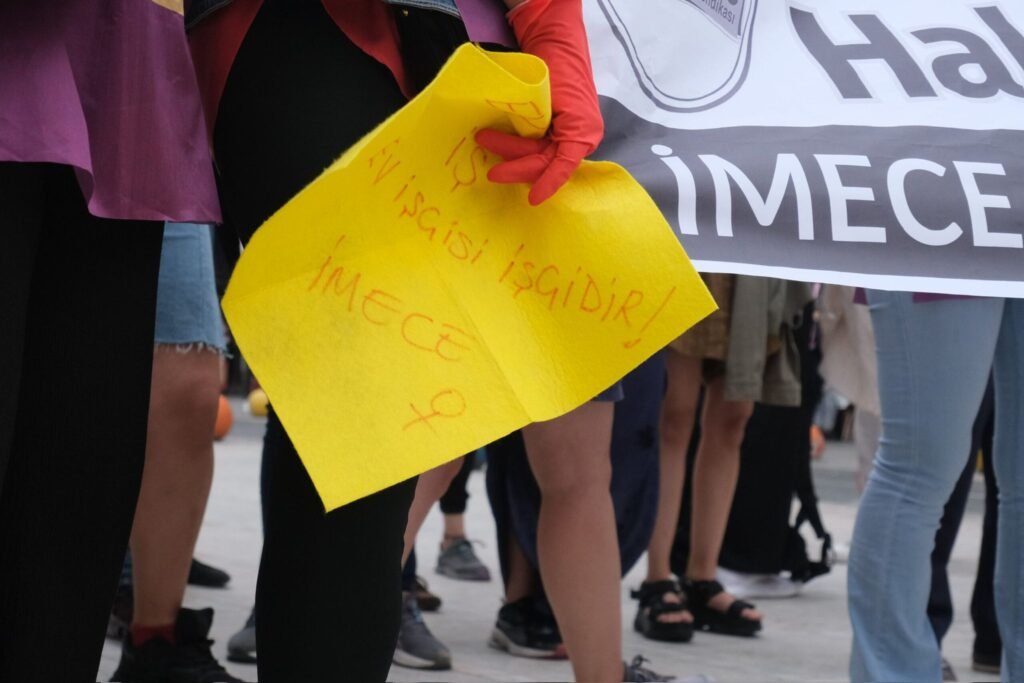
Others, like 44-year-old Dilek Turan, who died falling from a fifth-floor window in the western province of Aydın in April 2026, was not as fortunate. The NGO Workers’ Health and Workplace Safety Assembly (İSİG) deems her death a murder – the result of negligence – rather than an accident.
Aslı Odman, a researcher and member of İSİG, says that cleaning is the hardest sector to monitor for safety breaches. “Workplace accidents and hazards are not recorded. We have to register these incidents by scanning the media or receiving individual reports from unions, lawyers and professional bodies. Our figures represent just the ‘at least’ number of women who suffer injuries,” she says.
İmece-Sen argues that Turkey should sign up to the International Labor Organization’s 2011 convention on domestic workers, which has been signed by 40 states so far and mandates a safe and healthy working environment for all.
Several opposition parties, including the main opposition Republican People’s Party (CHP) and pro-Kurdish MPs, have proposed stricter laws and held inquiries on the topic of domestic workers a number of times since 2016, but there has been little change in policy from the labour and social security ministry.
The only significant step was to introduce the daily insurance for part-time workers in 2020, after CHP MP Ömer Fethi Gürer and others raised the issue of house cleaners falling outside the scope of labour laws. Critics of the measure argue that this limited form of insurance creates insecurity rather than ends it – but the government argues it offers sufficient protection.
Rabia Çetin