

Turkey has been shaken in recent years by a series of murders involving young people. Incidents such as the stabbings of 15-year-old Mattia Ahmet Minguzzi in January 2025 on a busy Istanbul street and of 15-year-old Atlas Çağlayan in January 2026, or the killing of 23-year-old Hakan Çakır in a fight with two teens in August 2025, have prompted public outrage.
Most recently, Turkey was shaken by a shooting at a middle school in the southeastern province of Kahramanmaraş on 15 April. 10 people, including the 14-year-old perpetrator, were killed.
Yet amid the debate, the voices of children who get caught up in crime are rarely heard. To shed light on the problem, Inside Turkey has been able to interview O.T., a 17-year-old currently charged with drug offenses in Istanbul.

(Credit: Freepik)
Because of his age and the ongoing legal proceedings, we are withholding O.T.’s full name, and have interviewed several legal and child development specialists to add context to his story.
“I left school after elementary school. I wanted to work and support my father, and I sort of had to,” says O.T., who was born in the eastern province of Batman.
Limited job opportunities, low wages and limited social life in Batman led O.T. to Istanbul when he was 16.
“There was immense unemployment in Batman, young people usually worked for less than minimum wage under heavy conditions,” he says.
“Anyone receiving minimum wage was considered lucky. We couldn’t find work, my dad worked day jobs. Sometimes we picked up seasonal work.”
At harvest time, O.T.’s whole family would travel to the Black Sea coast to pick hazelnuts, as many seasonal agriculture workers do at the end of summer.
Today, O.T. is embarrassed by his choices. He blames his attraction to crime on “unemployment and a lack of socialisation, combined with the excitement of youth”. He says there were few youth activities on offer back in Batman.
But he insists the main reason was to support his family.
“That’s why I got involved in crime to begin with,” he says. “To send my siblings to school, to have hot soup cooking on the stove at home.”
O.T. also regrets dropping out of school and losing touch with his friends.
“We felt safe [at school] but I wouldn’t say I felt supported. We didn’t feel hope about life. Our teachers did not motivate us to receive an education. Maybe they didn’t see potential in us, I don’t want to blame them either.”
Risk factors
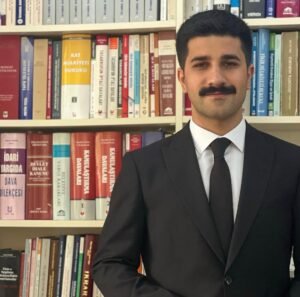
Barış Demirel, a criminal law specialist, says that young people drawn into crime are often “raised in socially and economically disadvantaged conditions and neighborhoods”. Most of these children, says the lawyer, grew up amid financial challenges, or in environments where family breakdown, social pressure or violence were a factor.
Credit: his own archive
Children are also sometimes used by criminal organisations, for example to deal drugs – either because they are easily influenced, or because they tend to receive lighter sentences if caught.
Yet Demirel does not believe there has been an overall rise in the number of children involved in crime in Turkey. “It would be more accurate to say that children have become more visible in violent incidents,” he says.
Recent public discussions in Turkey about the criminalization of youth have centered around violent acts such as fatal stabbings or shootings. Although not all violent incidents are linked to drugs, Demirel says drug dealing can get violent through financial disputes. Muggings, intimidation and participation in organized crime have also become more visible in disadvantaged urban areas.
Child and teenage psychiatry expert Şahika Gülen Şişmanlar says that youth crime can’t be traced back to a single cause.
“Many risk factors play into the criminalisation of children: personal traits, family problems, risks in education and work life, the nature of the community and population housing the child,” she says.
Positive displays of violence in the media also play a role, Şişmanlar adds.
Therapist Ezgi Gevher Avcı of the Children and Women First Association says it’s important to avoid stigmatising children involved in crime.

Credit: her own archive
“Deep poverty, insecurity, uncertain futures, disconnect from education and a lack of social support directly impact this phenomenon. Violence is often a reflection of the social tension housing these children,” she says.
“We see most often an immense vulnerability in children, prompted by neglect and isolation. Many children don’t have access to secure ties to an adult, an inclusive school life or social environments where they can express themselves.”
Şişmanlar concurs. “These cases show us that our education and health systems have shortcomings in recognising and preventing risk, that our child protection systems do not work well enough,” she says.
Crime and punishment
Recent public debate in Turkey has centered on the question of whether sentences for young people should be made tougher: currently, children in Turkey under 12 don’t go to prison, while prison sentences are limited for teenagers.
“This public request is understandable emotionally but we should approach the matter from both a legal and humanitarian angle,” says Demirel, the lawyer.
“Research shows that early intervention, education, social support and rehabilitation programs are the most effective preventative measures. Enhancing disincentives instead of punishment and establishing support systems in family and school can create much more sustainable solutions for children.”
What’s more, Demirel adds, sentencing is often already tough. “Legally, the foundation of the youth justice system is a protective and rehabilitative approach. But a punitive approach is more common in practice,” he says.

(Credit: Freepik)
Şişmanlar notes that developmental facts should be considered when discussing the punishment of children. Children should be at an age where they can comprehend the moral and legal consequences of their actions if they receive a punishment, she says.
“We know that increased punishment will not keep teens away from crime,” Şişmanlar says. Consolidating the child protection system, boosting preventative measures, establishing effective systems for rehabilitation and coordinating these systems would be more effective, she notes.
“A child presenting with criminal behavior is in fact a child who has experienced severe hardship and risk, but whose experience has so far gone unnoticed by the government,” she adds.
Gevher does not look warmly upon increased punishment, saying she considers it an example of “insincere populism”.
“Increasing punishment could satisfy the masses in the short term, but it doesn’t eliminate the conditions that create underage crime,” she says.
O.T. doesn’t believe that increased sentences alone can resolve the problem of youth crime.
“My goal in life at the moment is to provide a better life for my family,” he says, noting that financial struggles are often the cause leading children into crime.
“Most of the people around me who got involved in crime were unemployed or grew up in dire circumstances, in difficult families. If young people could find jobs that will pay them the value of their labour, they wouldn’t go down this road,” he says.
Aylin Kaplan